
Safety Warning
DIY auto repair can cause serious injury, fire, or vehicle damage. These guides are for informational purposes only. Always follow OEM torque specs, wear PPE, and consult a certified mechanic if you are unsure. You are solely responsible for your safety.
2009 Mazda B2300 L4-2.3LFACTORY OEM SERVICE PROCEDURE
Ignition Cable: Service and Repair
-
SPARK PLUG WIRE REMOVAL / INSTALLATION - 2.3L/4.0L
Removal and Installation
4.0L Vehicles
1. Remove the right front tire and wheel.
2. Remove the right front fender splash shield.

All Vehicles
CAUTION:Spark plug wires must be connected correctly. Mark the spark plug wires before removing them.
CAUTION:Do not pull on the spark plug wire as it may separate from the spark plug wire connector inside the spark plug wire boot.
1. With a twisting motion, use the spark plug wire remover SST to pull the spark plug wires from the right side of the engine.
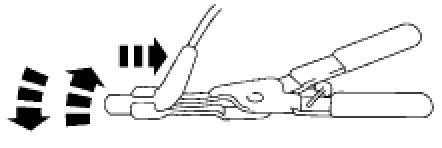
4.0L Vehicles
1. Lower the vehicle.
All Vehicles
1. With a twisting motion, use the special tool to pull the spark plug wires from the left side of the engine.
2. Squeeze the locking tabs and twist while pulling upward to remove the spark plug wires from the ignition coil.
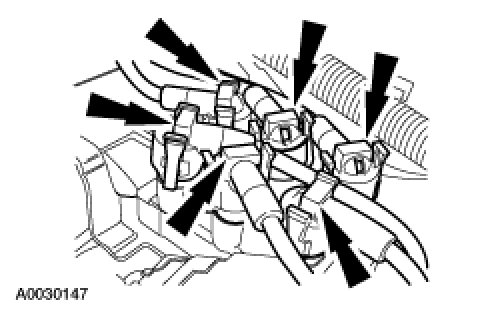
3. Open the spark plug wire separators and remove the spark plug wires.
CAUTION:Proper installation of the spark plug wires is critical to vehicle operation. If one spark plug wire is not properly installed on the spark plug or ignition coil, both spark plugs connected to that segment of the ignition coil may not fire under load.
NOTE:Wipe the spark plug wires with a clean, damp cloth prior to inspection.When a spark plug wire is removed for any reason from a spark plug or ignition coil, or a new spark plug wire is installed, apply silicone to the spark plug wire boot prior to installation.
2.3L Vehicles
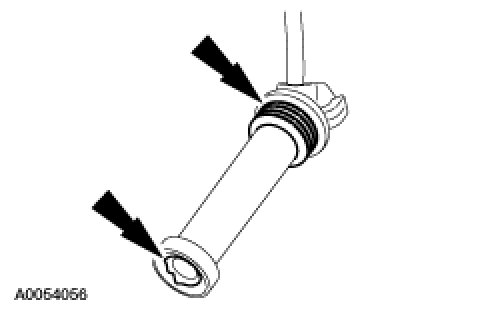
1. Apply silicone dielectric compound to the locations shown.
All Vehicles
1. Use a small, clean tool to coat the entire interior surface of the boot with silicone.
CAUTION:Be sure to orient the spark plug boots so the spark plug wires do not contact the exhaust manifold.
2. To install, reverse the removal procedure.
Factory Service Tools
Use the Manual With the Right Hardware
Pair factory procedures with proven DIY tools so the instructions are easier to execute.
Disclosure: Verified tool recommendations may earn an affiliate commission at no cost to you.
When to See a Mechanic
Stop DIY work and contact a certified mechanic immediately if any of the following apply:
- • You smell fuel, burning insulation, or see smoke.
- • Brakes feel soft, pull hard to one side, or make grinding noises.
- • The engine overheats, stalls repeatedly, or misfires under load.
- • You are missing required tools, torque specs, or safe lifting equipment.
- • You are not confident in the next step or safety outcome.