
Safety Warning
DIY auto repair can cause serious injury, fire, or vehicle damage. These guides are for informational purposes only. Always follow OEM torque specs, wear PPE, and consult a certified mechanic if you are unsure. You are solely responsible for your safety.
2000 Saturn LS1 L4-2.2L VIN FFACTORY OEM SERVICE PROCEDURE
O2S Sensor 1 (Oxygen Sensor)
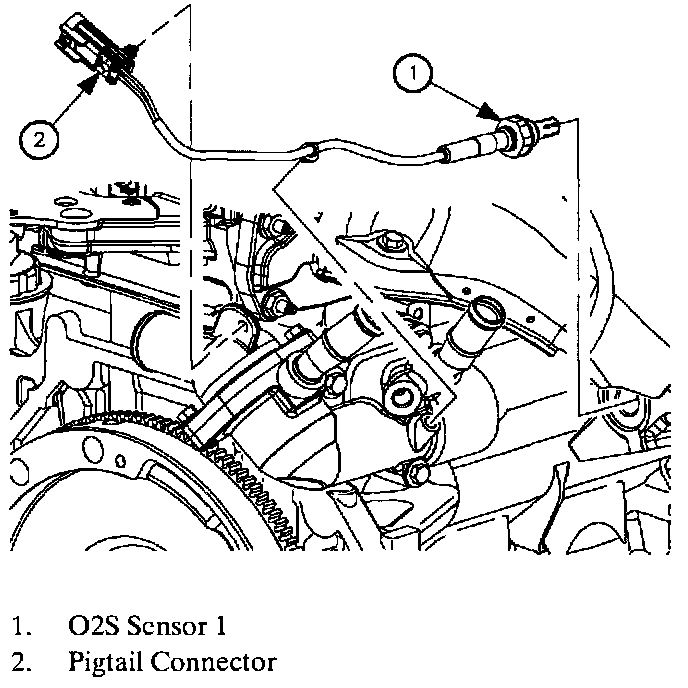
REMOVAL
NOTE: The oxygen sensor uses a permanently attached pigtail and connector. This pigtail should not be removed from the oxygen sensor. Damage or removal of the pigtail or connector could affect proper operation of the oxygen sensor.
1. Turn ignition Off.
2. Disconnect electrical connector at the oxygen sensor.
3. Use a liquid penetrate before removing sensor.
NOTE:
^ Removal of the sensor is easier if the exhaust system is warmed up slightly. Be careful that it is not too hot to work on safely. Various types of penetrating oils applied to the threads while moving the sensor back and forth will also aid in removal.
^ Do not allow penetrating oils to contact the upper (air reference) portion of the sensor. This is the area between the hex and lead wires.
4. Remove oxygen sensor.
INSTALLATION
NOTE: Silicone products will damage oxygen sensor. Use only nickle based anti-seize compound that does not contain silicone.
1. Apply anti-seize compound Saturn PIN 21485279 (or equivalent) to the threads of the oxygen sensor.
2. Install oxygen sensor in exhaust manifold.
Torque: 30 N.m (22 ft-lbs)
NOTE: Take care when handling the oxygen sensor, it should not be dropped or roughly handled. The attached pigtail and connector and the louvered end must be kept free of dirt, grease or other contaminants. Avoid using cleaning solvents of any type.
3. Connect the electrical connector at the oxygen sensor. Push until a click is heard.
Factory Service Tools
Use the Manual With the Right Hardware
Pair factory procedures with proven DIY tools so the instructions are easier to execute.
Disclosure: Verified tool recommendations may earn an affiliate commission at no cost to you.
When to See a Mechanic
Stop DIY work and contact a certified mechanic immediately if any of the following apply:
- • You smell fuel, burning insulation, or see smoke.
- • Brakes feel soft, pull hard to one side, or make grinding noises.
- • The engine overheats, stalls repeatedly, or misfires under load.
- • You are missing required tools, torque specs, or safe lifting equipment.
- • You are not confident in the next step or safety outcome.