
Safety Warning
DIY auto repair can cause serious injury, fire, or vehicle damage. These guides are for informational purposes only. Always follow OEM torque specs, wear PPE, and consult a certified mechanic if you are unsure. You are solely responsible for your safety.
2006 Mercury Mariner 4WD V6-3.0L VIN 1FACTORY OEM SERVICE PROCEDURE
Body Control Module: Service and Repair
SMART JUNCTION BOX (SJB)
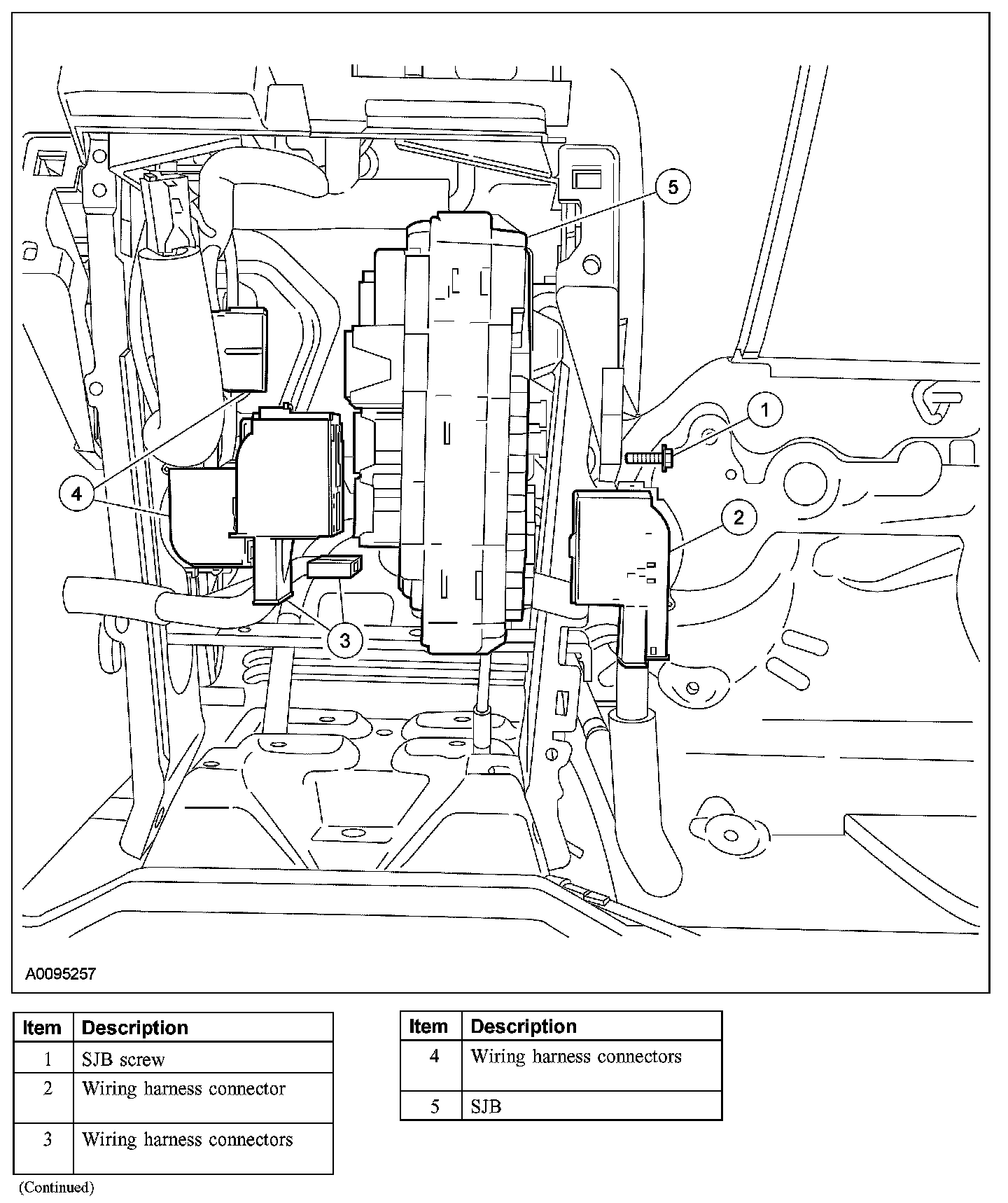
Removal
CAUTION: The steps included in the SJB removal and installation procedure are critical to restoring the SJB and tire pressure monitoring systems to normal operation. A new SJB is delivered in manufacturing mode with 6 preset diagnostic trouble codes (DTCs) related to the tire pressure monitoring system (TPMS). The presence of these DTCs requires the installation procedures be followed in order to clear the DTCs and enable normal SJB operations.
1. NOTE: Prior to removal of the SJB, it is necessary to upload module configuration information to a diagnostic tool. This information needs to be downloaded into the new module once installed.
Disconnect the battery.
2. Remove the floor console SJB cover.
3. Remove the transmission selector lever bezel from the floor console finish panel.
4. Apply the parking brake.
5. Remove the parking brake lever boot from the floor console finish panel.
6. Remove the floor console finish panel.
7. Remove the SJB screw.
8. Disconnect the electrical connectors and remove the SJB.
Installation
1. Install the SJB and connect the electrical connectors.
2. Position the SJB and install the screw
3. Install the floor console finish panel.
4. Install the parking brake lever boot into the floor console finish panel.
5. Release the parking brake.
6. Install the transmission selector lever bezel into the floor console finish panel.
7. Install the floor console SJB cover.
8. Connect the battery.
9. NOTE: When successful, this step provides the calibration necessary for the SJB operation and clears DTC B2477. The clearing of the DTC indicates the calibration data has been successfully downloaded to the SJB.
Download the SJB configuration information from the diagnostic tool to the SJB.
10. NOTE: When successful, this step clears DTCs B2868, B2869, B2870 and B2871. The clearing of these DTCs indicates the SJB has recognized the tire pressure sensors during the training procedure.
Train the tire pressure sensors.
11. Clear the DTCs.
12. NOTE: This step is required to clear DTC C2780, cause the SJB to exit the manufacturing mode, and to be sure there are no other concerns with the newly programmed SJB.
Carry out the SJB on-demand self-test.
13. Clear continuous DTCs and then check to ensure there are no additional codes present.
Removal
CAUTION: The steps included in the SJB removal and installation procedure are critical to restoring the SJB and tire pressure monitoring systems to normal operation. A new SJB is delivered in manufacturing mode with 6 preset diagnostic trouble codes (DTCs) related to the tire pressure monitoring system (TPMS). The presence of these DTCs requires the installation procedures be followed in order to clear the DTCs and enable normal SJB operations.
1. NOTE: Prior to removal of the SJB, it is necessary to upload module configuration information to a diagnostic tool. This information needs to be downloaded into the new module once installed.
Disconnect the battery.
2. Remove the floor console SJB cover.
3. Remove the transmission selector lever bezel from the floor console finish panel.
4. Apply the parking brake.
5. Remove the parking brake lever boot from the floor console finish panel.
6. Remove the floor console finish panel.
7. Remove the SJB screw.
8. Disconnect the electrical connectors and remove the SJB.
Installation
1. Install the SJB and connect the electrical connectors.
2. Position the SJB and install the screw
3. Install the floor console finish panel.
4. Install the parking brake lever boot into the floor console finish panel.
5. Release the parking brake.
6. Install the transmission selector lever bezel into the floor console finish panel.
7. Install the floor console SJB cover.
8. Connect the battery.
9. NOTE: When successful, this step provides the calibration necessary for the SJB operation and clears DTC B2477. The clearing of the DTC indicates the calibration data has been successfully downloaded to the SJB.
Download the SJB configuration information from the diagnostic tool to the SJB.
10. NOTE: When successful, this step clears DTCs B2868, B2869, B2870 and B2871. The clearing of these DTCs indicates the SJB has recognized the tire pressure sensors during the training procedure.
Train the tire pressure sensors.
11. Clear the DTCs.
12. NOTE: This step is required to clear DTC C2780, cause the SJB to exit the manufacturing mode, and to be sure there are no other concerns with the newly programmed SJB.
Carry out the SJB on-demand self-test.
13. Clear continuous DTCs and then check to ensure there are no additional codes present.
Factory Service Tools
Use the Manual With the Right Hardware
Pair factory procedures with proven DIY tools so the instructions are easier to execute.
Disclosure: Verified tool recommendations may earn an affiliate commission at no cost to you.
When to See a Mechanic
Stop DIY work and contact a certified mechanic immediately if any of the following apply:
- • You smell fuel, burning insulation, or see smoke.
- • Brakes feel soft, pull hard to one side, or make grinding noises.
- • The engine overheats, stalls repeatedly, or misfires under load.
- • You are missing required tools, torque specs, or safe lifting equipment.
- • You are not confident in the next step or safety outcome.
Rather have a pro handle this?
A certified mobile mechanic comes to your home or office. They bring the tools, you stay comfortable. No tow truck, no waiting room, no surprises.
Comes to youSame-day available12-month warranty
Get a Free QuoteNo obligation. See pricing before you book.