Safety Warning
DIY auto repair can cause serious injury, fire, or vehicle damage. These guides are for informational purposes only. Always follow OEM torque specs, wear PPE, and consult a certified mechanic if you are unsure. You are solely responsible for your safety.
SYS.OK|MANUAL.DB● LIVE
HOMESERVICE MANUALSMAZDA20126 V6-3.7LREPAIR AND DIAGNOSISPOWERTRAIN MANAGEMENTFUEL DELIVERY AND AIR INDUCTIONTESTING AND INSPECTIONAFTER SERVICE PRECAUTION
2012 Mazda 6 V6-3.7L
After Service Precaution
2012 Mazda 6 V6-3.7LSECTION After Service Precaution
AFTER SERVICE PRECAUTION [MZI 3.7 V6]
WARNING:
- Fuel line spills and leakage are dangerous. Fuel can ignite and cause serious injuries or death and damage. When installing the fuel hose, observe "Fuel Leakage Inspection" described below.
Fuel Leakage Inspection
WARNING:
- Fuel line spills and leakage are dangerous. Fuel can ignite and cause serious injuries or death and damage. Always carry out the following procedure with the engine stopped.
1. Disconnect the negative battery cable. Removal and Replacement
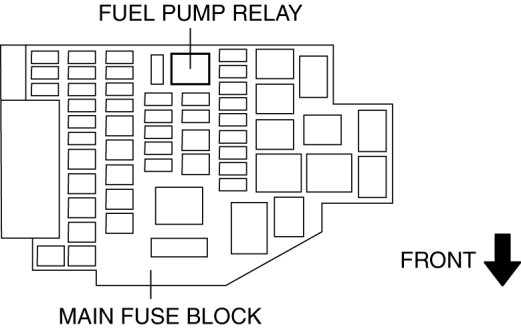
2. Remove the fuel pump relay.
CAUTION:
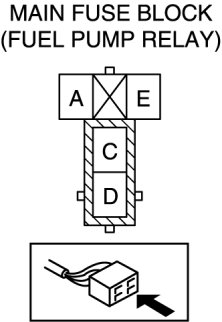
- Short the specified terminals because shorting the wrong terminal of the main fuse block may cause malfunctions.
3. Using a jumper wire, short fuel pump relay terminals C and D in the main fuse block.
4. Connect the negative battery cable and operate the fuel pump. Removal and Replacement
5. Verify that there is no fuel leakage from the pressurized parts.
Standard
- There shall be no leakage after 5 min.
6. In the case of fuel leakage, replace the following components and then do the recheck by the fuel leakage checking procedure.
- If there is leakage, replace the fuel hoses and clips.
- If there is damage on the seal on the fuel pipe side, replace the fuel pipe.
RENDER: 1.0x
NO RELATED
Recommended Tools & Savings
Use the Manual With the Right Hardware
Pair factory procedures with proven DIY tools so the instructions are easier to execute.
Affiliate disclosure: We may earn a commission at no extra cost to you.
When to See a Mechanic
Stop DIY work and contact a certified mechanic immediately if any of the following apply:
- • You smell fuel, burning insulation, or see smoke.
- • Brakes feel soft, pull hard to one side, or make grinding noises.
- • The engine overheats, stalls repeatedly, or misfires under load.
- • You are missing required tools, torque specs, or safe lifting equipment.
- • You are not confident in the next step or safety outcome.