
Safety Warning
DIY auto repair can cause serious injury, fire, or vehicle damage. These guides are for informational purposes only. Always follow OEM torque specs, wear PPE, and consult a certified mechanic if you are unsure. You are solely responsible for your safety.
2011 Kia Optima L4-2.0L TurboFACTORY OEM SERVICE PROCEDURE
Oxygen Sensor: Service and Repair
Inspection
1. Turn the ignition switch OFF.
2. Disconnect the HO2S connector.
3. Measure resistance between the HO2S terminals 4 and 5 [B1/S1].
4. Measure resistance between the HO2S terminals 3 and 4 [B1/S2].
5. Check that the resistance is within the specification.
Specification:Refer to "Specification"
Removal
1. Turn the ignition switch OFF and disconnect the battery negative (-) cable.
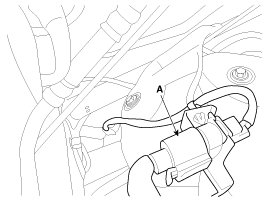
2. Disconnect the connector (A), and then remove the sensor (B).
NOTE:
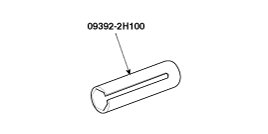
Note that the SST (Part No.: 09392-2H100) is useful when removing the heated oxygen sensor.
[Bank 1 / Sensor 1]
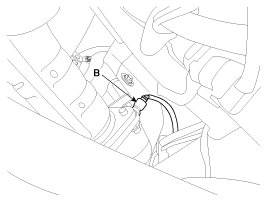
[Bank 1 / Sensor 2]

Installation
CAUTION:
- Install the component with the specified torques.
- Note that internal damage may occur when the component is dropped. If the component has been dropped, inspect before installing.
CAUTION:
- DON'T use a cleaner, spray, or grease to sensing element and connector of the sensor because oil component in them may malfunction the sensor performance.
- Sensor and its wiring may be damaged in case of contacting with the exhaust system (Exhaust Manifold, Catalytic Converter, and so on).
1. Installation is reverse of removal.
Heated oxygen sensor installation (Bank 1/ Sensor 1):
39.2 - 49.1 N.m (4.0 - 5.0 kgf.m, 28.9 - 36.2 lb-ft)
Heated oxygen sensor installation (Bank 1/ Sensor 2):
35 - 45 N.m (3.6 - 4.6 kgf.m, 25.8 - 33.2 lb-ft)
Factory Service Tools
Use the Manual With the Right Hardware
Pair factory procedures with proven DIY tools so the instructions are easier to execute.
Disclosure: Verified tool recommendations may earn an affiliate commission at no cost to you.
When to See a Mechanic
Stop DIY work and contact a certified mechanic immediately if any of the following apply:
- • You smell fuel, burning insulation, or see smoke.
- • Brakes feel soft, pull hard to one side, or make grinding noises.
- • The engine overheats, stalls repeatedly, or misfires under load.
- • You are missing required tools, torque specs, or safe lifting equipment.
- • You are not confident in the next step or safety outcome.