Safety Warning
DIY auto repair can cause serious injury, fire, or vehicle damage. These guides are for informational purposes only. Always follow OEM torque specs, wear PPE, and consult a certified mechanic if you are unsure. You are solely responsible for your safety.
SYS.OK|MANUAL.DB● LIVE
HOMESERVICE MANUALSKIA2010FORTE L4-2.4LREPAIR AND DIAGNOSISHEATING AND AIR CONDITIONINGTESTING AND INSPECTIONSYMPTOM RELATED DIAGNOSTIC PROCEDURES
2010 Kia Forte L4-2.4L
Symptom Related Diagnostic Procedures
2010 Kia Forte L4-2.4LSECTION Symptom Related Diagnostic Procedures
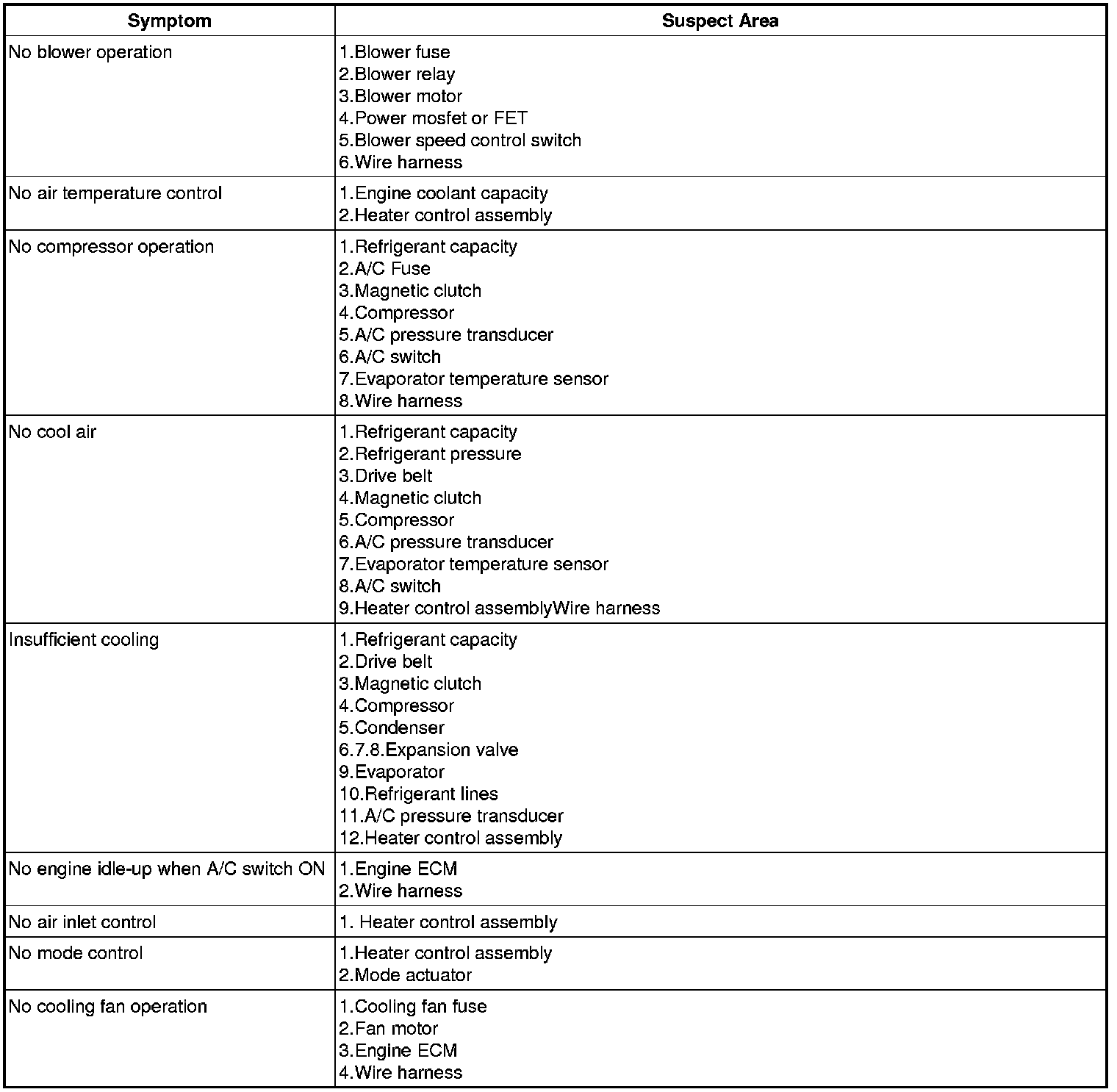
Problem symptoms table
Before replacing or repairing air conditioning components, first determine if the malfunction is due to the refrigerant charge, air flow or compressor.
Use the table below to help you find the cause of the problem. The numbers indicate the priority of the likely cause of the problem. Check each part in order. If necessary, replace these parts.
After correcting the malfunction, check the complete system to ensure that performance is satisfactory.
Standard:
RENDER: 1.0x
NO RELATED
Recommended Tools & Savings
Use the Manual With the Right Hardware
Pair factory procedures with proven DIY tools so the instructions are easier to execute.
Affiliate disclosure: We may earn a commission at no extra cost to you.
When to See a Mechanic
Stop DIY work and contact a certified mechanic immediately if any of the following apply:
- • You smell fuel, burning insulation, or see smoke.
- • Brakes feel soft, pull hard to one side, or make grinding noises.
- • The engine overheats, stalls repeatedly, or misfires under load.
- • You are missing required tools, torque specs, or safe lifting equipment.
- • You are not confident in the next step or safety outcome.