
Safety Warning
DIY auto repair can cause serious injury, fire, or vehicle damage. These guides are for informational purposes only. Always follow OEM torque specs, wear PPE, and consult a certified mechanic if you are unsure. You are solely responsible for your safety.
2009 Jeep Compass 4WD L4-2.4LFACTORY OEM SERVICE PROCEDURE
Speed Control Switch - Removal
REMOVAL
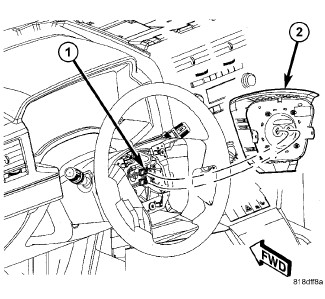
WARNING: Disconnect and isolate the battery negative (ground) cable before beginning steering wheel removal or installation. Allow the front airbag system capacitor to discharge for two minutes before removing the steering wheel or any front airbag system component. This will disable the front airbag system. Failure to disconnect the battery could result in accidental front airbag module deployment and possible personal injury.Do not place a non-deployed airbag face down on a hard surface as the airbag will propel into the air if accidentally deployed, and could result in serious or fatal injury.
1. Disconnect and isolate the negative battery cable before beginning steering wheel removal. Allow the front airbag system capacitor to discharge for two minutes before removing the steering wheel or any front airbag system component.
2. Turn off ignition.
3. Remove the driver's side airbag, Driver Air Bag - Removal.
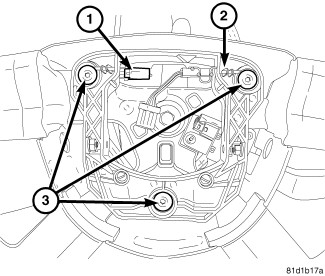
4. Disconnect electrical connector (1) from horn switch (2).
5. Remove mounting screws (3) and horn switch (2) from steering wheel.
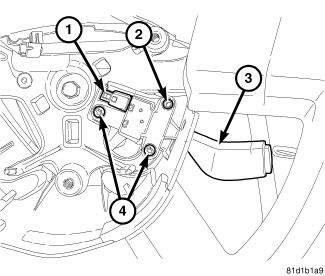
6. Disconnect electrical connector (1) from speed control switch (3).
7. Remove screws (4) from speed control switch (3).
8. Remove speed control switch (3) from steering wheel.
Factory Service Tools
Use the Manual With the Right Hardware
Pair factory procedures with proven DIY tools so the instructions are easier to execute.
Disclosure: Verified tool recommendations may earn an affiliate commission at no cost to you.
When to See a Mechanic
Stop DIY work and contact a certified mechanic immediately if any of the following apply:
- • You smell fuel, burning insulation, or see smoke.
- • Brakes feel soft, pull hard to one side, or make grinding noises.
- • The engine overheats, stalls repeatedly, or misfires under load.
- • You are missing required tools, torque specs, or safe lifting equipment.
- • You are not confident in the next step or safety outcome.