
Safety Warning
DIY auto repair can cause serious injury, fire, or vehicle damage. These guides are for informational purposes only. Always follow OEM torque specs, wear PPE, and consult a certified mechanic if you are unsure. You are solely responsible for your safety.
2009 Hyundai Azera V6-3.8LFACTORY OEM SERVICE PROCEDURE
Programming and Relearning
VIN Programming Procedure
VIN (Vehicle Identification Number) is a number that has the vehicle's information (Maker, Vehicle Type, Vehicle Line/Series, Body Type, Engine Type, Transmission Type, Model Year, Plant Location and so forth. When replacing a PCM, the VIN must be programmed in the PCM. If there is no VIN in PCM memory, the fault code (DTC P0630) is set.
CAUTION:
The programmed VIN cannot be changed. When writing the VIN, confirm the VIN carefully
1. Select "Vehicle" and "Engine" (For example, TUCSON 2.0L L4).

2. Select "VIN WRITING".
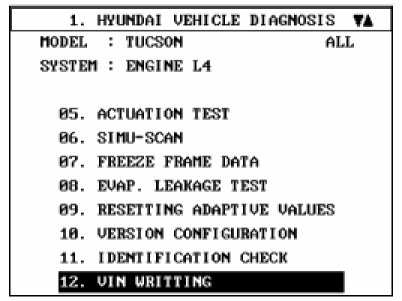
3. Check the PCM status.

NOTE:
- VIRGIN: VIN is not programmed
- LEARNT: VIN has been already programmed
Is the PCM status "VIRGIN"?
YES
> Go to next step 4.
NO
> END
4. Write the VIN with cursor, function and number keys.
WARNING:
Before pressing the "ENTER" key, confirm the VIN again because the programmed VIN cannot be changed.
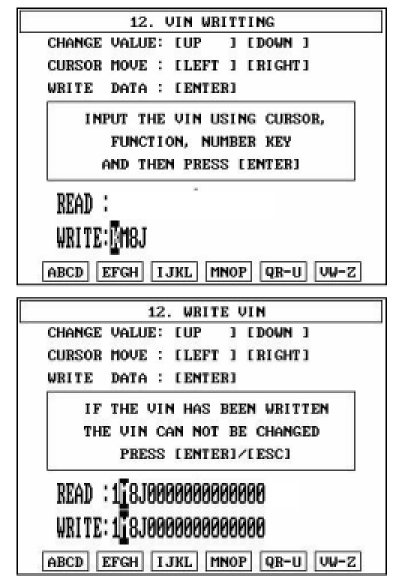
5. After verifying the written VIN, press the "ENTER" key.
6. Turn the ignition switch OFF, and then turn ON.
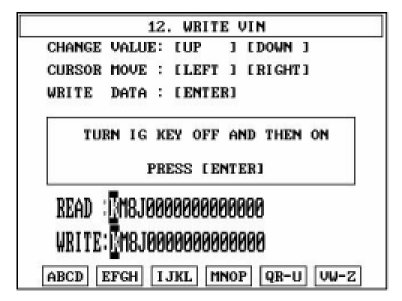
7. Verify the programmed VIN in the PCM memory.
Factory Service Tools
Use the Manual With the Right Hardware
Pair factory procedures with proven DIY tools so the instructions are easier to execute.
Disclosure: Verified tool recommendations may earn an affiliate commission at no cost to you.
When to See a Mechanic
Stop DIY work and contact a certified mechanic immediately if any of the following apply:
- • You smell fuel, burning insulation, or see smoke.
- • Brakes feel soft, pull hard to one side, or make grinding noises.
- • The engine overheats, stalls repeatedly, or misfires under load.
- • You are missing required tools, torque specs, or safe lifting equipment.
- • You are not confident in the next step or safety outcome.