
Safety Warning
DIY auto repair can cause serious injury, fire, or vehicle damage. These guides are for informational purposes only. Always follow OEM torque specs, wear PPE, and consult a certified mechanic if you are unsure. You are solely responsible for your safety.
2004 Honda S2000 L4-2.2LFACTORY OEM SERVICE PROCEDURE
Coolant: Service and Repair
Replacement
1. Set the heater temperature control dial to maximum heat.
2. Remove the radiator cap.

3. Loosen the drain plug (A), and drain the coolant.
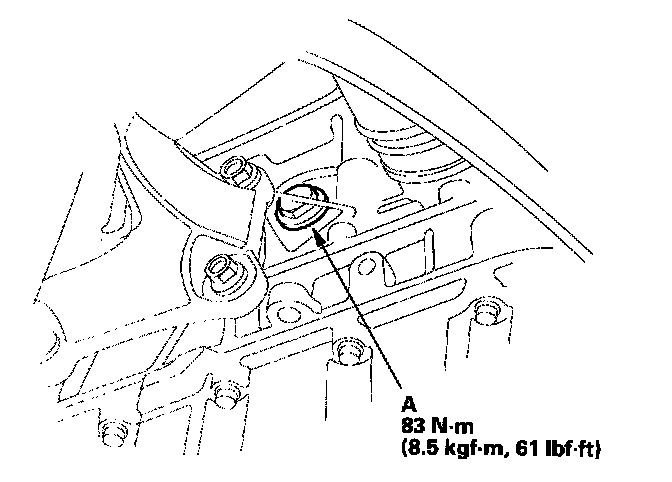
4. Remove the drain bolt (A) from the right side of the cylinder block.
5. After the coolant has drained, apply liquid gasket to the drain bolt threads, then reinstall the bolt with a new washer and tighten it securely.
6. Tighten the radiator drain plug securely.
7. Remove, drain and reinstall the reservoir. Fill the reservoir halfway to the MAX mark with water, then up to the MAX mark with antifreeze.
8. Mix the recommended antifreeze with an equal amount of water in a clean container.
NOTE:
- Always use Genuine Honda Antifreeze/Coolant. Using a non-Honda coolant can result in corrosion, causing the cooling system to malfunction or fail.
- For best corrosion protection, the coolant concentration must be maintained year-round at 50% minimum. Coolant concentrations less than 50% may not provide sufficient protection against corrosion or freezing. Coolant concentrations greater than 60% will impair cooling efficiency and are not recommended.
- Do not use additional rust inhibitors or anti-rust products; they may not be compatible with the coolant.
Engine Coolant Refill Capacity [including reservoir capacity of 0.6 L (0.6 US qt. 0.5 Imp qt.)]: 6.5 L (6.9 US qt. 5.7 Imp qt.)
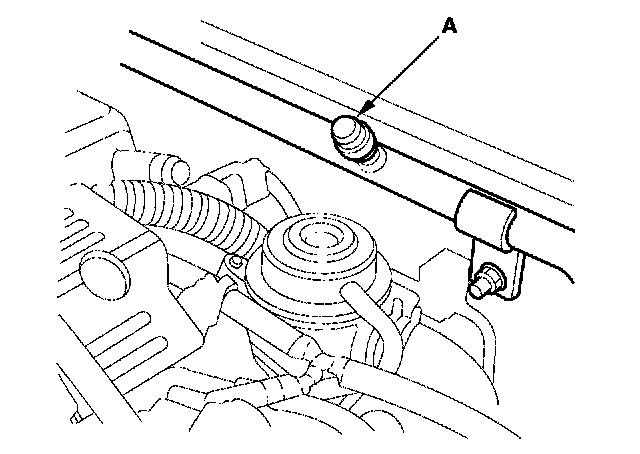
9. Remove the bleed cap (A) from the heater bypass tube.
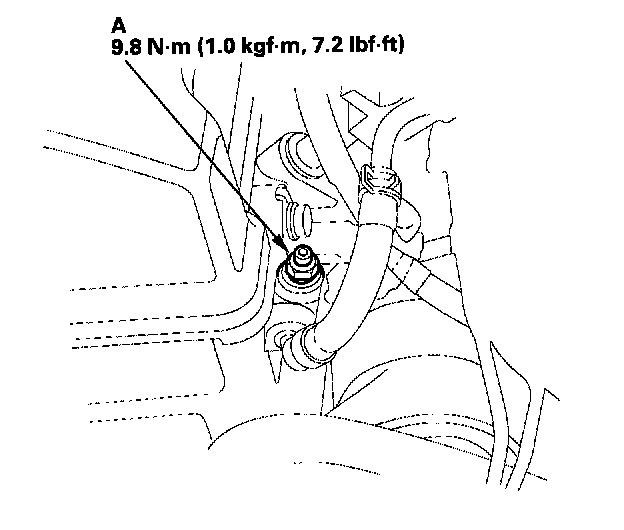
10. Loosen the air bleed bolt (A) in the intake manifold.
11. Pour coolant into the radiator to the bottom of the filler neck. Do not let coolant spill on any electrical parts or the paint. If any coolant spills, rinse it off immediately.
12. Tighten the bleed bolt as soon as coolant starts to run out in a steady stream.
13. Install the bleed cap as soon as coolant starts to run out in a steady stream.
14. With the radiator cap off, start the engine and let it run until warmed up (radiator fan comes on at least twice). Then, if necessary, add more coolant mix to bring the level back up to the bottom of the filler neck.
15. Put the radiator cap on tightly, then run the engine again and check for leaks.
1. Set the heater temperature control dial to maximum heat.
2. Remove the radiator cap.
3. Loosen the drain plug (A), and drain the coolant.
4. Remove the drain bolt (A) from the right side of the cylinder block.
5. After the coolant has drained, apply liquid gasket to the drain bolt threads, then reinstall the bolt with a new washer and tighten it securely.
6. Tighten the radiator drain plug securely.
7. Remove, drain and reinstall the reservoir. Fill the reservoir halfway to the MAX mark with water, then up to the MAX mark with antifreeze.
8. Mix the recommended antifreeze with an equal amount of water in a clean container.
NOTE:
- Always use Genuine Honda Antifreeze/Coolant. Using a non-Honda coolant can result in corrosion, causing the cooling system to malfunction or fail.
- For best corrosion protection, the coolant concentration must be maintained year-round at 50% minimum. Coolant concentrations less than 50% may not provide sufficient protection against corrosion or freezing. Coolant concentrations greater than 60% will impair cooling efficiency and are not recommended.
- Do not use additional rust inhibitors or anti-rust products; they may not be compatible with the coolant.
Engine Coolant Refill Capacity [including reservoir capacity of 0.6 L (0.6 US qt. 0.5 Imp qt.)]: 6.5 L (6.9 US qt. 5.7 Imp qt.)
9. Remove the bleed cap (A) from the heater bypass tube.
10. Loosen the air bleed bolt (A) in the intake manifold.
11. Pour coolant into the radiator to the bottom of the filler neck. Do not let coolant spill on any electrical parts or the paint. If any coolant spills, rinse it off immediately.
12. Tighten the bleed bolt as soon as coolant starts to run out in a steady stream.
13. Install the bleed cap as soon as coolant starts to run out in a steady stream.
14. With the radiator cap off, start the engine and let it run until warmed up (radiator fan comes on at least twice). Then, if necessary, add more coolant mix to bring the level back up to the bottom of the filler neck.
15. Put the radiator cap on tightly, then run the engine again and check for leaks.
Factory Service Tools
Use the Manual With the Right Hardware
Pair factory procedures with proven DIY tools so the instructions are easier to execute.
Disclosure: Verified tool recommendations may earn an affiliate commission at no cost to you.
When to See a Mechanic
Stop DIY work and contact a certified mechanic immediately if any of the following apply:
- • You smell fuel, burning insulation, or see smoke.
- • Brakes feel soft, pull hard to one side, or make grinding noises.
- • The engine overheats, stalls repeatedly, or misfires under load.
- • You are missing required tools, torque specs, or safe lifting equipment.
- • You are not confident in the next step or safety outcome.
Rather have a pro handle this?
A certified mobile mechanic comes to your home or office. They bring the tools, you stay comfortable. No tow truck, no waiting room, no surprises.
Comes to youSame-day available12-month warranty
Get a Free QuoteNo obligation. See pricing before you book.