
Safety Warning
DIY auto repair can cause serious injury, fire, or vehicle damage. These guides are for informational purposes only. Always follow OEM torque specs, wear PPE, and consult a certified mechanic if you are unsure. You are solely responsible for your safety.
2004 Honda S2000 L4-2.2LFACTORY OEM SERVICE PROCEDURE
Brake Bleeding: Service and Repair
Brake System Bleeding
NOTE:
^ Do not reuse the drained fluid.
^ Always use Honda DOT 3 Brake Fluid from an unopened container. Using a non-Honda brake fluid can cause corrosion and shorten the life of the system.
^ Make sure no dirt or other foreign matter is allowed to contaminate the brake fluid.
^ Do not spill brake fluid on the vehicle; it may damage the paint; if brake fluid does contact the paint, wash it off immediately with water.
^ The reservoir on the master cylinder must be at the MAX (upper) level mark at the start of the bleeding procedure and checked after bleeding each brake caliper. Add fluid as required.

1. Make sure the brake fluid level in the reservoir is at the MAX (upper) level line (A).
2. Attach a piece of clear plastic hose over the first bleed screw, and submerge the other end into a container of new brake fluid.
3. Have someone slowly pump the brake pedal several times, then apply steady pressure.
4. Starting at the left-front, loosen the brake bleed screw to allow air to escape from the system. Then tighten the bleed screw securely.

4. Repeat the procedure for each wheel in the sequence shown following until air bubbles no longer appear in the fluid.
5. Refill the master cylinder reservoir to the MAX (upper) level line.
Pressure Bleeding
Install the appropriate power probe pressure bleeder adapter onto the master cylinder.
Use the bleeding sequence above, and follow the bleeding instructions that come with your pressure bleeder.

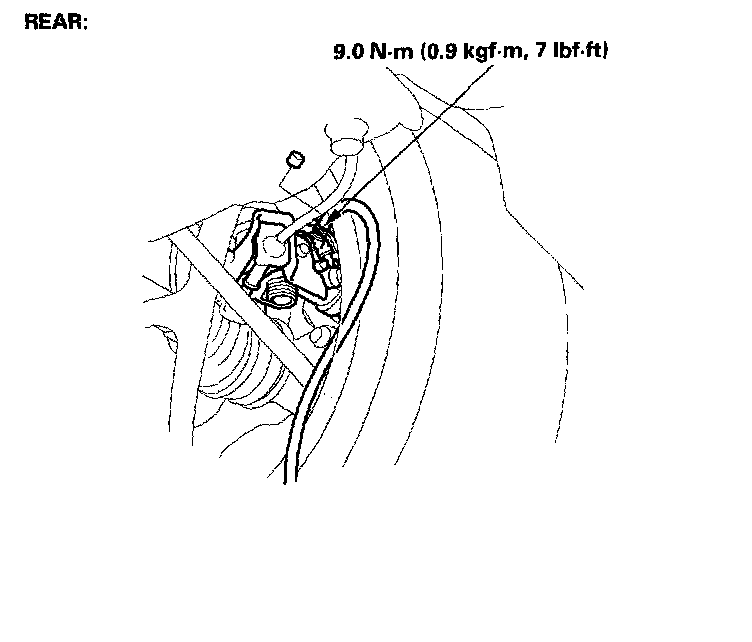
Bleed Screw Locations
NOTE:
^ Do not reuse the drained fluid.
^ Always use Honda DOT 3 Brake Fluid from an unopened container. Using a non-Honda brake fluid can cause corrosion and shorten the life of the system.
^ Make sure no dirt or other foreign matter is allowed to contaminate the brake fluid.
^ Do not spill brake fluid on the vehicle; it may damage the paint; if brake fluid does contact the paint, wash it off immediately with water.
^ The reservoir on the master cylinder must be at the MAX (upper) level mark at the start of the bleeding procedure and checked after bleeding each brake caliper. Add fluid as required.
1. Make sure the brake fluid level in the reservoir is at the MAX (upper) level line (A).
2. Attach a piece of clear plastic hose over the first bleed screw, and submerge the other end into a container of new brake fluid.
3. Have someone slowly pump the brake pedal several times, then apply steady pressure.
4. Starting at the left-front, loosen the brake bleed screw to allow air to escape from the system. Then tighten the bleed screw securely.
4. Repeat the procedure for each wheel in the sequence shown following until air bubbles no longer appear in the fluid.
5. Refill the master cylinder reservoir to the MAX (upper) level line.
Pressure Bleeding
Install the appropriate power probe pressure bleeder adapter onto the master cylinder.
Use the bleeding sequence above, and follow the bleeding instructions that come with your pressure bleeder.
Bleed Screw Locations
Factory Service Tools
Use the Manual With the Right Hardware
Pair factory procedures with proven DIY tools so the instructions are easier to execute.
Disclosure: Verified tool recommendations may earn an affiliate commission at no cost to you.
When to See a Mechanic
Stop DIY work and contact a certified mechanic immediately if any of the following apply:
- • You smell fuel, burning insulation, or see smoke.
- • Brakes feel soft, pull hard to one side, or make grinding noises.
- • The engine overheats, stalls repeatedly, or misfires under load.
- • You are missing required tools, torque specs, or safe lifting equipment.
- • You are not confident in the next step or safety outcome.
Rather have a pro handle this?
A certified mobile mechanic comes to your home or office. They bring the tools, you stay comfortable. No tow truck, no waiting room, no surprises.
Comes to youSame-day available12-month warranty
Get a Free QuoteNo obligation. See pricing before you book.