
Safety Warning
DIY auto repair can cause serious injury, fire, or vehicle damage. These guides are for informational purposes only. Always follow OEM torque specs, wear PPE, and consult a certified mechanic if you are unsure. You are solely responsible for your safety.
2004 Honda S2000 L4-2.2LFACTORY OEM SERVICE PROCEDURE
Body and Frame: Service Precautions
Supplemental Restraint System (SRS)
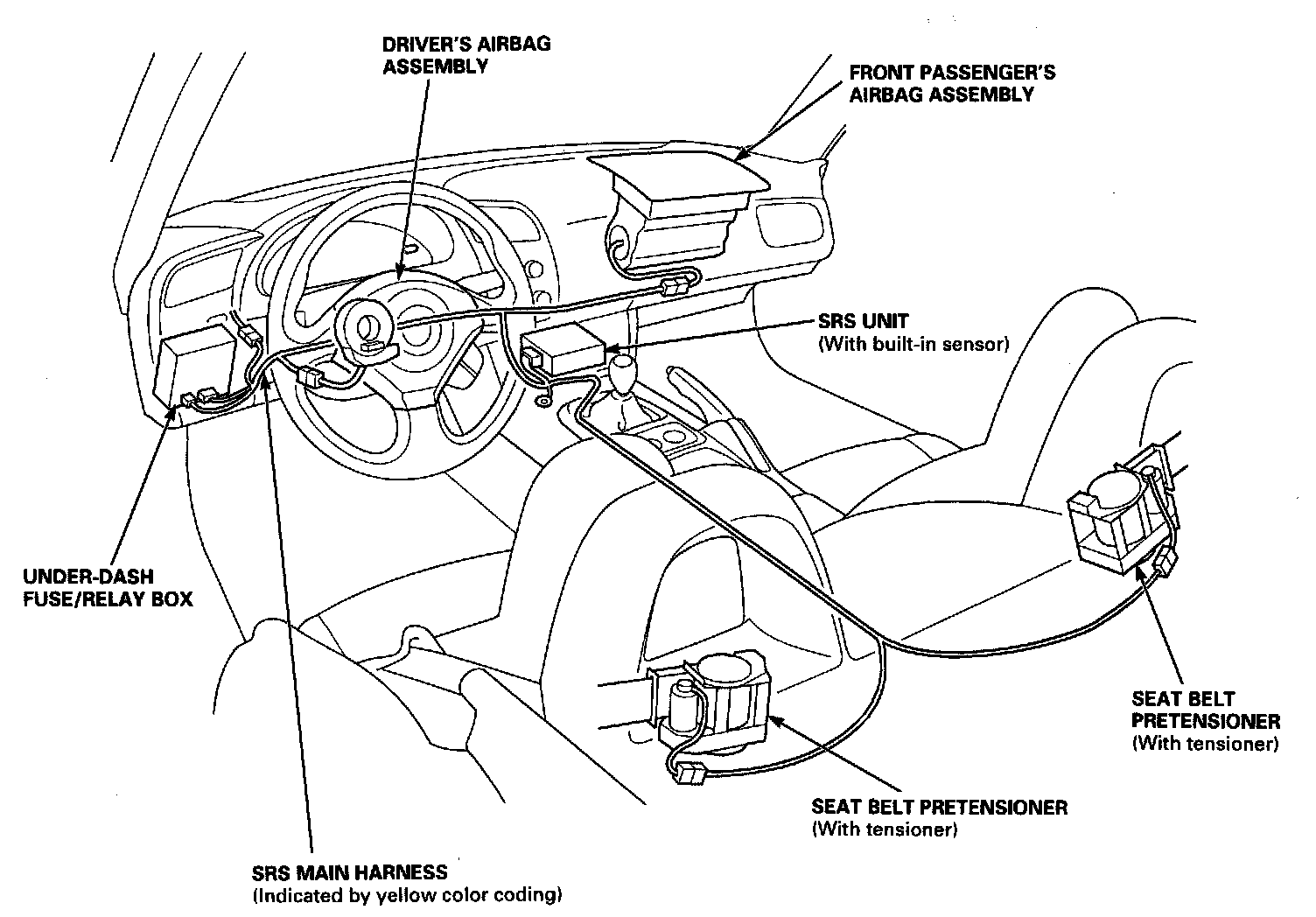
This model has an SRS which include a driver's airbag located in the steering wheel hub, a passengers airbag located in the dash-board above the glove box, and seat belt tensioners located in the seat belt retractors. The SRS unit is separate from the part of the airbag assembly and has built-in sensors.
NOTE: The following precautions should be observed when performing sheet metal work, paint work, and repair work around the locations of the SRS components.
1. The SRS unit (including safing sensor and impact sensor) is located under the dashboard. Avoid any strong impact with a hammer or other tools when repairing the front side frame and the lower part of the dashboard. Do not apply heat to these areas with a torch, etc.
2. Take extra care when painting or doing body work in the area below the center pillar. Avoid direct exposure of the seat belt retractor with tensioner to heat guns, welding, or spraying equipment.
3. All SRS electrical wiring harnesses are located under the lower part of the dashboard below the dashboard panel. (All SRS electrical wiring harnesses are indicated by yellow color coding.) Care should be taken not to damage the harness when repairing this area.
4. Do not apply heat of more than 212 degrees F (100 degrees C) when drying painted surfaces anywhere around the locations of SRS components.
5. If strong impact or high temperature needs to be applied to the areas around the locations of SRS components, remove the components before performing the repair work.
6. If any of the SRS related components are damaged or deformed, be sure to replace them.
NOTE: Refer to the Restraints systems for removal and replacement of SRS related components.
This model has an SRS which include a driver's airbag located in the steering wheel hub, a passengers airbag located in the dash-board above the glove box, and seat belt tensioners located in the seat belt retractors. The SRS unit is separate from the part of the airbag assembly and has built-in sensors.
NOTE: The following precautions should be observed when performing sheet metal work, paint work, and repair work around the locations of the SRS components.
1. The SRS unit (including safing sensor and impact sensor) is located under the dashboard. Avoid any strong impact with a hammer or other tools when repairing the front side frame and the lower part of the dashboard. Do not apply heat to these areas with a torch, etc.
2. Take extra care when painting or doing body work in the area below the center pillar. Avoid direct exposure of the seat belt retractor with tensioner to heat guns, welding, or spraying equipment.
3. All SRS electrical wiring harnesses are located under the lower part of the dashboard below the dashboard panel. (All SRS electrical wiring harnesses are indicated by yellow color coding.) Care should be taken not to damage the harness when repairing this area.
4. Do not apply heat of more than 212 degrees F (100 degrees C) when drying painted surfaces anywhere around the locations of SRS components.
5. If strong impact or high temperature needs to be applied to the areas around the locations of SRS components, remove the components before performing the repair work.
6. If any of the SRS related components are damaged or deformed, be sure to replace them.
NOTE: Refer to the Restraints systems for removal and replacement of SRS related components.
Factory Service Tools
Use the Manual With the Right Hardware
Pair factory procedures with proven DIY tools so the instructions are easier to execute.
Disclosure: Verified tool recommendations may earn an affiliate commission at no cost to you.
When to See a Mechanic
Stop DIY work and contact a certified mechanic immediately if any of the following apply:
- • You smell fuel, burning insulation, or see smoke.
- • Brakes feel soft, pull hard to one side, or make grinding noises.
- • The engine overheats, stalls repeatedly, or misfires under load.
- • You are missing required tools, torque specs, or safe lifting equipment.
- • You are not confident in the next step or safety outcome.