
Safety Warning
DIY auto repair can cause serious injury, fire, or vehicle damage. These guides are for informational purposes only. Always follow OEM torque specs, wear PPE, and consult a certified mechanic if you are unsure. You are solely responsible for your safety.
2008 Ford Escape 2WD V6-3.0LFACTORY OEM SERVICE PROCEDURE
System Specifications
Cylinder Head Bolts
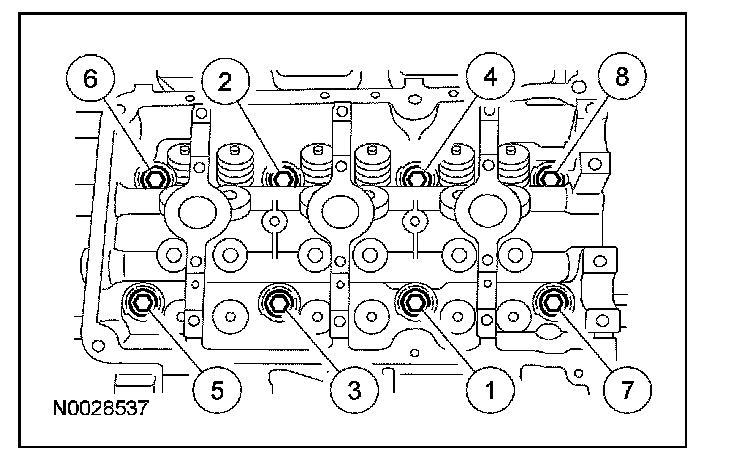
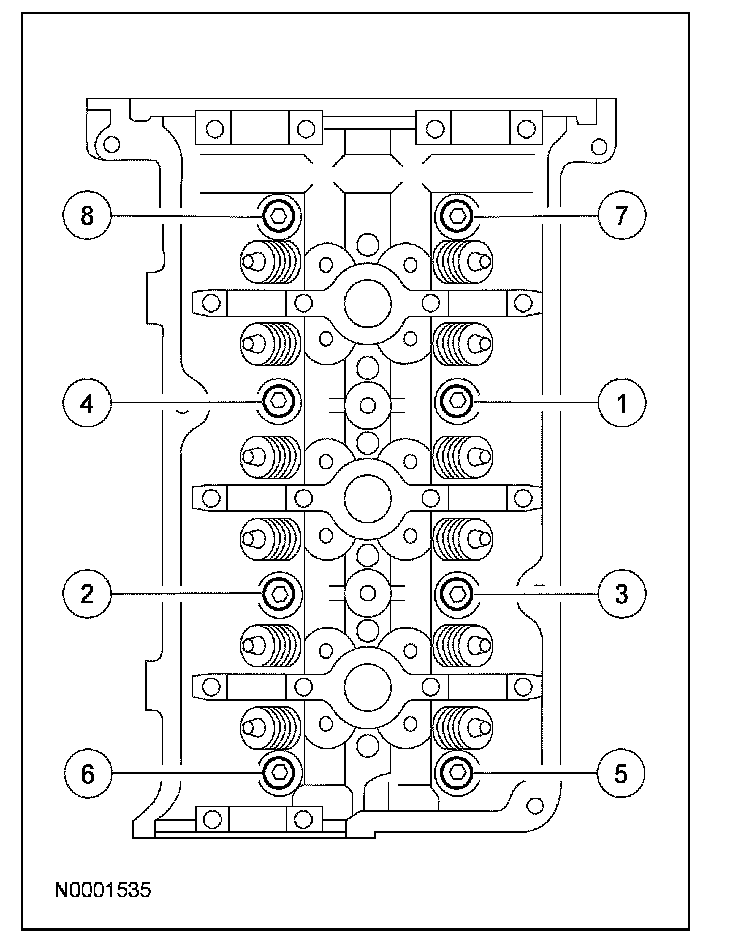
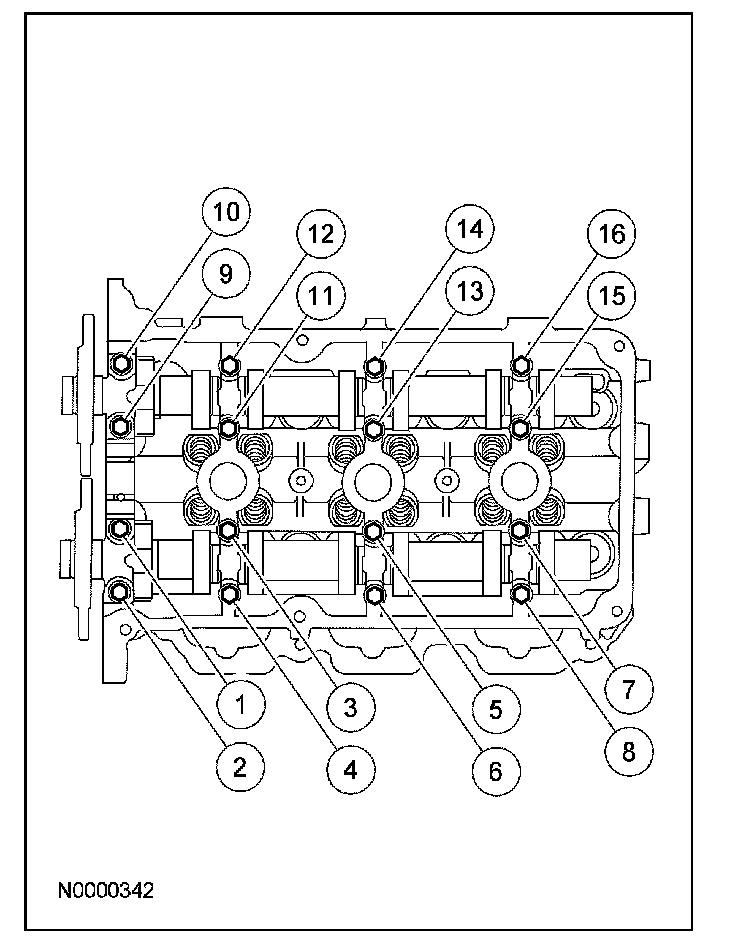
New cylinder head bolts must be installed. They are torque-to-yield designed and cannot be reused.
First pass 40 Nm (30 lb-ft).
Second pass Tighten bolts 90°
Third pass Loosen one full turn
Fourth pass 40 Nm (30 lb-ft).
Fifth pass Tighten 90°
Final pass Tighten 90°
The cylinder head must not have depressions deeper than 0.0254 mm (0.001 in) across a 38.1 mm (1.5 in) square area, or scratches more than 0.0254 mm (0.001 in).
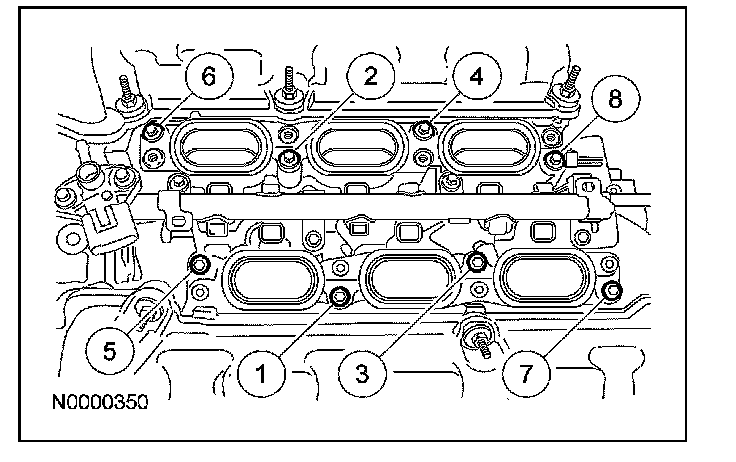
Lower Intake Manifold Bolts 10 Nm (89 lb-in).
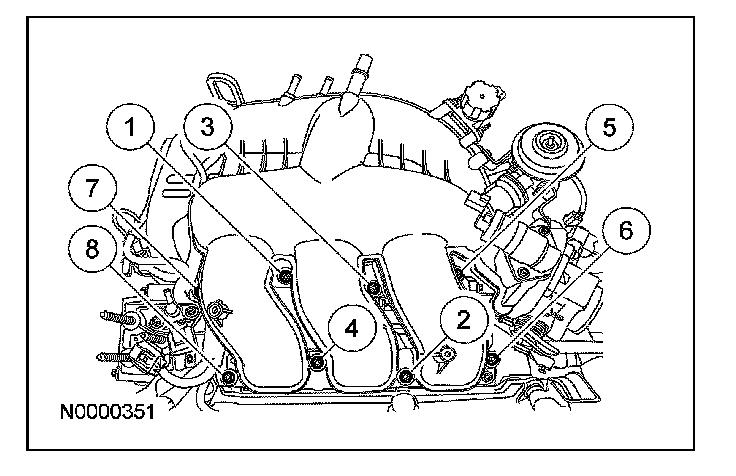
Upper Intake Manifold Bolts 10 Nm (89 lb-in).
Camshaft Bearing Cap Bolts 10 Nm (89 lb-in).
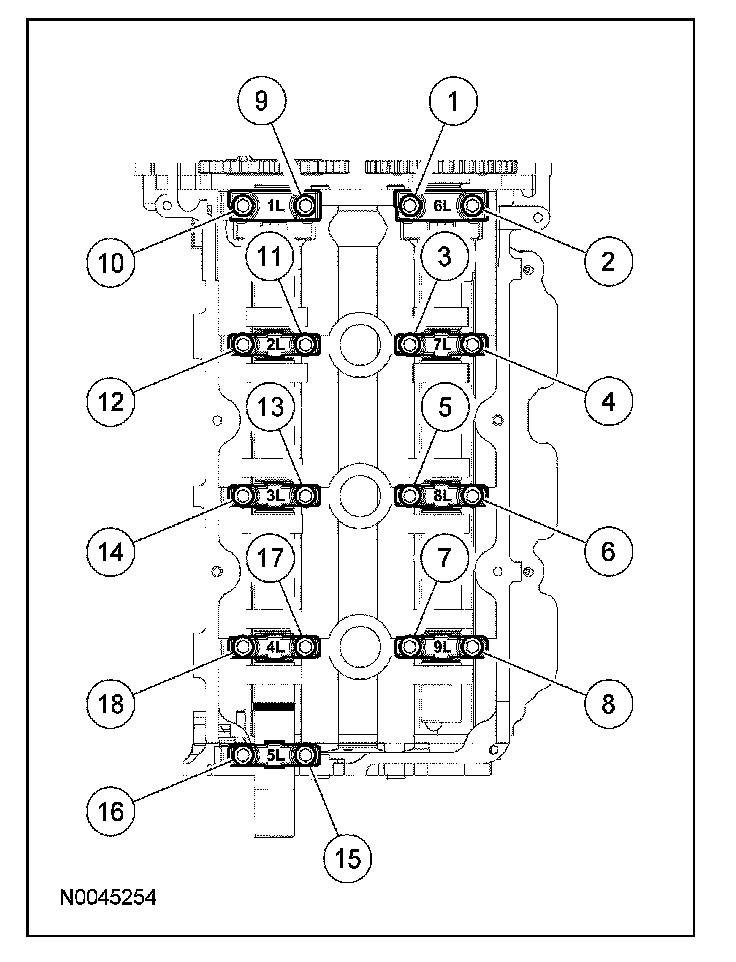
Exhaust Manifold Studs 11 Nm (8 lb-ft).
Discard the studs.
Exhaust Manifold Nuts
Discard the nuts.
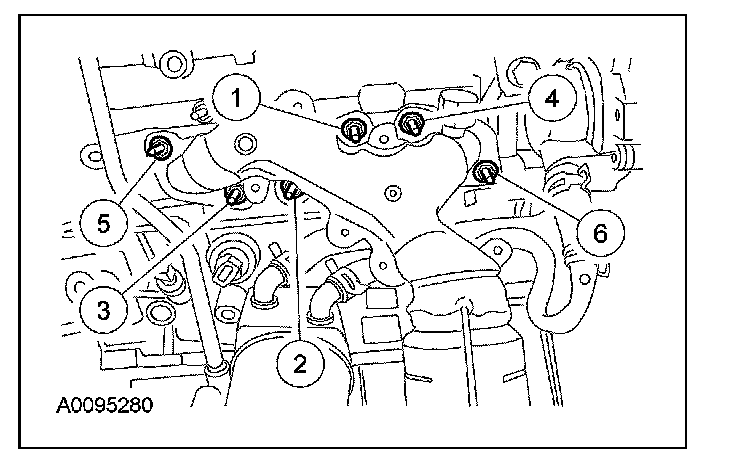
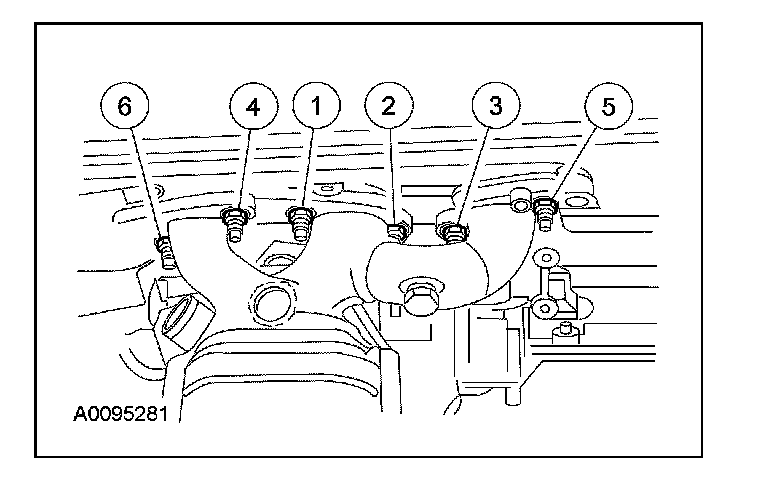
First pass 25 Nm (18 lb-ft).
Final pass 25 Nm (18 lb-ft).
New cylinder head bolts must be installed. They are torque-to-yield designed and cannot be reused.
First pass 40 Nm (30 lb-ft).
Second pass Tighten bolts 90°
Third pass Loosen one full turn
Fourth pass 40 Nm (30 lb-ft).
Fifth pass Tighten 90°
Final pass Tighten 90°
The cylinder head must not have depressions deeper than 0.0254 mm (0.001 in) across a 38.1 mm (1.5 in) square area, or scratches more than 0.0254 mm (0.001 in).
Lower Intake Manifold Bolts 10 Nm (89 lb-in).
Upper Intake Manifold Bolts 10 Nm (89 lb-in).
Camshaft Bearing Cap Bolts 10 Nm (89 lb-in).
Exhaust Manifold Studs 11 Nm (8 lb-ft).
Discard the studs.
Exhaust Manifold Nuts
Discard the nuts.
First pass 25 Nm (18 lb-ft).
Final pass 25 Nm (18 lb-ft).
Factory Service Tools
Use the Manual With the Right Hardware
Pair factory procedures with proven DIY tools so the instructions are easier to execute.
Disclosure: Verified tool recommendations may earn an affiliate commission at no cost to you.
When to See a Mechanic
Stop DIY work and contact a certified mechanic immediately if any of the following apply:
- • You smell fuel, burning insulation, or see smoke.
- • Brakes feel soft, pull hard to one side, or make grinding noises.
- • The engine overheats, stalls repeatedly, or misfires under load.
- • You are missing required tools, torque specs, or safe lifting equipment.
- • You are not confident in the next step or safety outcome.