
Safety Warning
DIY auto repair can cause serious injury, fire, or vehicle damage. These guides are for informational purposes only. Always follow OEM torque specs, wear PPE, and consult a certified mechanic if you are unsure. You are solely responsible for your safety.
2009 Chrysler 300 V6-2.7LFACTORY OEM SERVICE PROCEDURE
Totally Integrated Power Module (TIPM) - Installation
INSTALLATION
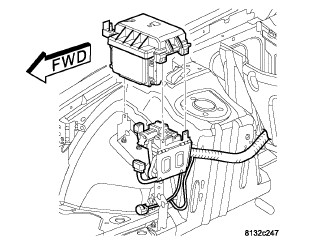
CAUTION: The original Cab Compartment Node (CCN) and Powertrain Control Module (PCM) must be installed and functioning properly prior to powering up the new Totally Integrated Power Module (TIPM). The TIPM receives vehicle configuration data from the CCN and Vehicle Identification Number information from the PCM. If configuration information becomes lost or corrupted, the data can be obtained from DealerCONNECT
NOTE: A battery reconnect procedure must be performed anytime the battery has been disconnected. Battery Reconnection .
1. Position Totally Integrated Power Module (TIPM) to vehicle. Engage the three retaining clips.
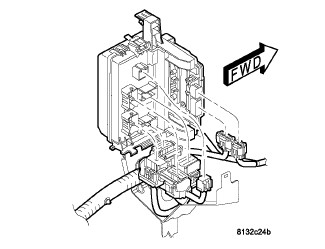
2. Disengage the outboard retaining clip and rotate the TIPM to access wire harness connectors.
3. Connect electrical harness connectors to TIPM.
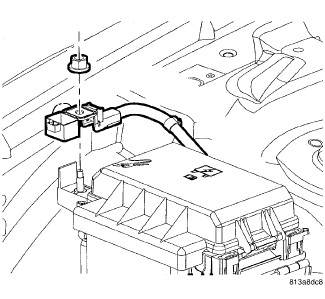
4. Connect battery cable to TIPM. Tighten the nut to 20 - 28 Nm (15 - 21 ft. lbs.).
5. Close the battery cable nut cover.
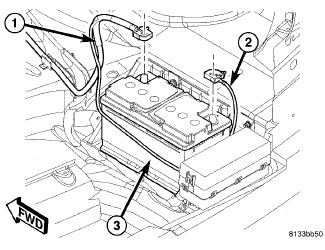
6. Connect negative battery cable (2).
7. Insert the ignition key and turn it to the RUNposition and wait twenty seconds. The TIPM will collect the necessary vehicle configuration and VIN data from the CCN and PCM at this time. After twenty seconds turn the ignition key to the OFFposition and then back to the ONposition and verify proper vehicle systems operation.
Factory Service Tools
Use the Manual With the Right Hardware
Pair factory procedures with proven DIY tools so the instructions are easier to execute.
Disclosure: Verified tool recommendations may earn an affiliate commission at no cost to you.
When to See a Mechanic
Stop DIY work and contact a certified mechanic immediately if any of the following apply:
- • You smell fuel, burning insulation, or see smoke.
- • Brakes feel soft, pull hard to one side, or make grinding noises.
- • The engine overheats, stalls repeatedly, or misfires under load.
- • You are missing required tools, torque specs, or safe lifting equipment.
- • You are not confident in the next step or safety outcome.