
Safety Warning
DIY auto repair can cause serious injury, fire, or vehicle damage. These guides are for informational purposes only. Always follow OEM torque specs, wear PPE, and consult a certified mechanic if you are unsure. You are solely responsible for your safety.
2008 Chrysler PT Cruiser L4-2.4LFACTORY OEM SERVICE PROCEDURE
Description
DESCRIPTION
When a PCM and the SKREEM are replaced at the same time, perform the following steps in order:
1. Program the new PCM.
2. Program the new SKREEM.
3. Replace all ignition keys and program them to the new SKREEM.Programming the Sentry Key Remote Entry Module (SKREEM)
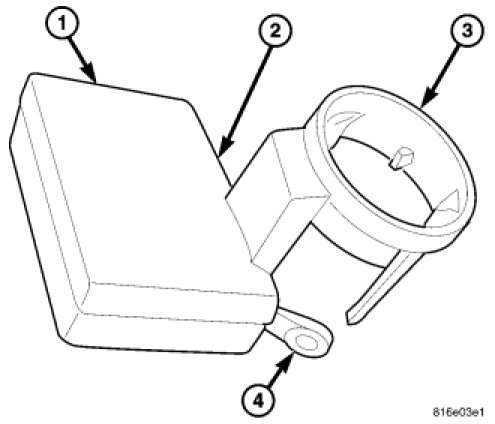
The Sentry Key REmote Entry Module (SKREEM) is sometimes referred to as the Wireless Control Module (WCM). The SKREEM/WCM is the primary component of the Sentry Key Immobilizer System (SKIS). It is also the receiver for the Remote Keyless Entry (RKE) system. The SKREEM/WCM is located on the steering column, around the ignition lock cylinder housing and is concealed beneath the steering column shrouds. The molded black plastic housing for the SKREEM/WCM has an integral molded plastic halo-like antenna ring (3) that extends from one side. When the SKREEM/WCM is properly installed, the antenna ring is oriented around the ignition lock cylinder housing.
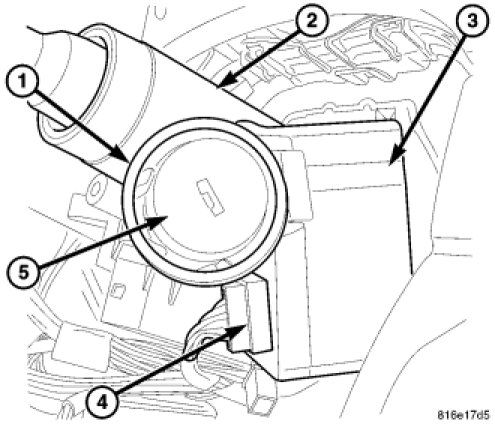
A single connector (1) is located next to the antenna ring on the SKREEM/WCM housing. A molded plastic mounting tab (2) on the SKREEM/WCM housing secures the unit to the steering column. The SKREEM/WCM is connected to the vehicle electrical system through the instrument panel wire harness.
The SKREEM/WCM cannot be adjusted or repaired. If faulty or damaged, the entire SKREEM unit must be replaced.
Factory Service Tools
Use the Manual With the Right Hardware
Pair factory procedures with proven DIY tools so the instructions are easier to execute.
Disclosure: Verified tool recommendations may earn an affiliate commission at no cost to you.
When to See a Mechanic
Stop DIY work and contact a certified mechanic immediately if any of the following apply:
- • You smell fuel, burning insulation, or see smoke.
- • Brakes feel soft, pull hard to one side, or make grinding noises.
- • The engine overheats, stalls repeatedly, or misfires under load.
- • You are missing required tools, torque specs, or safe lifting equipment.
- • You are not confident in the next step or safety outcome.