
Safety Warning
DIY auto repair can cause serious injury, fire, or vehicle damage. These guides are for informational purposes only. Always follow OEM torque specs, wear PPE, and consult a certified mechanic if you are unsure. You are solely responsible for your safety.
2003 Chevrolet Express 1/2 Ton Van V6-4.3L VIN XFACTORY OEM SERVICE PROCEDURE
Battery: Description and Operation
CAUTION: Batteries produce explosive gases, contain corrosive acid, and supply levels of electrical current high enough to cause burns. Therefore, to reduce the risk of personal injury when working near a battery:
- Always shield your eyes and avoid leaning over the battery whenever possible.
- Do not expose the battery to open flames or sparks.
- Do not allow the battery electrolyte to contact the eyes or the skin. Flush immediately and thoroughly any contacted areas with water and get medical help.
- Follow each step of the jump starting procedure in order.
- Treat both the booster and the discharged batteries carefully when using the jumper cables.
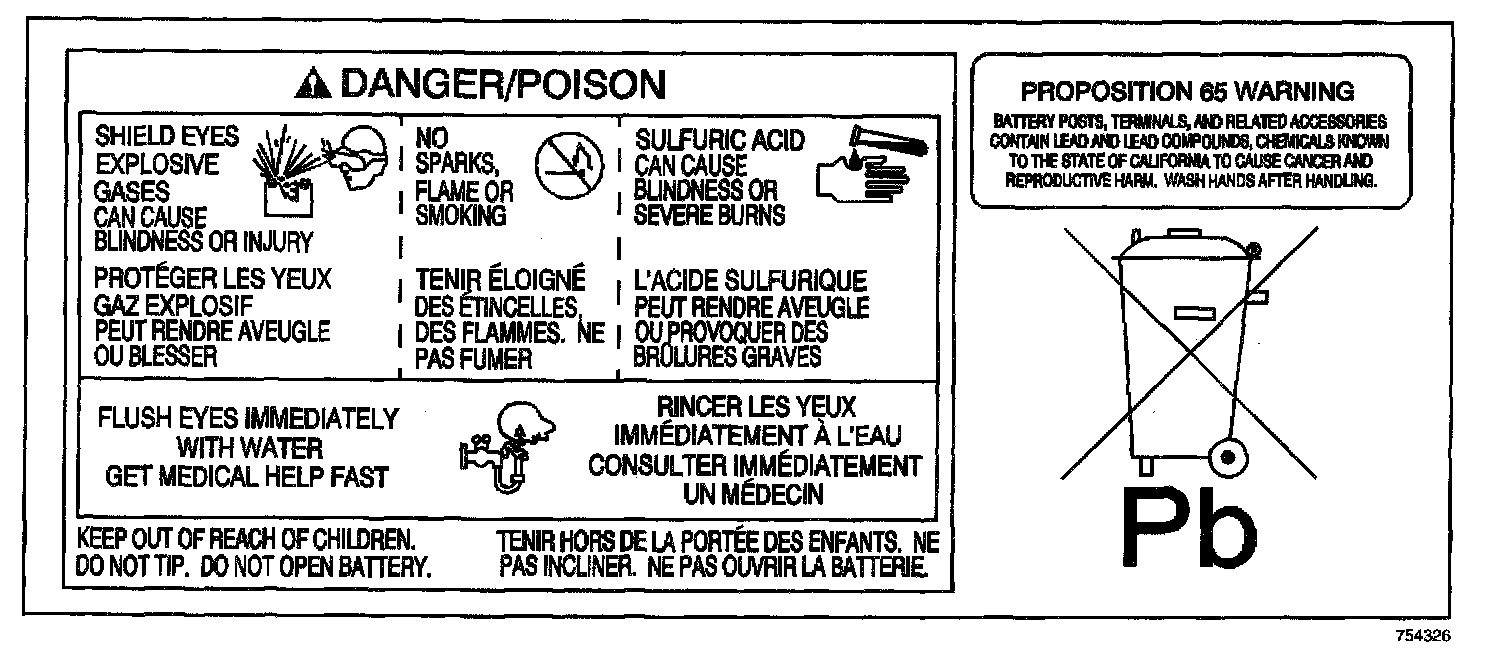
The maintenance free battery is standard. There are no vent plugs in the cover. The battery is completely sealed except for 2 small vent holes in the side. These vent holes allow the small amount of gas that is produced in the battery to escape.
The battery has 3 functions as a major source of energy:
- Engine cranking
- Voltage stabilizer
- Alternate source of energy with generator overload
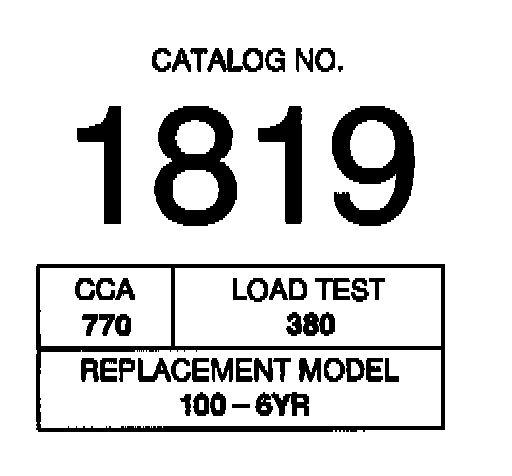
The battery specification label, example below, contains information about the following:
- The test ratings
- The original equipment catalog number
- The recommended replacement model number
Battery Ratings
A battery has 2 ratings:
- Reserve capacity
- Cold cranking amperage
When a battery is replaced use a battery with similar ratings. Refer to the battery specification label on the original battery or refer to Battery Usage.
Reserve Capacity
Reserve capacity is the amount of time in minutes it takes a fully charged battery, being discharged at a constant rate of 25 amperes and a constant temperature of 27°C (80°F) to reach a terminal voltage of 10.5 volts. Refer to Battery Usage for the reserve capacity rating of the original equipment battery.
Cold Cranking Amperage
The cold cranking amperage is an indication of the ability of the battery to crank the engine at cold temperatures. The cold cranking amperage rating is the minimum amperage the battery must maintain for 30 seconds at -18°C (0°F) while maintaining at least 7.2 volts. Refer to Battery Usage for the cold cranking amperage rating for this vehicle.
- Always shield your eyes and avoid leaning over the battery whenever possible.
- Do not expose the battery to open flames or sparks.
- Do not allow the battery electrolyte to contact the eyes or the skin. Flush immediately and thoroughly any contacted areas with water and get medical help.
- Follow each step of the jump starting procedure in order.
- Treat both the booster and the discharged batteries carefully when using the jumper cables.
The maintenance free battery is standard. There are no vent plugs in the cover. The battery is completely sealed except for 2 small vent holes in the side. These vent holes allow the small amount of gas that is produced in the battery to escape.
The battery has 3 functions as a major source of energy:
- Engine cranking
- Voltage stabilizer
- Alternate source of energy with generator overload
Battery Specification Label:
The battery specification label, example below, contains information about the following:
- The test ratings
- The original equipment catalog number
- The recommended replacement model number
Battery Ratings
A battery has 2 ratings:
- Reserve capacity
- Cold cranking amperage
When a battery is replaced use a battery with similar ratings. Refer to the battery specification label on the original battery or refer to Battery Usage.
Reserve Capacity
Reserve capacity is the amount of time in minutes it takes a fully charged battery, being discharged at a constant rate of 25 amperes and a constant temperature of 27°C (80°F) to reach a terminal voltage of 10.5 volts. Refer to Battery Usage for the reserve capacity rating of the original equipment battery.
Cold Cranking Amperage
The cold cranking amperage is an indication of the ability of the battery to crank the engine at cold temperatures. The cold cranking amperage rating is the minimum amperage the battery must maintain for 30 seconds at -18°C (0°F) while maintaining at least 7.2 volts. Refer to Battery Usage for the cold cranking amperage rating for this vehicle.
Factory Service Tools
Use the Manual With the Right Hardware
Pair factory procedures with proven DIY tools so the instructions are easier to execute.
Disclosure: Verified tool recommendations may earn an affiliate commission at no cost to you.
When to See a Mechanic
Stop DIY work and contact a certified mechanic immediately if any of the following apply:
- • You smell fuel, burning insulation, or see smoke.
- • Brakes feel soft, pull hard to one side, or make grinding noises.
- • The engine overheats, stalls repeatedly, or misfires under load.
- • You are missing required tools, torque specs, or safe lifting equipment.
- • You are not confident in the next step or safety outcome.
Rather have a pro handle this?
A certified mobile mechanic comes to your home or office. They bring the tools, you stay comfortable. No tow truck, no waiting room, no surprises.
Comes to youSame-day available12-month warranty
Get a Free QuoteNo obligation. See pricing before you book.