
Safety Warning
DIY auto repair can cause serious injury, fire, or vehicle damage. These guides are for informational purposes only. Always follow OEM torque specs, wear PPE, and consult a certified mechanic if you are unsure. You are solely responsible for your safety.
2008 Acura TSX L4-2.4LFACTORY OEM SERVICE PROCEDURE
General Specifications
Surface Variation

Cylinder Bore

Cylinder-to-Piston Clearance

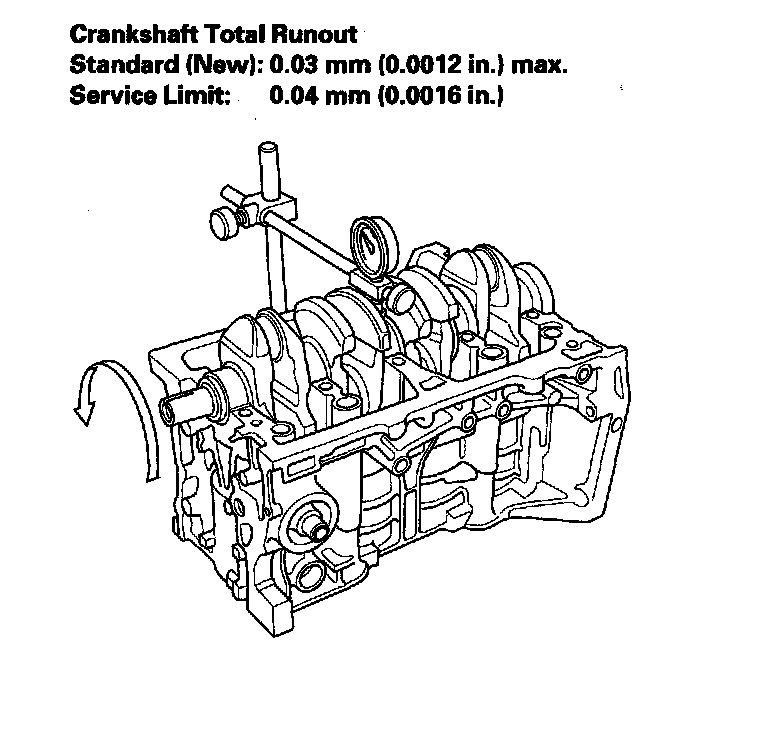
Crankshaft

Journal Taper
Standard (New) 0.005 mm (0.0002 in.) max.
Service Limit 0.010 mm (0.0004 in.)

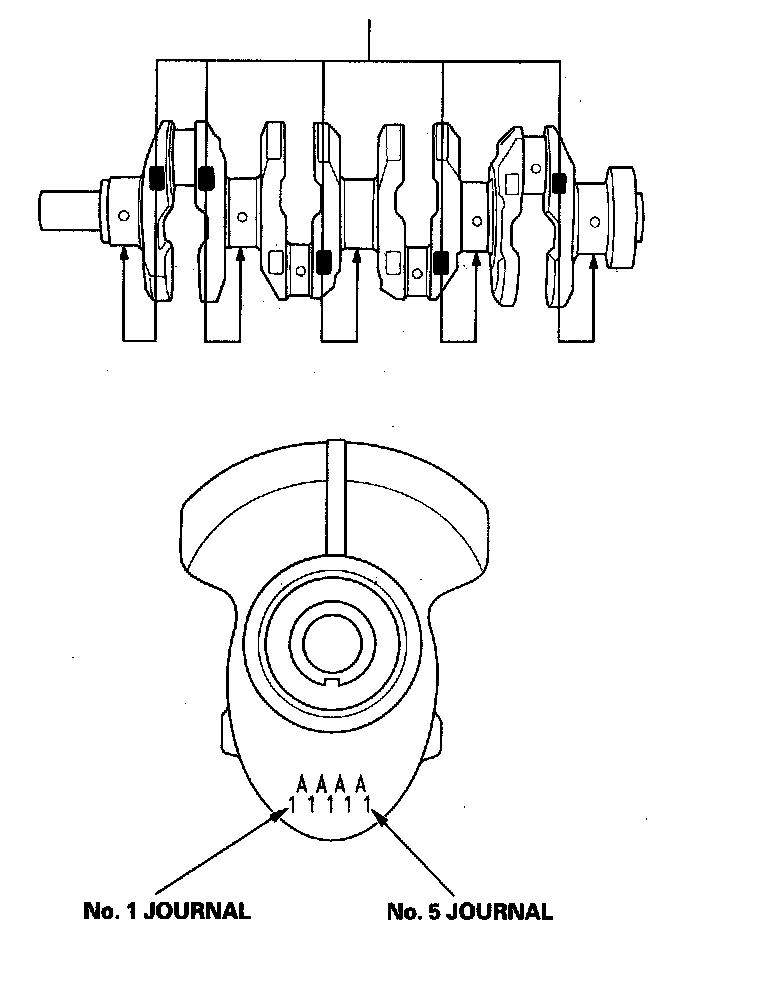
Main Bearing

Torque 30 Nm (3.0 kgf-m, 22 lbf-ft) +56°



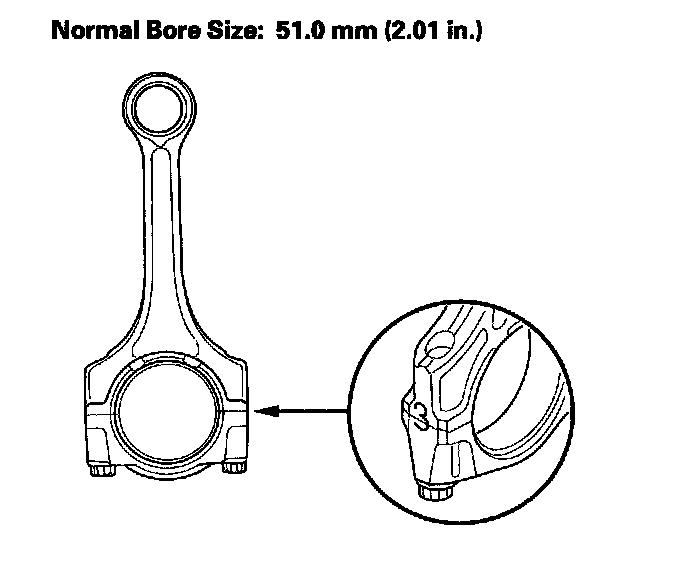
Connecting Rod

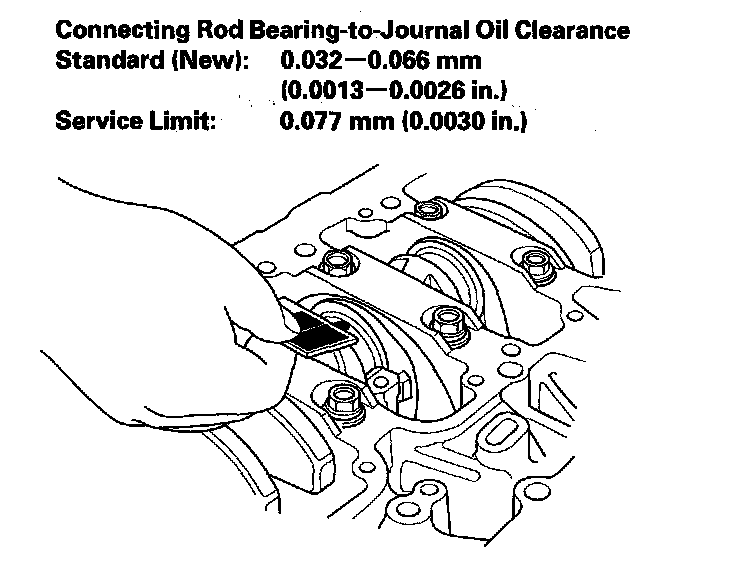
Connecting Rod Bearing
Piston

Piston Ring
Piston Ring End-Gap
Top Ring:
Standard (New) 0.20 - 0.35 mm (0.008 - 0.014 in.)
Service Limit 0.60 mm (0.024 in.)
Second Ring:
Standard (New) 0.50 - 0.65 mm (0.020 - 0.026 in.)
Service Limit 0.75 mm (0.030 in.)
Oil Ring:
Standard (New) 0.20 - 0.70 mm (0.008 - 0.028 in.)
Service Limit 0.80 mm (0.031 in.)

Crankshaft Pulley
Torque 50 Nm (5.0 kgf-m, 37 lbf-ft)
Tighten additional 90°
Cylinder Bore
Cylinder-to-Piston Clearance
Crankshaft
Journal Taper
Standard (New) 0.005 mm (0.0002 in.) max.
Service Limit 0.010 mm (0.0004 in.)
Main Bearing
Torque 30 Nm (3.0 kgf-m, 22 lbf-ft) +56°
Connecting Rod
Connecting Rod Bearing
Piston
Piston Ring
Piston Ring End-Gap
Top Ring:
Standard (New) 0.20 - 0.35 mm (0.008 - 0.014 in.)
Service Limit 0.60 mm (0.024 in.)
Second Ring:
Standard (New) 0.50 - 0.65 mm (0.020 - 0.026 in.)
Service Limit 0.75 mm (0.030 in.)
Oil Ring:
Standard (New) 0.20 - 0.70 mm (0.008 - 0.028 in.)
Service Limit 0.80 mm (0.031 in.)
Crankshaft Pulley
Torque 50 Nm (5.0 kgf-m, 37 lbf-ft)
Tighten additional 90°
Factory Service Tools
Use the Manual With the Right Hardware
Pair factory procedures with proven DIY tools so the instructions are easier to execute.
Disclosure: Verified tool recommendations may earn an affiliate commission at no cost to you.
When to See a Mechanic
Stop DIY work and contact a certified mechanic immediately if any of the following apply:
- • You smell fuel, burning insulation, or see smoke.
- • Brakes feel soft, pull hard to one side, or make grinding noises.
- • The engine overheats, stalls repeatedly, or misfires under load.
- • You are missing required tools, torque specs, or safe lifting equipment.
- • You are not confident in the next step or safety outcome.
Rather have a pro handle this?
A certified mobile mechanic comes to your home or office. They bring the tools, you stay comfortable. No tow truck, no waiting room, no surprises.
Comes to youSame-day available12-month warranty
Get a Free QuoteNo obligation. See pricing before you book.