
Safety Warning
DIY auto repair can cause serious injury, fire, or vehicle damage. These guides are for informational purposes only. Always follow OEM torque specs, wear PPE, and consult a certified mechanic if you are unsure. You are solely responsible for your safety.
2012 Toyota Matrix AWD L4-2.4L (2AZ-FE)FACTORY OEM SERVICE PROCEDURE
Ignition System: Testing and Inspection
2AZ-FE ENGINE CONTROL: IGNITION SYSTEM: ON-VEHICLE INSPECTION
1. PERFORM SPARK TEST
(a) Check for DTCs Reading and Clearing Diagnostic Trouble Codes.
NOTICE:
If any DTC is present, perform troubleshooting in accordance with the procedure for that DTC.
(b) Remove the 4 ignition coils and 4 spark plugs Removal.
(c) Disconnect the 4 fuel injector connectors.

(d) Install the spark plug into the ignition coil and connect the ignition coil connector.
(e) Ground the spark plug.

(f) Check that spark occurs while the engine is being cranked.
NOTICE:
* Be sure to ground the spark plugs when checking them.
* Do not crank the engine for more than 2 seconds.
* If a spark plug has been struck or dropped, replace it.
* If an ignition coil assembly has been struck or dropped, replace it.
HINT
If spark does not occur for any cylinder, perform the following Inspect Ignition Coil and Spark Test procedure.
(g) Connect the 4 injector connectors.

(h) Install the 4 ignition coils and 4 spark plugs Installation.
(i) Check for DTCs Reading and Clearing Diagnostic Trouble Codes.
(j) Clear the DTCs Reading and Clearing Diagnostic Trouble Codes.
2. INSPECT IGNITION COIL AND SPARK TEST
(a) Check that the wire harness side connector of the ignition coil with igniter is securely connected.
Result:

(b) Perform the spark test on each ignition coil with igniter.
(1) Replace the ignition coil with igniter with a known good one.
(2) Perform the spark test again.
Result:

(c) Check the spark plug.
(1) Replace the spark plug with a known good one.
(2) Perform the spark test again.
Result:

3. INSPECT SPARK PLUG
NOTICE:
* Do not use a wire brush for cleaning.
* Do not attempt to adjust the electrode gap of a used spark plug.
(a) Check the electrode.
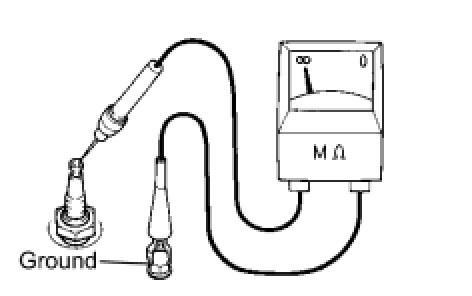
(1) Using a megohmmeter, measure the insulation resistance.
Standard Resistance:
10 MOhms or more
HINT
* If the result is not as specified, clean the spark plug with a spark plug cleaner and measure the resistance again.
* If a megohmmeter is not available, perform the following simple inspection instead.
(b) Alternative inspection method:
(1) Quickly accelerate the engine to 4000 rpm 5 times.
(2) Remove the spark plug Removal.
(3) Visually check the spark plug.

If the electrode is dry, the spark plug is functioning properly. If the electrode is damp, proceed to the next step.
(c) Check the spark plug for any damage to its threads and insulator.
If there is any damage, replace the spark plug.
Recommended Spark Plug:
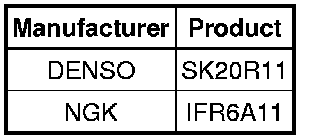
(d) Reference:
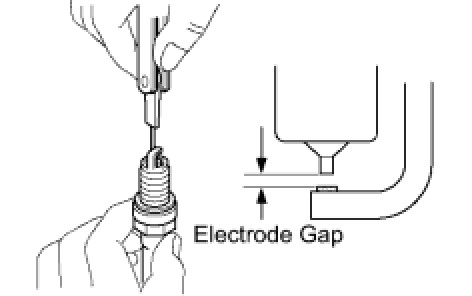
Maximum Electrode Gap for Used Spark Plug:

If the gap is greater than the maximum, replace the spark plug.
Electrode Gap for New Spark Plug:

(e) Clean the spark plug.
If the electrode has traces of wet carbon, clean the electrode with a spark plug cleaner and then dry it.
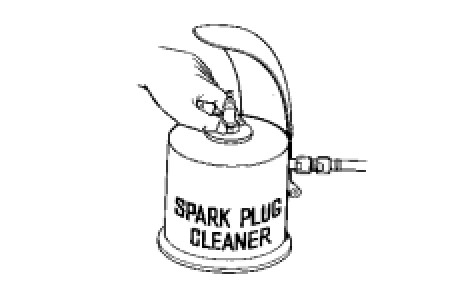
Air pressure:
588 kPa (6.0 kgf/cm2, 85 psi)
Duration:
20 seconds or less
HINT
Only use the spark plug cleaner when the electrode is free of oil. If the electrode has traces of oil, use gasoline to clean off the oil before using the spark plug cleaner.
Factory Service Tools
Use the Manual With the Right Hardware
Pair factory procedures with proven DIY tools so the instructions are easier to execute.
Disclosure: Verified tool recommendations may earn an affiliate commission at no cost to you.
When to See a Mechanic
Stop DIY work and contact a certified mechanic immediately if any of the following apply:
- • You smell fuel, burning insulation, or see smoke.
- • Brakes feel soft, pull hard to one side, or make grinding noises.
- • The engine overheats, stalls repeatedly, or misfires under load.
- • You are missing required tools, torque specs, or safe lifting equipment.
- • You are not confident in the next step or safety outcome.