
Safety Warning
DIY auto repair can cause serious injury, fire, or vehicle damage. These guides are for informational purposes only. Always follow OEM torque specs, wear PPE, and consult a certified mechanic if you are unsure. You are solely responsible for your safety.
2011 Toyota Matrix FWD L4-1.8L (2ZR-FE)FACTORY OEM SERVICE PROCEDURE
Ignition System: Testing and Inspection
2ZR-FE ENGINE CONTROL: IGNITION SYSTEM: ON-VEHICLE INSPECTION
1. CHECK IGNITION COIL ASSEMBLY AND PERFORM SPARK TEST
(a) Check for DTCs Reading and Clearing Diagnostic Trouble Codes.
NOTICE:
If any DTC is present, perform troubleshooting in accordance with the procedure for that DTC.
(b) Check that spark occurs.
(1) Remove the ignition coils and spark plugs Removal.
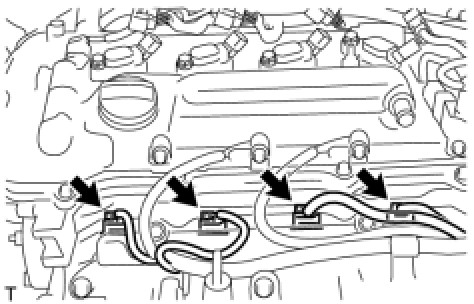
(2) Disconnect the 4 fuel injector connectors.
(3) Install the spark plug into the ignition coil, and then connect the ignition coil connector.
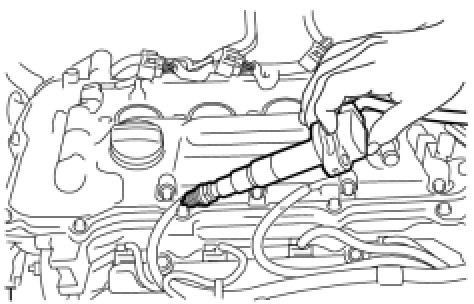
(4) Ground the spark plug.
(5) Check that spark occurs while the engine is being cranked.
NOTICE:
* Be sure to ground the spark plugs when checking them.
* If the ignition coil has been struck or dropped, replace it.
* Do not crank the engine for more than 2 seconds.
If spark does not occur, perform the following procedure.
(c) Perform the following spark test procedure.
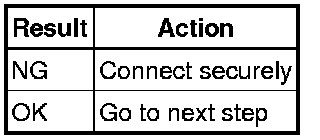
(1) Check that the ignition coil connector is securely connected.
Result:
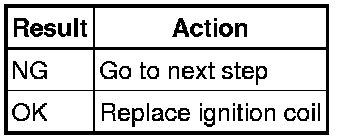
(2) Perform a spark test on each ignition coil.
Replace the ignition coil with a known good one.
Perform the spark test again.
Result:
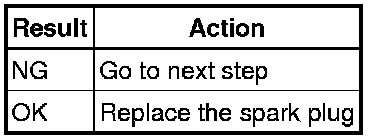
(3) Perform a spark test.
Replace the spark plug with a known good one.
Perform the spark test again.
Result:
(4) Check power supply to each ignition coil.
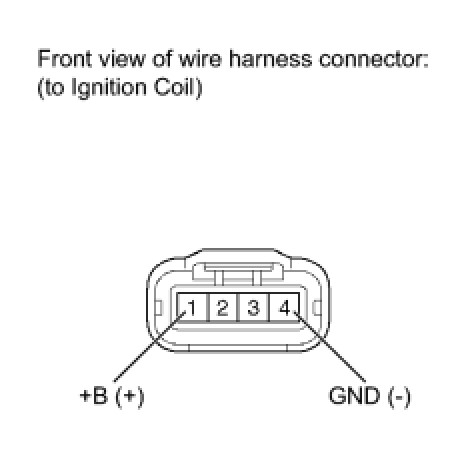
Disconnect each ignition coil connector.
Measure the resistance according to the value(s) in the table below.
Standard Resistance (Check for Open):

HINT
Perform the same procedure for each ignition coil.
Turn the ignition switch to ON.
Measure the voltage according to the value(s) in the table below.
Standard Voltage:

HINT
Perform the same procedure for each ignition coil.
Result:
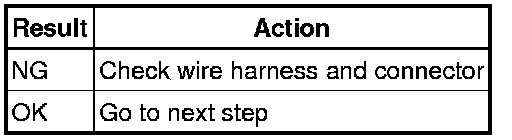
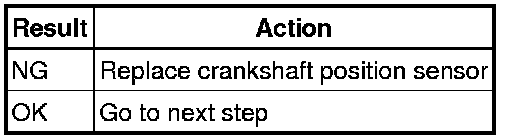
(5) Check the resistance of the crankshaft position sensor Component Tests and General Diagnostics.
Result:
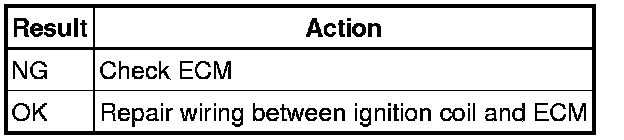
(6) Check the IGT signal from the ECM P0351.
Result:
2. INSPECT SPARK PLUG
(a) Check the electrode.
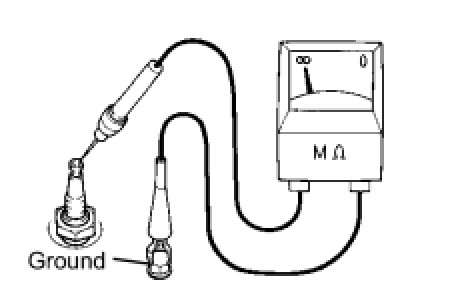
(1) Using a megohmmeter, measure the resistance.
Standard Resistance:
10 MOhms or more
HINT
* If a megohmmeter is not available, perform the following simple inspection instead.
* If the result is 10 MOhms or less, clean the plug and measure the resistance again.
(b) Alternative inspection method:
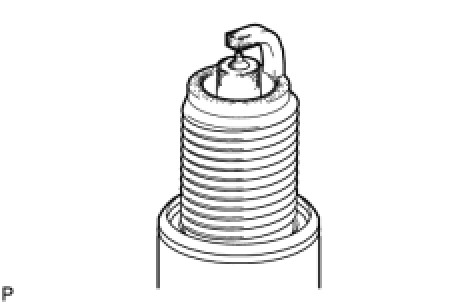
(1) Quickly accelerate the engine to 4000 rpm 5 times.
(2) Remove each spark plug Removal.
(3) Visually check the spark plug.
If the electrode is dry, the spark plug is functioning properly. If the electrode is damp, proceed to the next step.
(c) Check the spark plug for any damage on its threads and insulator.
If there is any damage, replace the spark plug.
Recommended Spark Plug
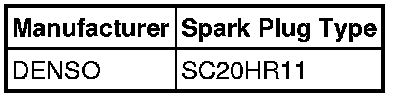
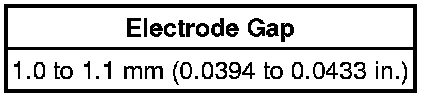
(d) Check the spark plug electrode gap.
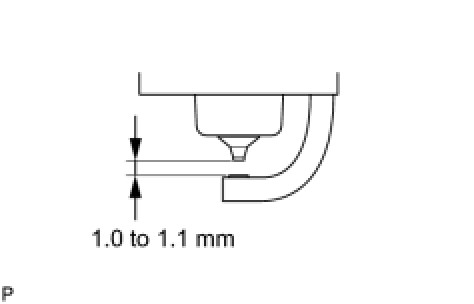
Maximum Electrode Gap for Used Spark Plug:
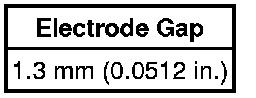
If the gap is greater than the maximum, replace the spark plug.
Electrode Gap for New Spark Plug:
(e) Clean the spark plugs.
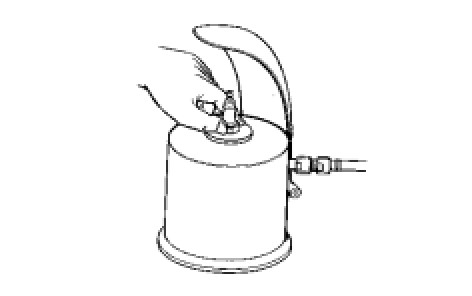
If the electrode has traces of wet carbon, clean the electrode with a spark plug cleaner and then dry it.
Standard air pressure:
588 kPa (6.0 kgf/cm2, 85 psi)
Standard duration:
20 seconds or less.
HINT
Only use the spark plug cleaner when the electrode is free of oil. If the electrode has traces of oil, use gasoline to clean off the oil before using the spark plug cleaner.
Factory Service Tools
Use the Manual With the Right Hardware
Pair factory procedures with proven DIY tools so the instructions are easier to execute.
Disclosure: Verified tool recommendations may earn an affiliate commission at no cost to you.
When to See a Mechanic
Stop DIY work and contact a certified mechanic immediately if any of the following apply:
- • You smell fuel, burning insulation, or see smoke.
- • Brakes feel soft, pull hard to one side, or make grinding noises.
- • The engine overheats, stalls repeatedly, or misfires under load.
- • You are missing required tools, torque specs, or safe lifting equipment.
- • You are not confident in the next step or safety outcome.