
Safety Warning
DIY auto repair can cause serious injury, fire, or vehicle damage. These guides are for informational purposes only. Always follow OEM torque specs, wear PPE, and consult a certified mechanic if you are unsure. You are solely responsible for your safety.
2011 Suzuki SX4 2WD L4-2.0LFACTORY OEM SERVICE PROCEDURE
Connecting Rod, Engine
Connecting rod
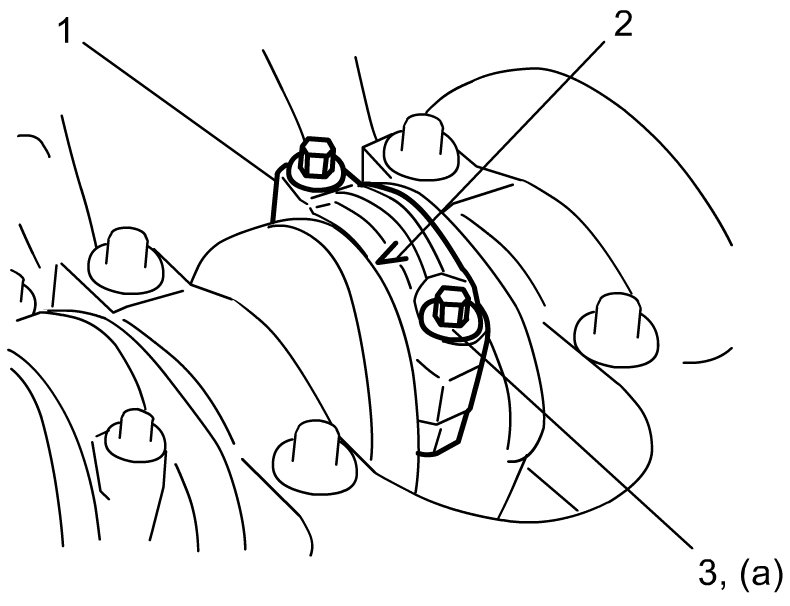
Tighten connecting rod bearing cap bolt (3) gradually.
a) Point arrow mark (2) on connecting rod bearing cap (1) to crankshaft pulley side.
b) Apply engine oil to bolt thread and seat of connecting rod bearing cap bolt.
c) Tighten all connecting rod bearing cap bolt to 15 Nm (1.5 kgf-m, 11.0 lbf-ft) evenly and gradually.
d) In the same manner as Step c), retighten them to 45°.
e) In the same manner as Step c), retighten them to 45°.
Tightening torque
Connecting rod bolt* (a) (15 Nm -> +45� -> +45� (1.5 kgf-m -> +45� -> +45�, 11.0 lbf-ft -> +45� -> +45�)
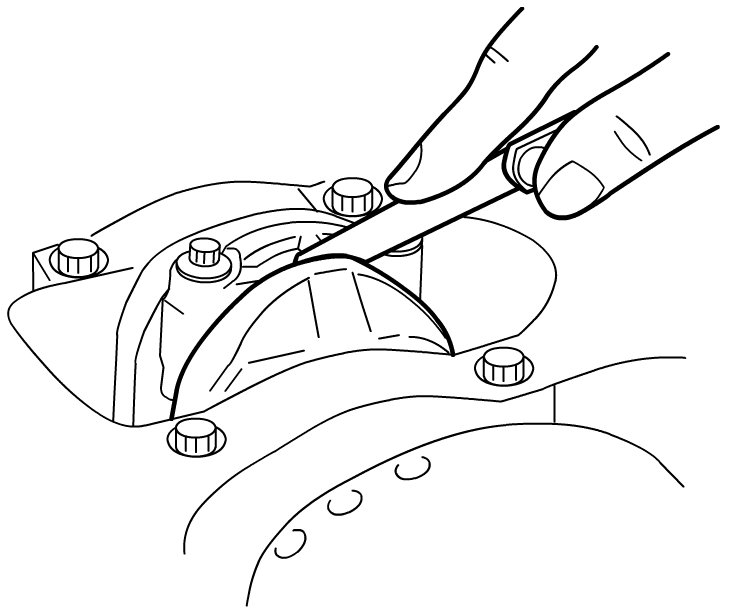
Big-end side clearance
Standard: 0.25 - 0.40 mm (0.0099 - 0.0157 in.)
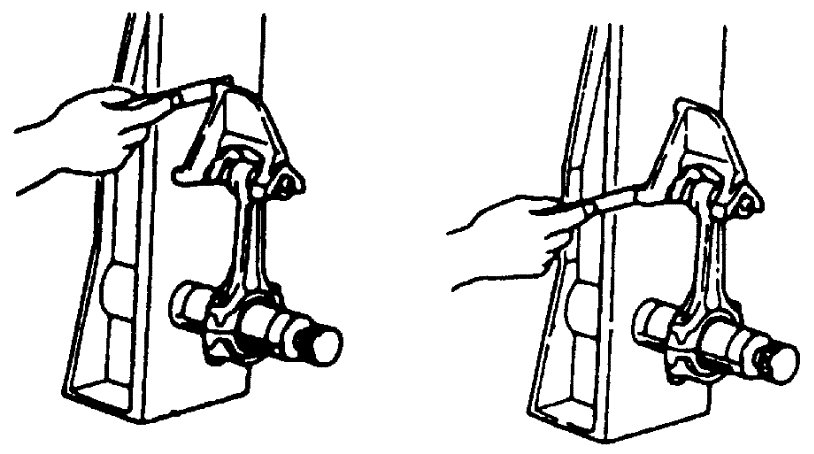
Connecting rod alignment
Limit on bow: 0.05 mm (0.0019 in.)
Limit on twist: 0.10 mm (0.0039 in.)
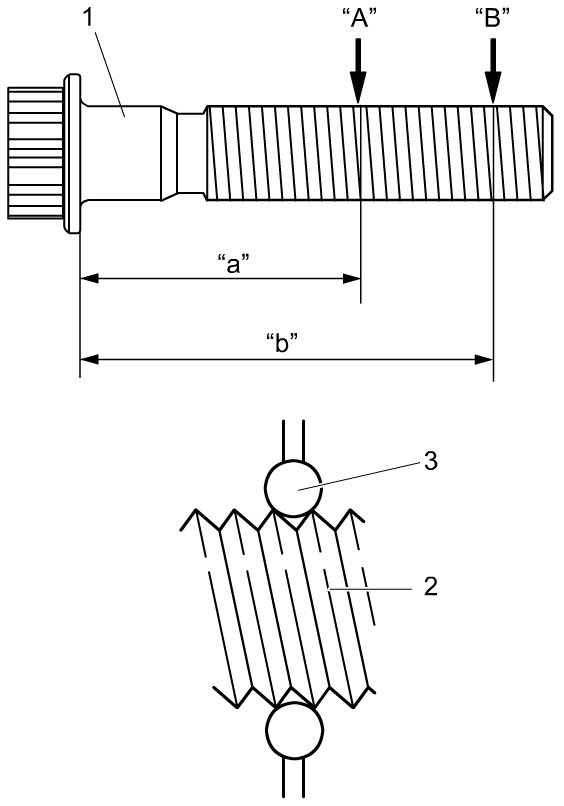
Connecting rod bolt measurement points
"a": 28.5 mm (1.12 in.)
"b": 42.0 mm (1.65 in.)
Connecting rod bolt diameter difference
Limit ("A" - "B"): 0.05 mm (0.0019 in.)

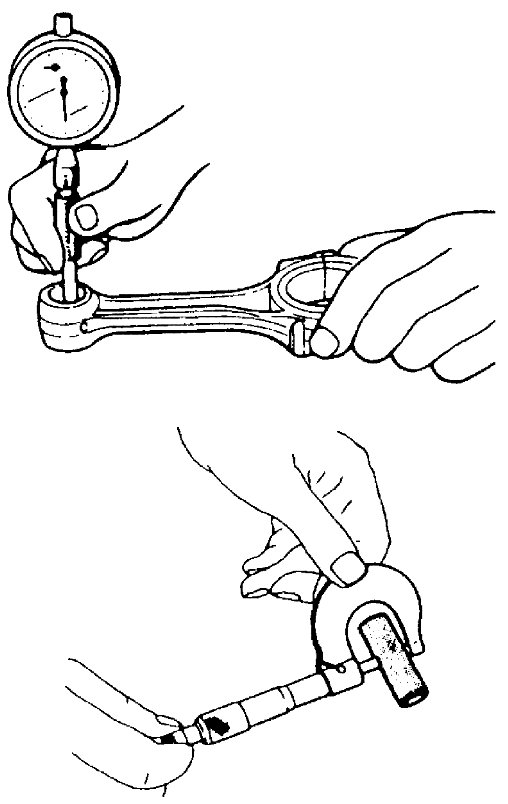
Piston pin clearance
Piston pin clearance in connecting rod small-end
Standard 0.003 - 0.016 mm (0.00012 - 0.00062 in.)
Limit 0.040 mm (0.0015 in.)
Piston pin clearance in piston
Standard 0.006 - 0.017 mm (0.00024 - 0.00066 in.)
Limit 0.05 mm (0.0019 in.)
Small-end bore 21.003 - 21.013 mm (0.82689 - 0.82728 in.)
Piston pin outside diameter 20.997 - 21.000 mm (0.82666 - 0.82677 in.)
Diameter of piston pin hole in piston 21.006 - 21.014 mm (0.82701 - 0.82732 in.)
Factory Service Tools
Use the Manual With the Right Hardware
Pair factory procedures with proven DIY tools so the instructions are easier to execute.
Disclosure: Verified tool recommendations may earn an affiliate commission at no cost to you.
When to See a Mechanic
Stop DIY work and contact a certified mechanic immediately if any of the following apply:
- • You smell fuel, burning insulation, or see smoke.
- • Brakes feel soft, pull hard to one side, or make grinding noises.
- • The engine overheats, stalls repeatedly, or misfires under load.
- • You are missing required tools, torque specs, or safe lifting equipment.
- • You are not confident in the next step or safety outcome.