
Safety Warning
DIY auto repair can cause serious injury, fire, or vehicle damage. These guides are for informational purposes only. Always follow OEM torque specs, wear PPE, and consult a certified mechanic if you are unsure. You are solely responsible for your safety.
2011 Suzuki Equator 2WD L4-2.5LFACTORY OEM SERVICE PROCEDURE
Brake Fluid: Service and Repair
Brake Fluid: Drain and Refill
CAUTION:
- Refill with new brake fluid. Refer to [Recommended Fluids and Lubricants [for USA and Canada]] [1][2]Maintenance. (United States and Canada) and [Recommended Fluids and Lubricants [for Mexico]] [1][2]Maintenance (Mexico).
- Do not reuse drained brake fluid.
- Do not let brake fluid splash on the painted surfaces of the body. This might damage the paint, so when splashing it, immediately wipe off the area and wash away with water.
- Before servicing, disconnect ABS actuator and electric unit (control unit) connector or battery negative terminal.
1) Turn ignition switch OFF and disconnect ABS actuator and electric unit (control unit) connector or battery negative terminal.
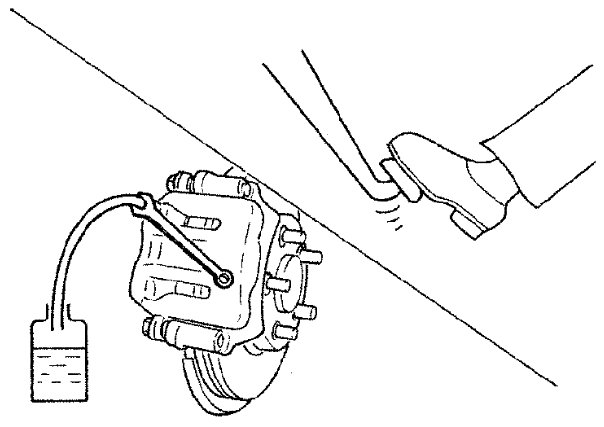
2) Connect a vinyl tube to each bleed valve.
3) Depress brake pedal, loosen each bleed valve, and gradually remove brake fluid.
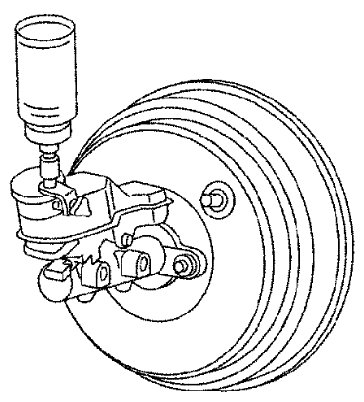
4) Make sure there is no foreign material in reservoir tank, and refill with new brake fluid.
5) Rest foot on brake pedal. Loosen bleed valve. Slowly depress brake pedal until it stops. Tighten bleed valve. Release brake pedal. Repeat the process a few times, then pause to add new brake fluid to master cylinder. Continue until the new brake fluid flows out of the bleed valve.
Bleed the air out of the brake hydraulic system. Refer to [Brake Fluid: Bleeding Brake System] Service and Repair.
Factory Service Tools
Use the Manual With the Right Hardware
Pair factory procedures with proven DIY tools so the instructions are easier to execute.
Disclosure: Verified tool recommendations may earn an affiliate commission at no cost to you.
When to See a Mechanic
Stop DIY work and contact a certified mechanic immediately if any of the following apply:
- • You smell fuel, burning insulation, or see smoke.
- • Brakes feel soft, pull hard to one side, or make grinding noises.
- • The engine overheats, stalls repeatedly, or misfires under load.
- • You are missing required tools, torque specs, or safe lifting equipment.
- • You are not confident in the next step or safety outcome.