
Safety Warning
DIY auto repair can cause serious injury, fire, or vehicle damage. These guides are for informational purposes only. Always follow OEM torque specs, wear PPE, and consult a certified mechanic if you are unsure. You are solely responsible for your safety.
2007 Suzuki Reno L4-2.0LFACTORY OEM SERVICE PROCEDURE
Engine Controls - DTC P2138 Stored/MIL ON
FORENZA
Section Title: Engine
TSB No. TS 23 08020R
Division: Automotive
Category: Technical
SUBJECT:
COUNTER-MEASURE PROCEDURE FOR DTC P2138
MODEL(S):
FORENZA, FORENZA WAGON, RENO (RQ420)
YEAR:
2006~2008
CONDITION:
MIL light is on, DTC P2138 stored, as reported by the vehicle owner.
CAUSE:
Failure of the connector and/or wiring circuits between the ECM and the Accelerator Pedal Position Sensor.
CORRECTION:
Please refer to, and follow, the diagnostic, repair, and precautionary steps, as outlined in the counter-measure procedure in this bulletin.

PART(S) INFORMATION:

WARRANTY INFORMATION
Repair Procedure
1. Connect the Tech 2 scan tool to the vehicle DLC (Data Link Connector), and access DTC's stored in the ECM (Engine Control Module). Is the DTC P2138? If yes, continue to step 2 of this instruction. If no, stop this instruction and refer to the Forenza Service Manual concerning the DTC found.
2. Make note of the customer's radio presets, disconnect the negative battery terminal.
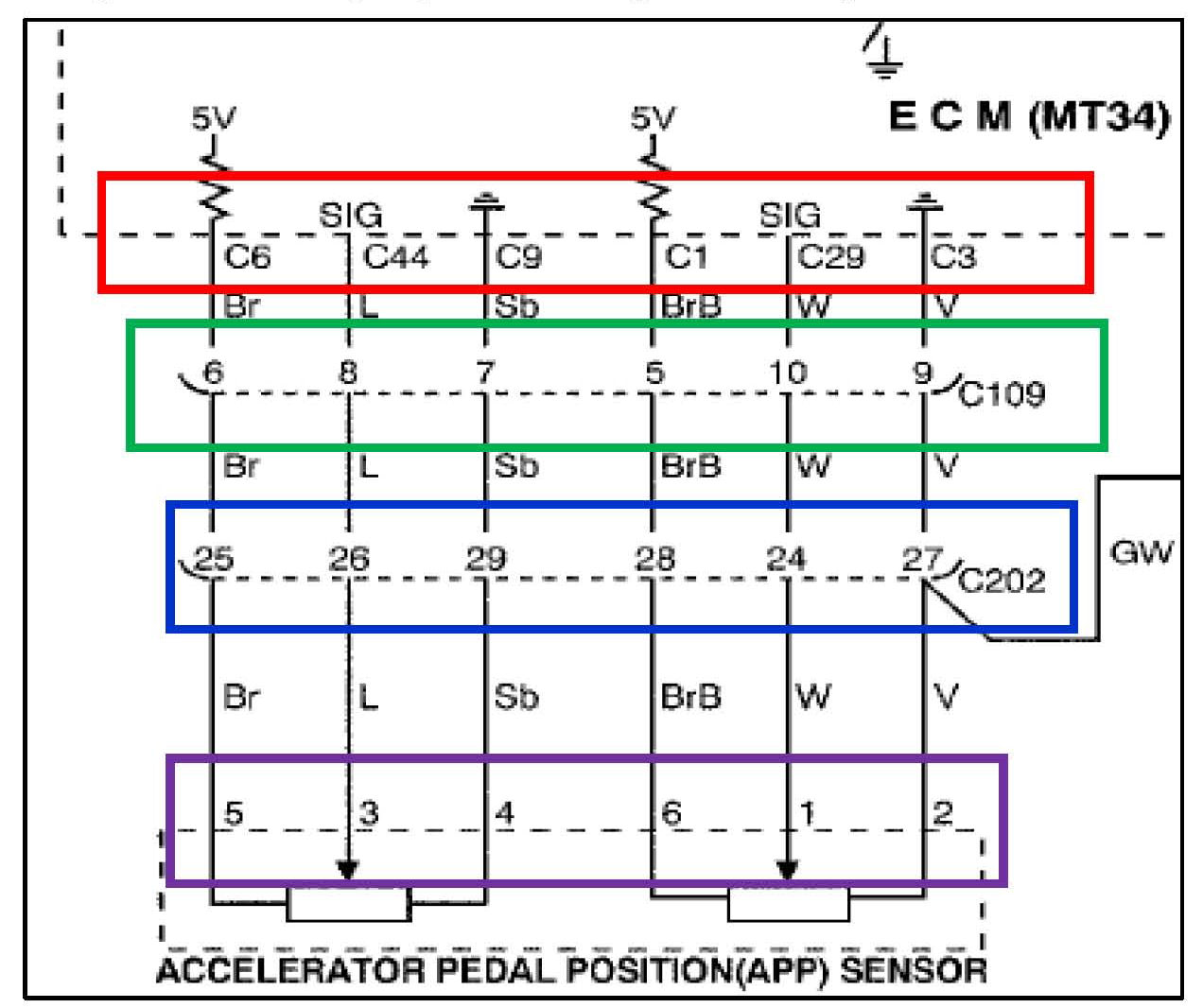
3. Inspect the following harness connectors and wiring circuits associated with DTC P2138 (see fig.1), for any damage and/or improper seating/fastening.
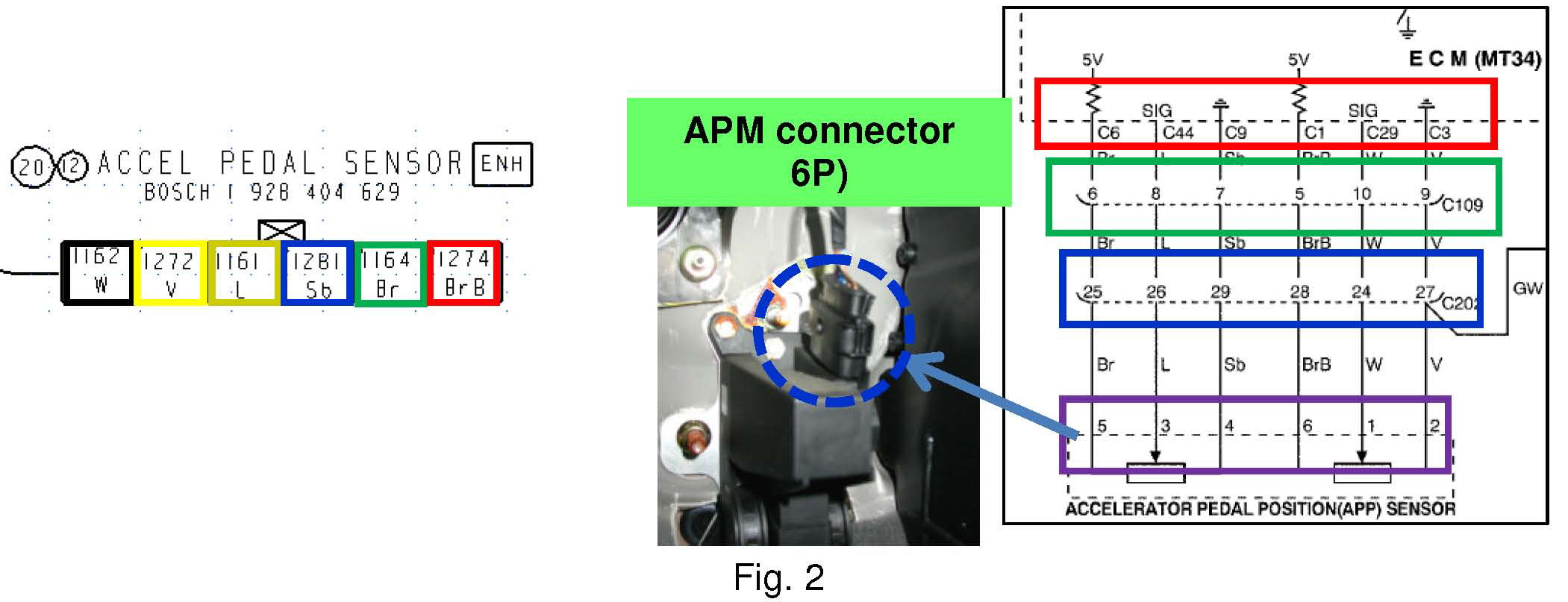
4. Inspect all six terminals at the APM (Accelerator Pedal Module) as illustrated in fig. 2, looking for bent/deformed terminals, corrosion, etc., and clean or repair as needed and proceed to step 5.

5. Inspect the Body to Instrument Panel harness connector (94 pin inline connector) as illustrated in fig. 3, for any damage and/or improper seating/fastening, looking for bent/deformed terminals, corrosion, etc., and clean or repair as needed and proceed to step 6.
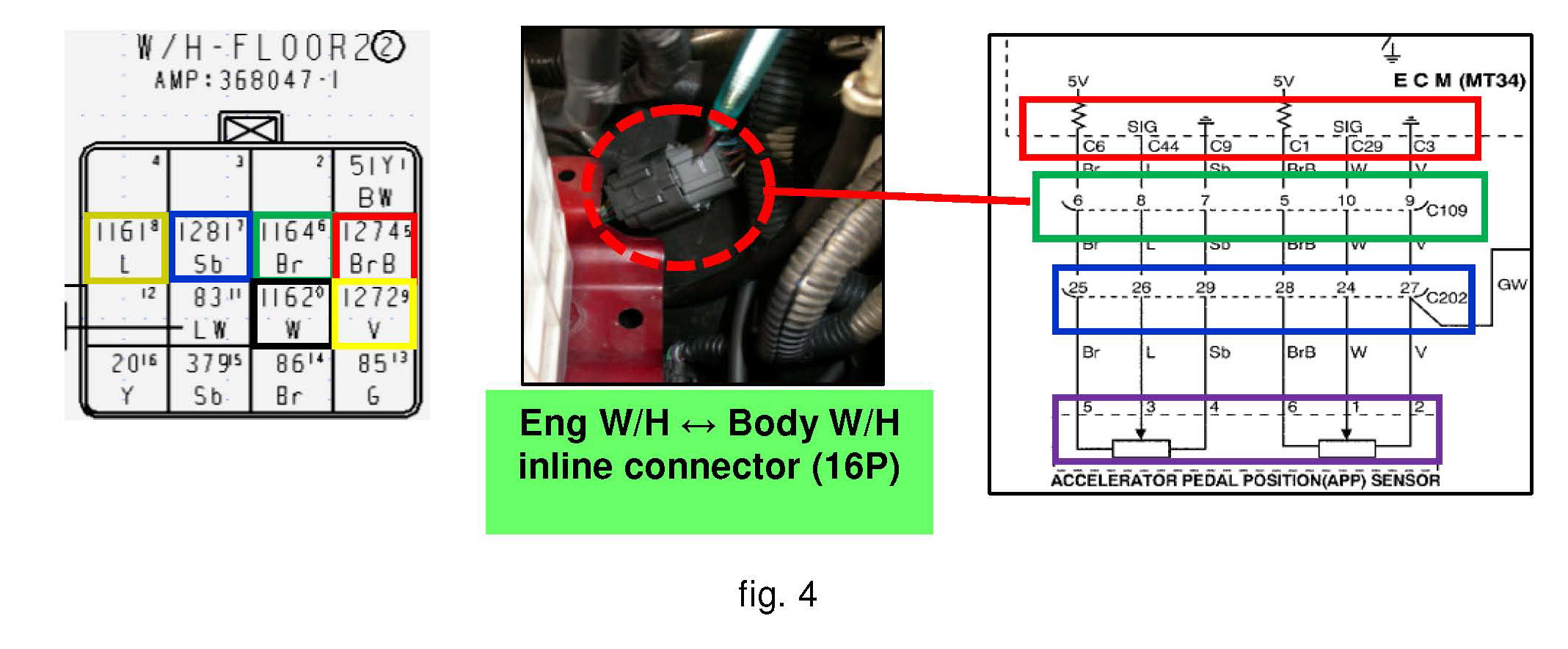
6. Inspect the Engine to Body harness connector (1 6 pin inline connector) as illustrated in fig. 4, for any damage and/or improper seating/fastening, looking for bent/deformed terminals, corrosion, etc., and clean or repair as needed and proceed to step 7.
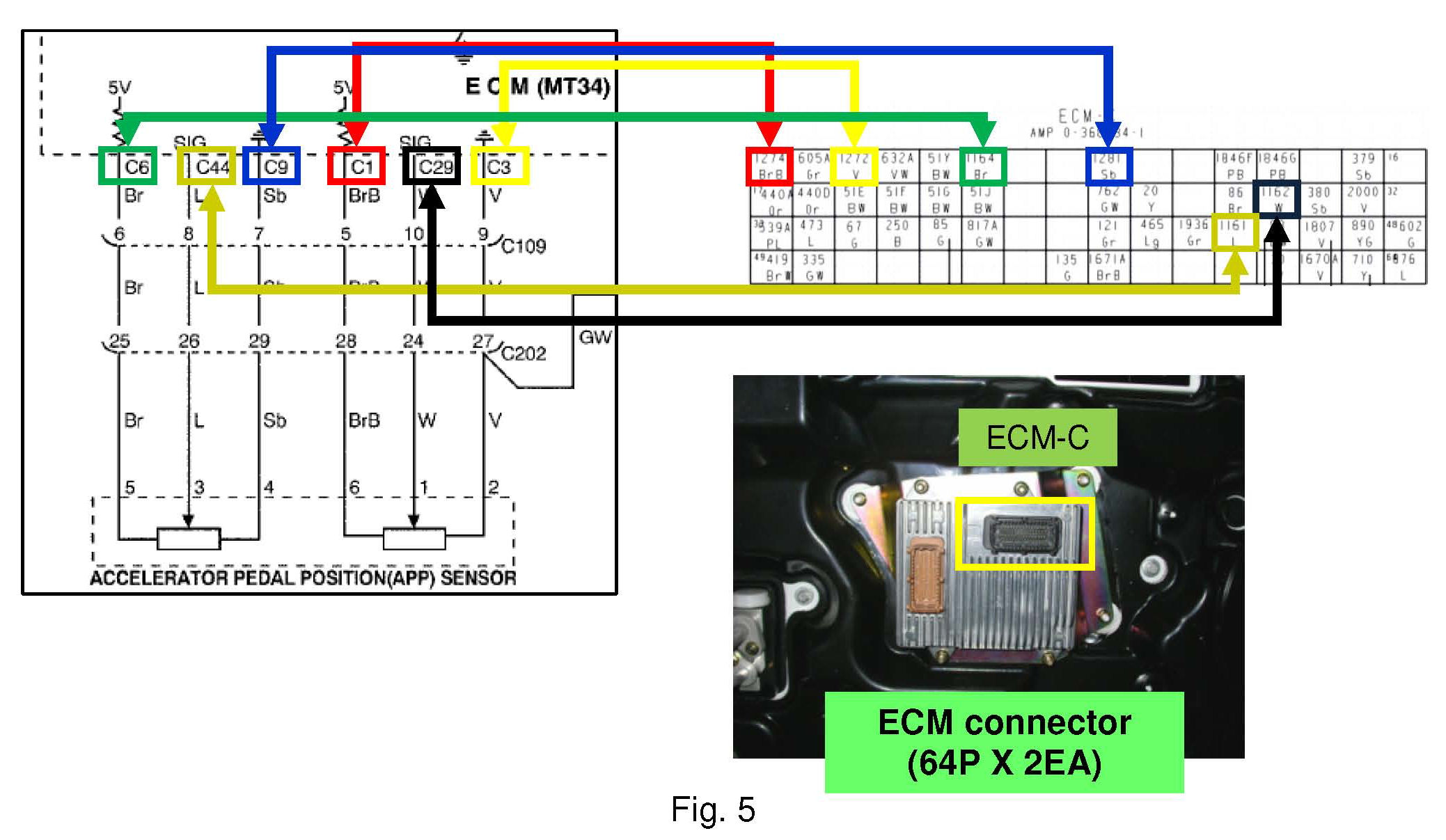
7. Inspect the six terminals at the ECM-C (64 pin connector), illustrated in fig. 2, looking for bent/deformed terminals, corrosion, etc., and clean or repair as needed and proceed to step 8.
8. If there are no problems with any of the connectors, or their terminals, apply Stabilant 22, Electric Contact Enhancer, or equivalent (see list of AKA marketing names below, and MSDS, this is not a dielectric grease) and then re-connect the harnesses.
9. In the event that an issue is found with the harness that cannot be repaired (this is rare), the harness may need to be replaced.
10. Using the Tech 2 scan tool, clear the DIG and road test the vehicle.
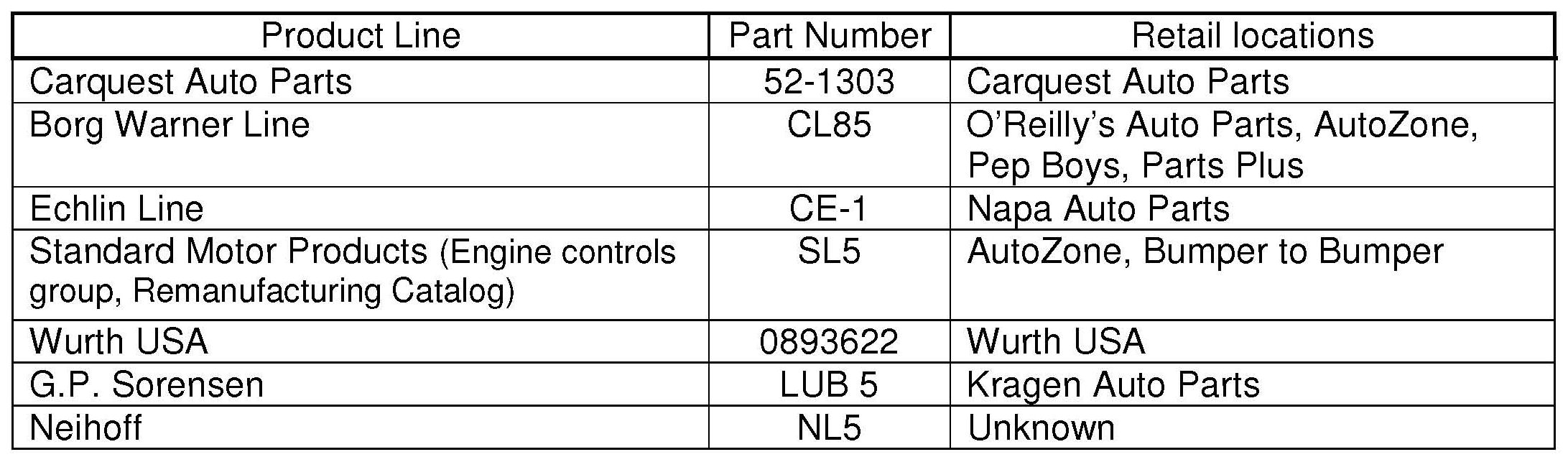
Stabilant 22 is also packaged and sold as the following product lines, many of which may be readily available at local parts stores and jobbers.
Section Title: Engine
TSB No. TS 23 08020R
Division: Automotive
Category: Technical
SUBJECT:
COUNTER-MEASURE PROCEDURE FOR DTC P2138
MODEL(S):
FORENZA, FORENZA WAGON, RENO (RQ420)
YEAR:
2006~2008
CONDITION:
MIL light is on, DTC P2138 stored, as reported by the vehicle owner.
CAUSE:
Failure of the connector and/or wiring circuits between the ECM and the Accelerator Pedal Position Sensor.
CORRECTION:
Please refer to, and follow, the diagnostic, repair, and precautionary steps, as outlined in the counter-measure procedure in this bulletin.
PART(S) INFORMATION:
WARRANTY INFORMATION
Repair Procedure
1. Connect the Tech 2 scan tool to the vehicle DLC (Data Link Connector), and access DTC's stored in the ECM (Engine Control Module). Is the DTC P2138? If yes, continue to step 2 of this instruction. If no, stop this instruction and refer to the Forenza Service Manual concerning the DTC found.
2. Make note of the customer's radio presets, disconnect the negative battery terminal.
3. Inspect the following harness connectors and wiring circuits associated with DTC P2138 (see fig.1), for any damage and/or improper seating/fastening.
4. Inspect all six terminals at the APM (Accelerator Pedal Module) as illustrated in fig. 2, looking for bent/deformed terminals, corrosion, etc., and clean or repair as needed and proceed to step 5.
5. Inspect the Body to Instrument Panel harness connector (94 pin inline connector) as illustrated in fig. 3, for any damage and/or improper seating/fastening, looking for bent/deformed terminals, corrosion, etc., and clean or repair as needed and proceed to step 6.
6. Inspect the Engine to Body harness connector (1 6 pin inline connector) as illustrated in fig. 4, for any damage and/or improper seating/fastening, looking for bent/deformed terminals, corrosion, etc., and clean or repair as needed and proceed to step 7.
7. Inspect the six terminals at the ECM-C (64 pin connector), illustrated in fig. 2, looking for bent/deformed terminals, corrosion, etc., and clean or repair as needed and proceed to step 8.
8. If there are no problems with any of the connectors, or their terminals, apply Stabilant 22, Electric Contact Enhancer, or equivalent (see list of AKA marketing names below, and MSDS, this is not a dielectric grease) and then re-connect the harnesses.
9. In the event that an issue is found with the harness that cannot be repaired (this is rare), the harness may need to be replaced.
10. Using the Tech 2 scan tool, clear the DIG and road test the vehicle.
Stabilant 22 is also packaged and sold as the following product lines, many of which may be readily available at local parts stores and jobbers.
Factory Service Tools
Use the Manual With the Right Hardware
Pair factory procedures with proven DIY tools so the instructions are easier to execute.
Disclosure: Verified tool recommendations may earn an affiliate commission at no cost to you.
When to See a Mechanic
Stop DIY work and contact a certified mechanic immediately if any of the following apply:
- • You smell fuel, burning insulation, or see smoke.
- • Brakes feel soft, pull hard to one side, or make grinding noises.
- • The engine overheats, stalls repeatedly, or misfires under load.
- • You are missing required tools, torque specs, or safe lifting equipment.
- • You are not confident in the next step or safety outcome.