
Safety Warning
DIY auto repair can cause serious injury, fire, or vehicle damage. These guides are for informational purposes only. Always follow OEM torque specs, wear PPE, and consult a certified mechanic if you are unsure. You are solely responsible for your safety.
2003 Suzuki Vitara 4WD L4-2.0LFACTORY OEM SERVICE PROCEDURE
Compression Check: Testing and Inspection
Compression Check
Check compression pressure on all 4 cylinders as follows:
1. Warm up engine.
2. Stop engine after warming up.
NOTE: After warming up engine, place transmission gear shift lever in "Neutral" (shift selector lever to "P" range for A/T model), and set parking brake and block drive wheels.
3. Disconnect accelerator cable (3) from clamp (4) (For LH steering vehicle only).
4. Disconnect ignition coil couplers.
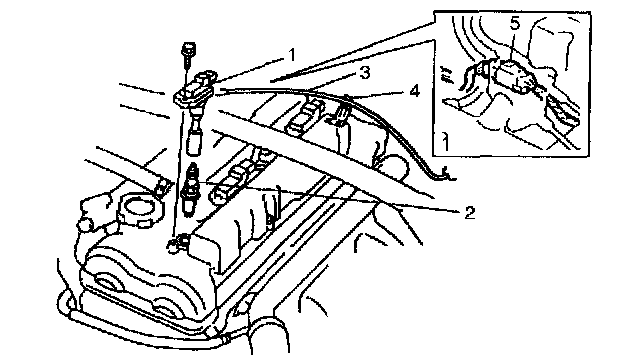
5. Remove ignition coils (1).
6. Remove all spark plugs (2).
7. Disconnect fuel injector wires at the coupler (5).

8. Install special tool (Compression gauge) into spark plug hole.
Special tool
(A): 09915-64510-001
(B): 09915-64510-002
(C): 09915-64530
(D): 09915-67010
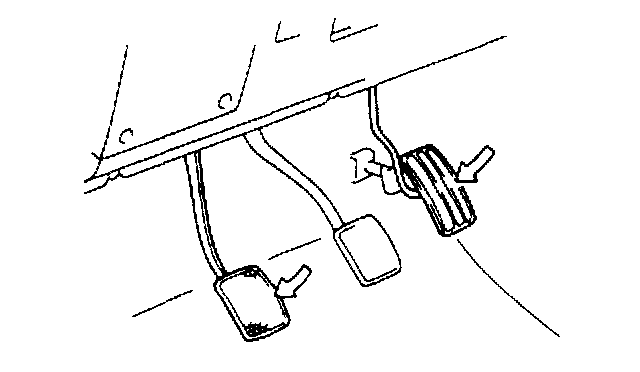
9. Disengage clutch (to lighten starting load on engine) for M/T vehicle, and depress accelerator pedal all the way to make throttle fully open.
10. Crank engine with fully charged battery, and read the highest pressure on compression gauge.
NOTE: For measuring compression pressure, crank engine at least 250 rpm by using fully charged battery.
Compression pressure
Standard: 1400 kPa (14.0 kgf/cm2, 199.0 psi)
Limit: 1200 kPa (112.0 kgf/cm2, 170.0 psi)
Max. difference between any 2 cylinders: 100 kPa (1.0 kgf/cm2, 14.2 psi)
11. Carry out Steps 8, 9 and 10 on each cylinder to obtain 4 readings.
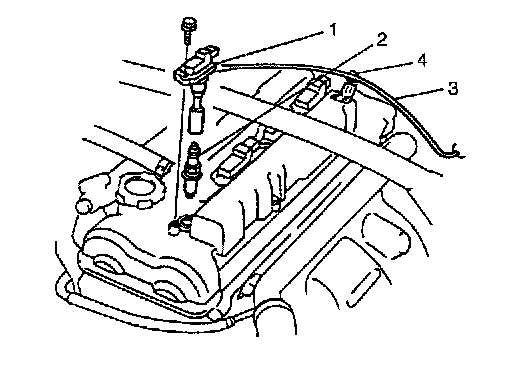
12. After checking, install spark plugs (2) and ignition coils (1).
13. Connect ignition coil couplers.
14. Connect accelerator cable (3) to clamp (4) (For LH steering vehicle only).
Check compression pressure on all 4 cylinders as follows:
1. Warm up engine.
2. Stop engine after warming up.
NOTE: After warming up engine, place transmission gear shift lever in "Neutral" (shift selector lever to "P" range for A/T model), and set parking brake and block drive wheels.
3. Disconnect accelerator cable (3) from clamp (4) (For LH steering vehicle only).
4. Disconnect ignition coil couplers.
5. Remove ignition coils (1).
6. Remove all spark plugs (2).
7. Disconnect fuel injector wires at the coupler (5).
8. Install special tool (Compression gauge) into spark plug hole.
Special tool
(A): 09915-64510-001
(B): 09915-64510-002
(C): 09915-64530
(D): 09915-67010
9. Disengage clutch (to lighten starting load on engine) for M/T vehicle, and depress accelerator pedal all the way to make throttle fully open.
10. Crank engine with fully charged battery, and read the highest pressure on compression gauge.
NOTE: For measuring compression pressure, crank engine at least 250 rpm by using fully charged battery.
Compression pressure
Standard: 1400 kPa (14.0 kgf/cm2, 199.0 psi)
Limit: 1200 kPa (112.0 kgf/cm2, 170.0 psi)
Max. difference between any 2 cylinders: 100 kPa (1.0 kgf/cm2, 14.2 psi)
11. Carry out Steps 8, 9 and 10 on each cylinder to obtain 4 readings.
12. After checking, install spark plugs (2) and ignition coils (1).
13. Connect ignition coil couplers.
14. Connect accelerator cable (3) to clamp (4) (For LH steering vehicle only).
Factory Service Tools
Use the Manual With the Right Hardware
Pair factory procedures with proven DIY tools so the instructions are easier to execute.
Disclosure: Verified tool recommendations may earn an affiliate commission at no cost to you.
When to See a Mechanic
Stop DIY work and contact a certified mechanic immediately if any of the following apply:
- • You smell fuel, burning insulation, or see smoke.
- • Brakes feel soft, pull hard to one side, or make grinding noises.
- • The engine overheats, stalls repeatedly, or misfires under load.
- • You are missing required tools, torque specs, or safe lifting equipment.
- • You are not confident in the next step or safety outcome.