
Safety Warning
DIY auto repair can cause serious injury, fire, or vehicle damage. These guides are for informational purposes only. Always follow OEM torque specs, wear PPE, and consult a certified mechanic if you are unsure. You are solely responsible for your safety.
2002 Suzuki Aerio L4-2.0LFACTORY OEM SERVICE PROCEDURE
Repair and Diagnosis: Service and Repair

When Using Floor Jack
WARNING: If the vehicle to be jacked up only at the front or rear end, be sure to block the wheels on ground in order to ensure safety. After the vehicle is jacked up, be sure to support it on stands. It is extremely dangerous to do any work on the vehicle raised on jack alone.
CAUTION: Never apply jack against suspension parts (i.e., stabilizer, etc) or vehicle floor, or it may get deformed.
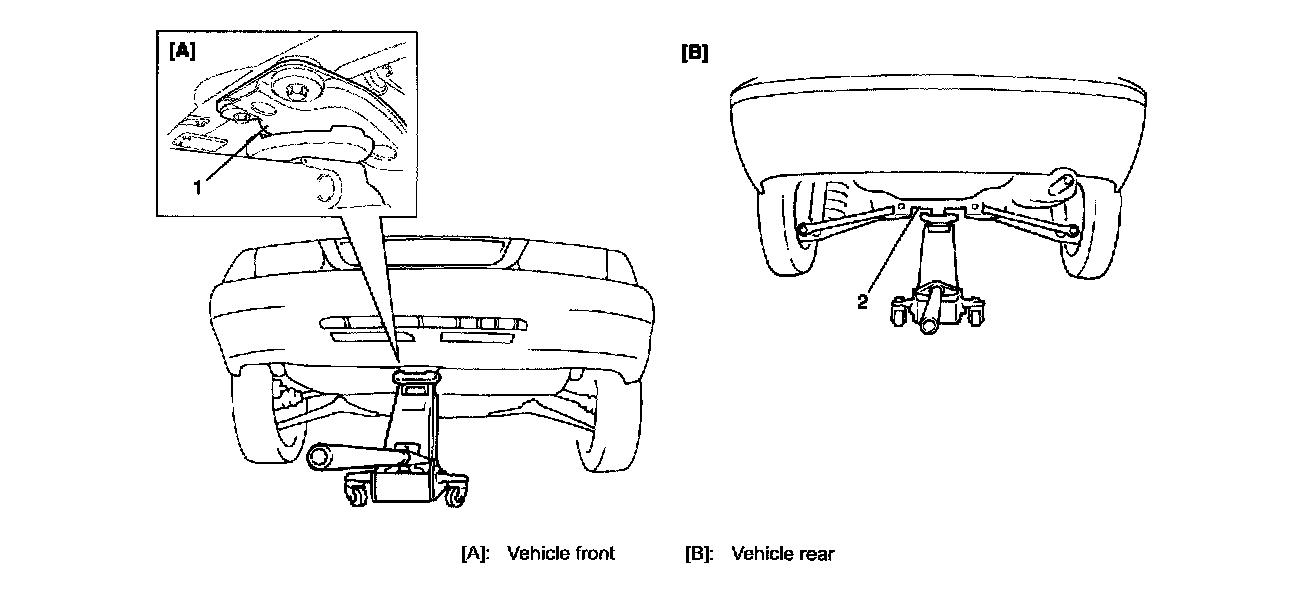
In raising front or rear vehicle end off the floor by jacking, be sure to put the jack against the front end of the engine mounting member (1) or rear suspension frame (2).
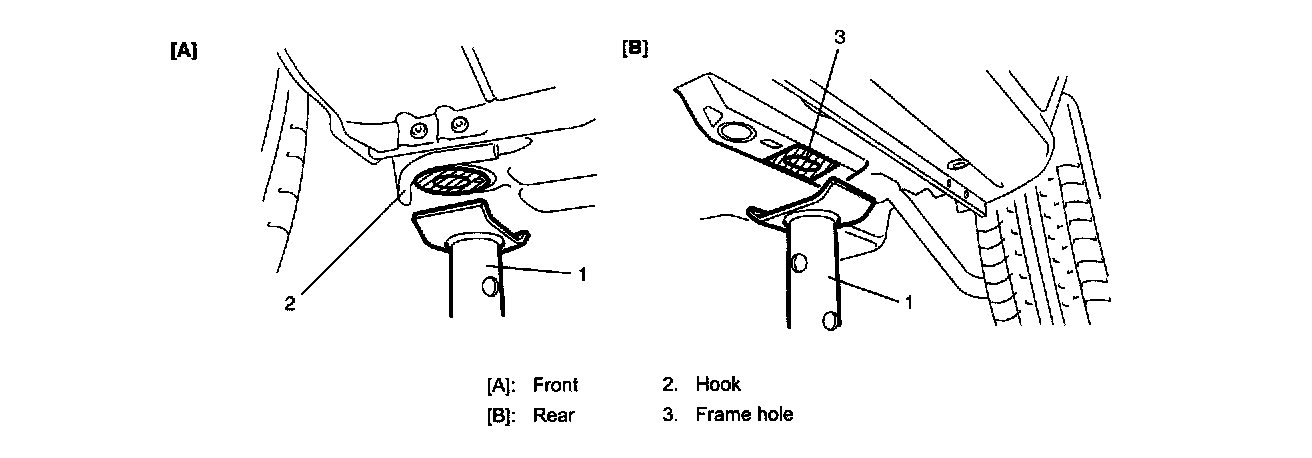
To perform service with either front or rear vehicle end jacked up, be sure to place safety stands (1) under shaded positions of vehicle body so that vehicle body is securely supported. And then check to ensure that vehicle body does not slide on safety stands (1) and the vehicle is held stable for safety's sake.
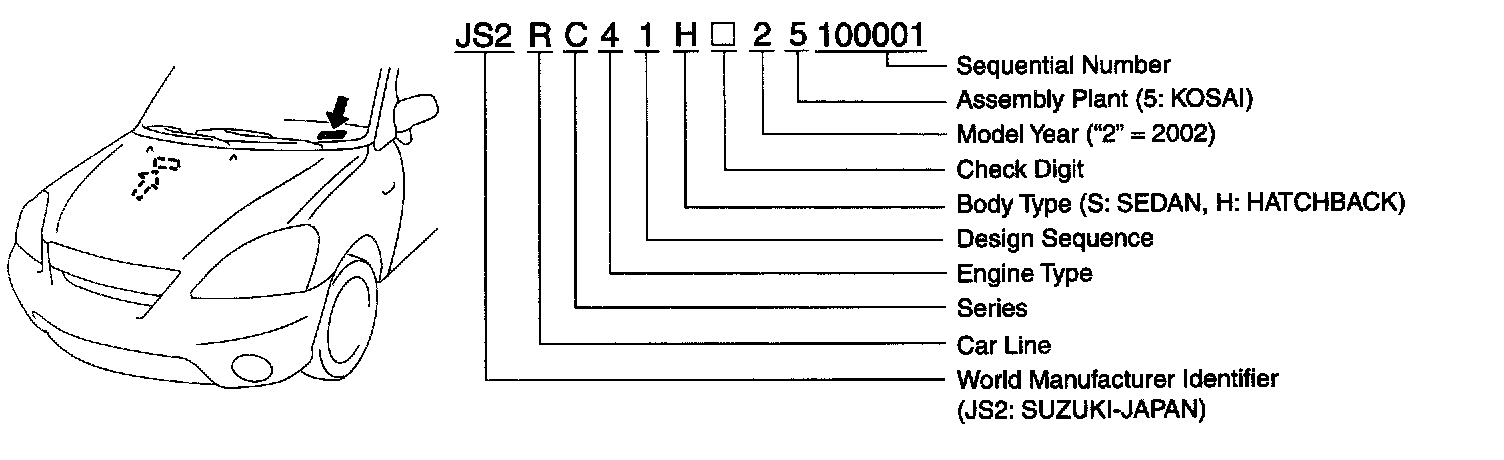
Vehicle Identification Number
The vehicle identification number is attached on the left front top of the instrument panel and punched on the front dash panel in engine room. Refer to figure for detailed VIN cord information and its location.
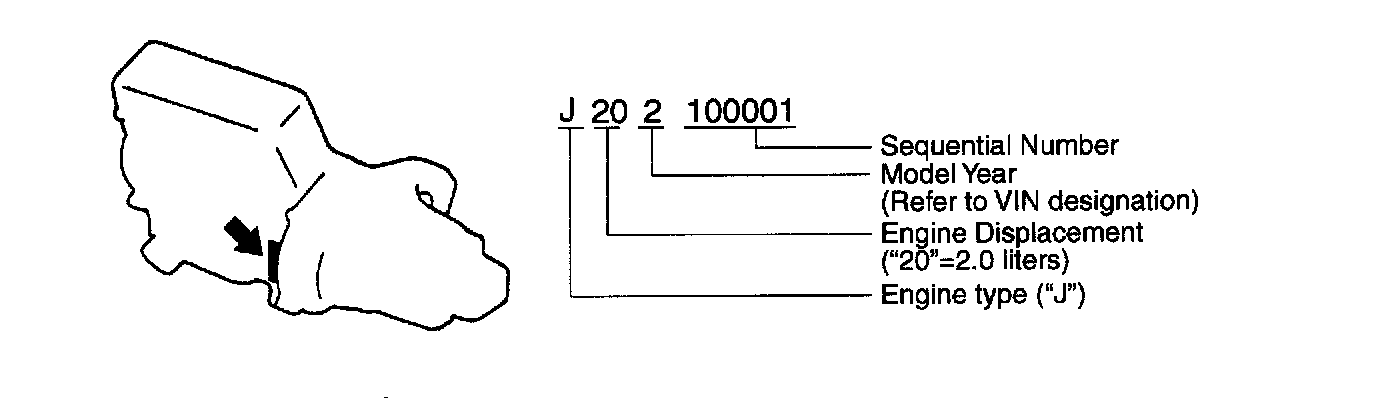
Engine Identification Number
The number is punched on cylinder block.

Transmission Identification Number
The automatic transmission identification number is located on transmission case.
Factory Service Tools
Use the Manual With the Right Hardware
Pair factory procedures with proven DIY tools so the instructions are easier to execute.
Disclosure: Verified tool recommendations may earn an affiliate commission at no cost to you.
When to See a Mechanic
Stop DIY work and contact a certified mechanic immediately if any of the following apply:
- • You smell fuel, burning insulation, or see smoke.
- • Brakes feel soft, pull hard to one side, or make grinding noises.
- • The engine overheats, stalls repeatedly, or misfires under load.
- • You are missing required tools, torque specs, or safe lifting equipment.
- • You are not confident in the next step or safety outcome.