
Safety Warning
DIY auto repair can cause serious injury, fire, or vehicle damage. These guides are for informational purposes only. Always follow OEM torque specs, wear PPE, and consult a certified mechanic if you are unsure. You are solely responsible for your safety.
2012 Subaru Forester F4-2.5L DOHCFACTORY OEM SERVICE PROCEDURE
Recommended Materials
RECOMMENDED MATERIALS
1. GENERAL
To insure the best performance, always use the specified oil, gasoline, adhesive, sealant, etc. or a substitute of equivalent quality.
2. FUEL
- Use unleaded gasoline to reduce air pollution, because using leaded gasoline will damage the catalytic converter.
- Do not use the low quality gasoline, or improper fuel such as diesel fuel, fuel alcohol, or gasoline additive because they will adversely affect on engine components.
- Always use gasoline that is equivalent to that prescribed in the instruction manual or that of high octane value. There is the possibility of damaging or improper operation of the engine and fuel injection system if the specifications are not observed. Use the prescribed gasoline type to maintain proper vehicle performance.
3. LUBRICANTS
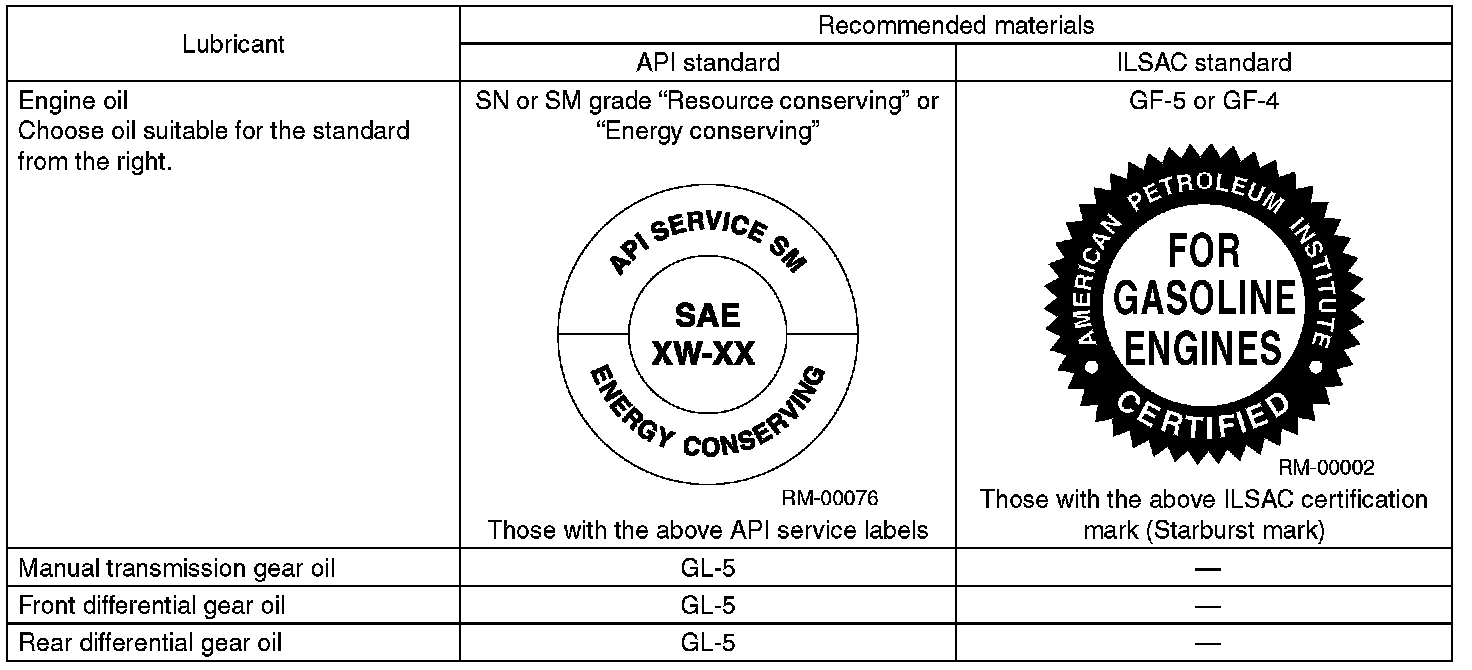
Use the lubricants shown in the table below, or equivalent. See the table below to choose the correct SAE viscosity.


4. FLUID
Use the fluids specified in the table below. Do not mix two different kinds or makes of fluid.
CAUTION: For AT model, be sure to use the recommended ATF or equivalent. Otherwise it will cause trouble.

5. ENGINE COOLANT
Use genuine engine coolant to protect the engine.

6. REFRIGERANT
Standard air conditioners on Subaru vehicles use HFC134a refrigerant. Do not mix it with other refrigerants. Also, do not use any air compressor oil except for DH-PR.

7. GREASE
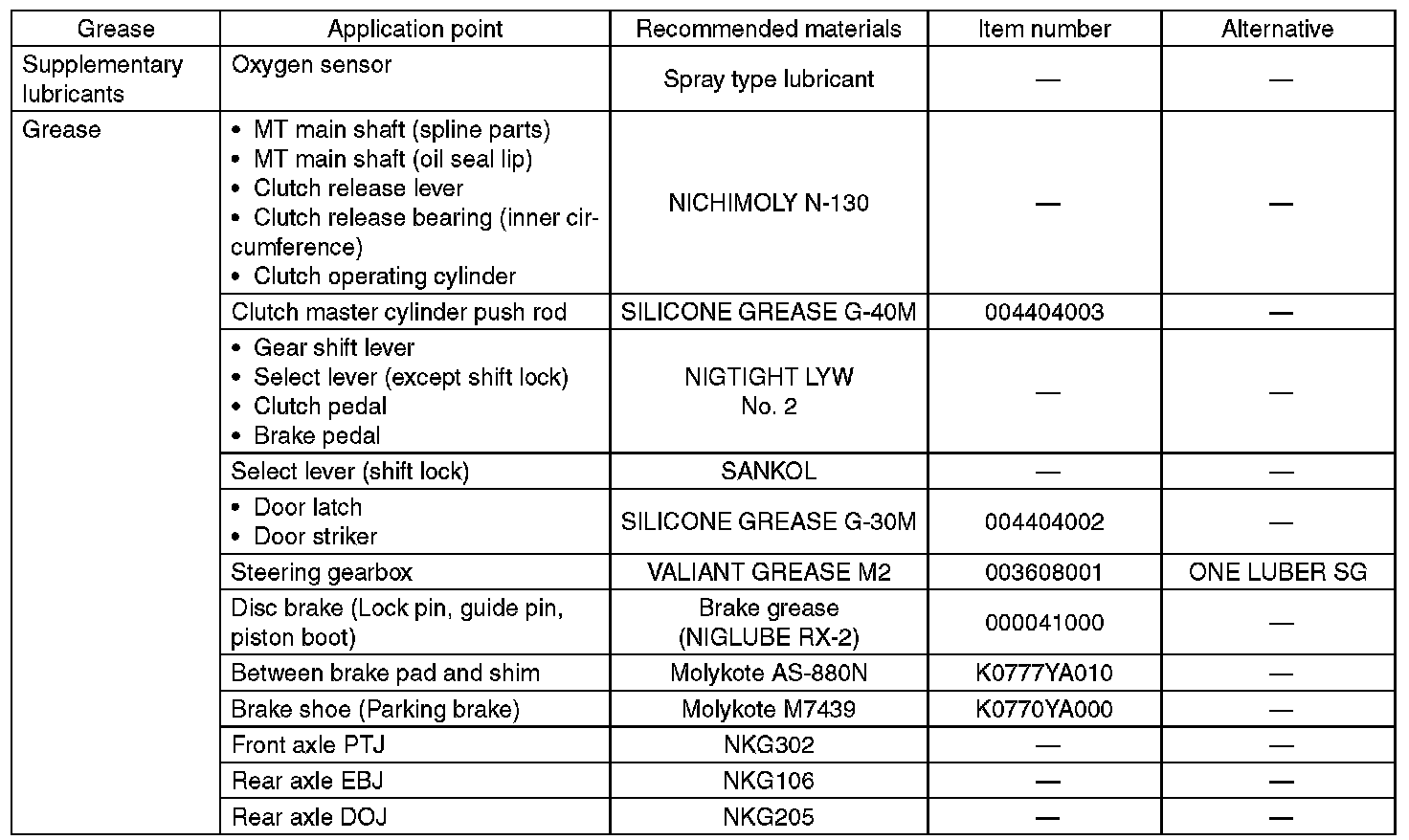
Use grease and supplementary lubricants shown in the table below.
8. ADHESIVE
Use the adhesives shown in the table below, or equivalent.

9. SEAL MATERIAL
Use the seal material shown in the table below, or equivalent.

1. GENERAL
To insure the best performance, always use the specified oil, gasoline, adhesive, sealant, etc. or a substitute of equivalent quality.
2. FUEL
- Use unleaded gasoline to reduce air pollution, because using leaded gasoline will damage the catalytic converter.
- Do not use the low quality gasoline, or improper fuel such as diesel fuel, fuel alcohol, or gasoline additive because they will adversely affect on engine components.
- Always use gasoline that is equivalent to that prescribed in the instruction manual or that of high octane value. There is the possibility of damaging or improper operation of the engine and fuel injection system if the specifications are not observed. Use the prescribed gasoline type to maintain proper vehicle performance.
3. LUBRICANTS
Use the lubricants shown in the table below, or equivalent. See the table below to choose the correct SAE viscosity.
4. FLUID
Use the fluids specified in the table below. Do not mix two different kinds or makes of fluid.
CAUTION: For AT model, be sure to use the recommended ATF or equivalent. Otherwise it will cause trouble.
5. ENGINE COOLANT
Use genuine engine coolant to protect the engine.
6. REFRIGERANT
Standard air conditioners on Subaru vehicles use HFC134a refrigerant. Do not mix it with other refrigerants. Also, do not use any air compressor oil except for DH-PR.
7. GREASE
Use grease and supplementary lubricants shown in the table below.
8. ADHESIVE
Use the adhesives shown in the table below, or equivalent.
9. SEAL MATERIAL
Use the seal material shown in the table below, or equivalent.
Factory Service Tools
Use the Manual With the Right Hardware
Pair factory procedures with proven DIY tools so the instructions are easier to execute.
Disclosure: Verified tool recommendations may earn an affiliate commission at no cost to you.
When to See a Mechanic
Stop DIY work and contact a certified mechanic immediately if any of the following apply:
- • You smell fuel, burning insulation, or see smoke.
- • Brakes feel soft, pull hard to one side, or make grinding noises.
- • The engine overheats, stalls repeatedly, or misfires under load.
- • You are missing required tools, torque specs, or safe lifting equipment.
- • You are not confident in the next step or safety outcome.