
Safety Warning
DIY auto repair can cause serious injury, fire, or vehicle damage. These guides are for informational purposes only. Always follow OEM torque specs, wear PPE, and consult a certified mechanic if you are unsure. You are solely responsible for your safety.
2010 Subaru Outback F4-2.5L SOHCFACTORY OEM SERVICE PROCEDURE
System Specifications
Cylinder Block Inspection
Warping limit 0.025 mm (0.00098 in)
Grinding limit 0.1 mm (0.004 in)
Standard height of cylinder block 201.0 mm (7.91 in)
Cylinder and Piston
The cylinder bore size is stamped on the front upper face of the cylinder block
Standard sized pistons are classified into two grades, "A" and "B"
These grades should be used as guidelines in selecting a standard piston

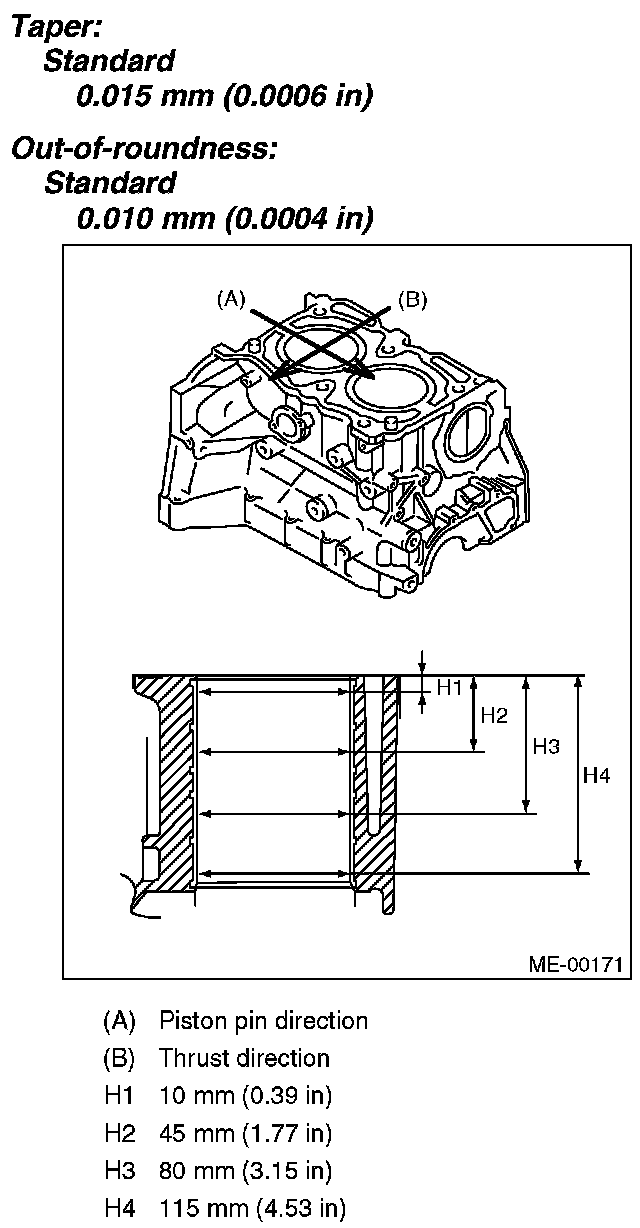
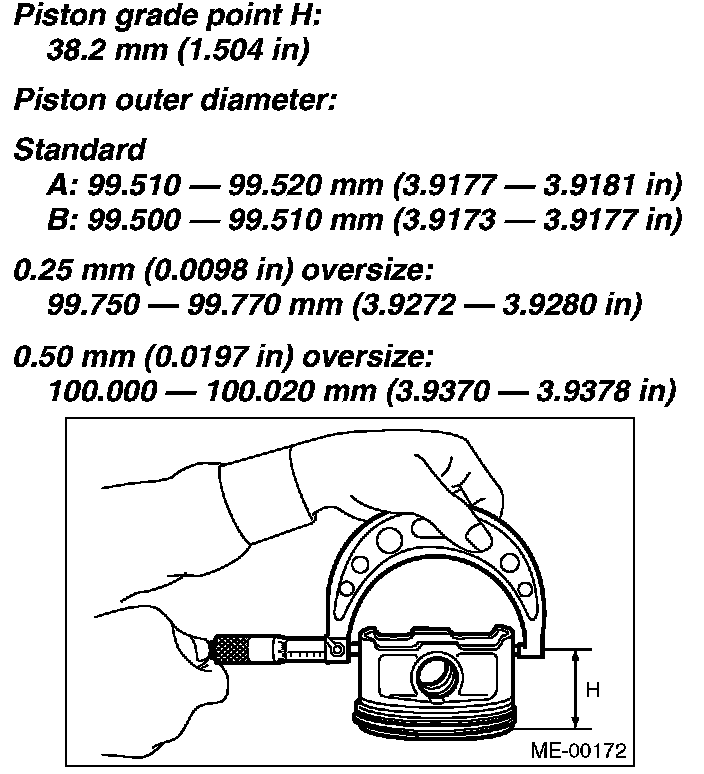
Cylinder to piston clearance at 20° C (68° F) -0.015 - 0.005 mm (-0.00059 - 0.00020 in)
Cylinder inner diameter boring limit to 100.005 mm (3.9372 in)
Crankshaft and Main Bearings

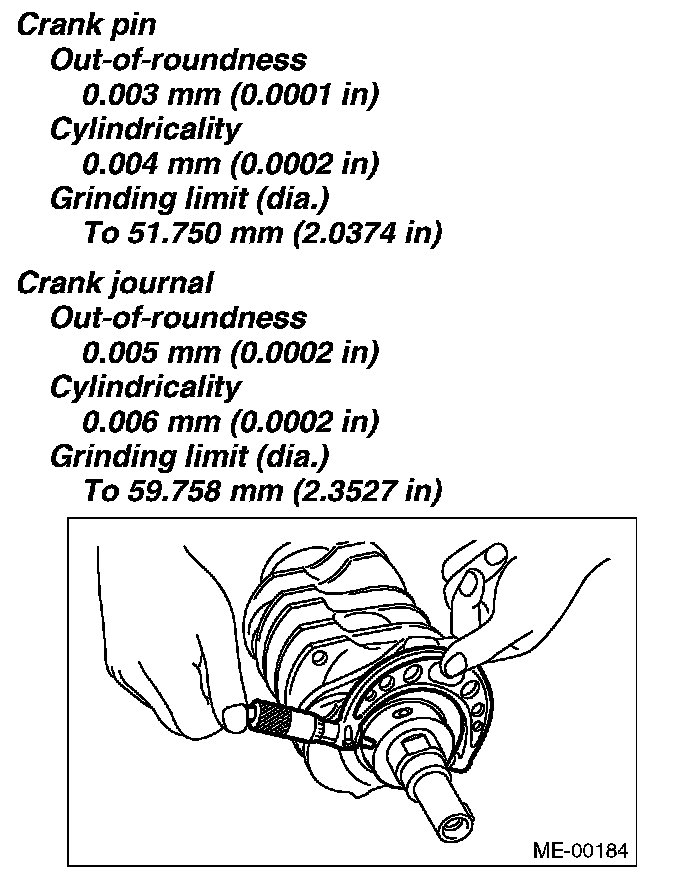
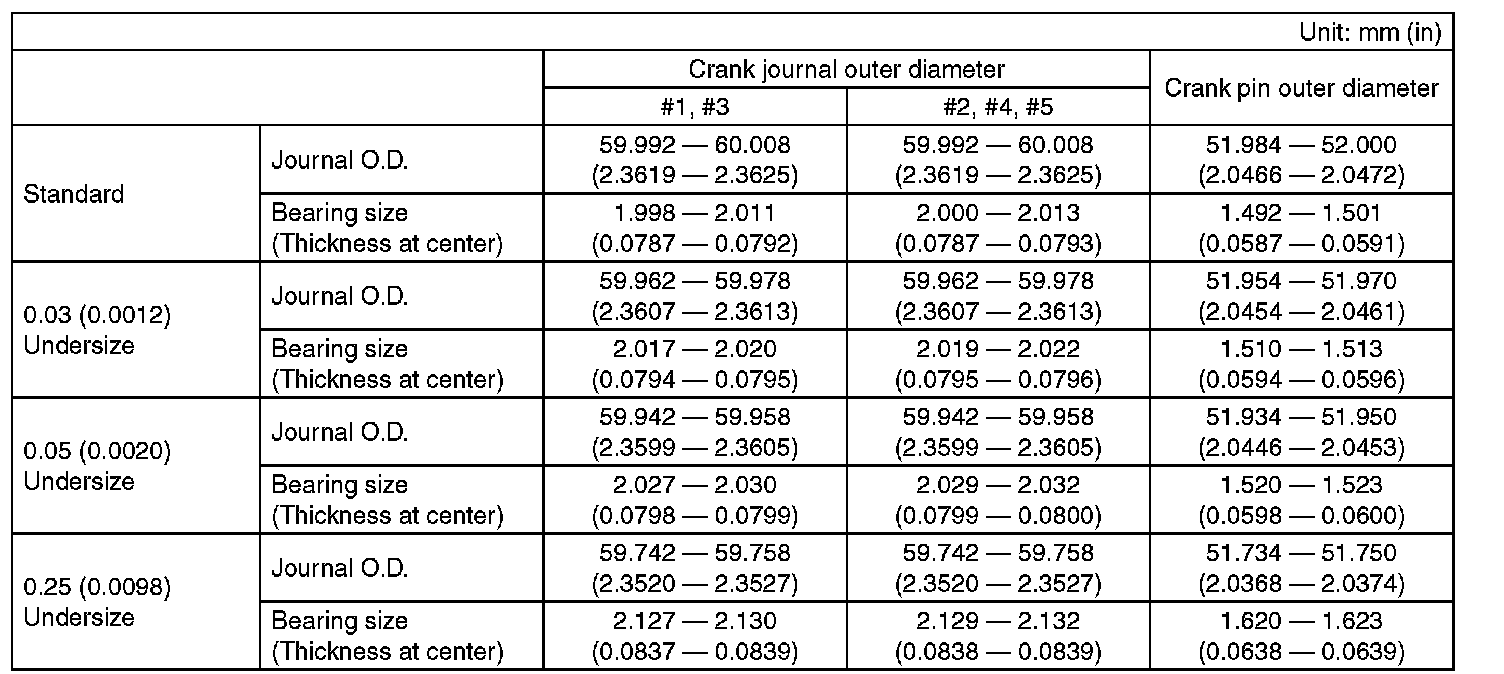

Crankshaft oil clearance (standard) 0.010- 0.030 mm (0.0004-0.0012 in)
Crankshaft Main Bearing Cap Bolts
Please refer to Cylinder Block Assembly Removal and Replacement for bolt tightening specifications and sequence. Service and Repair
Connecting Rods and Bearings
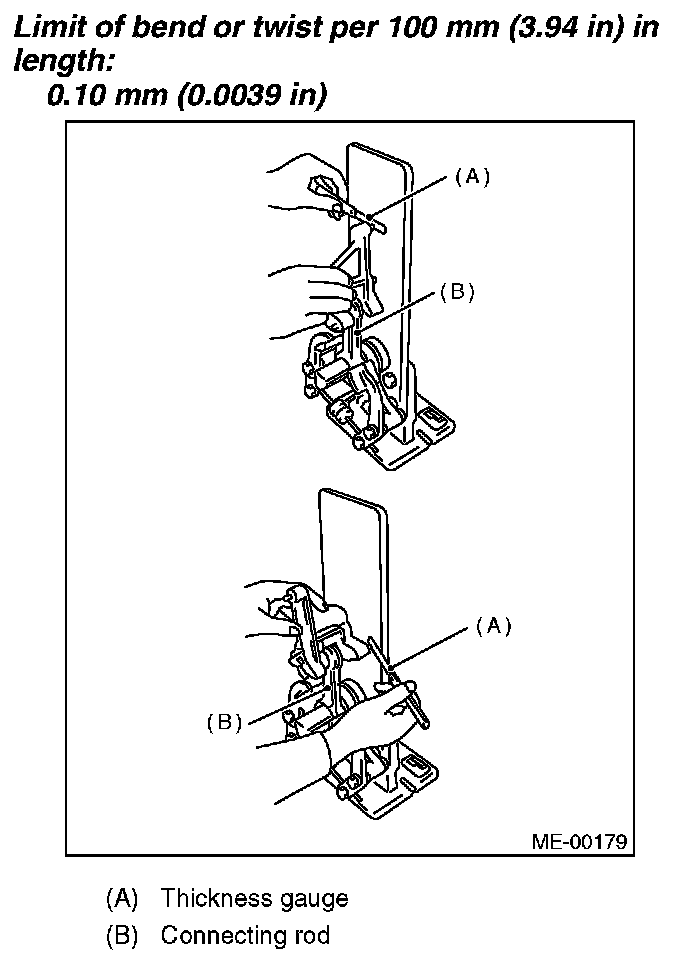
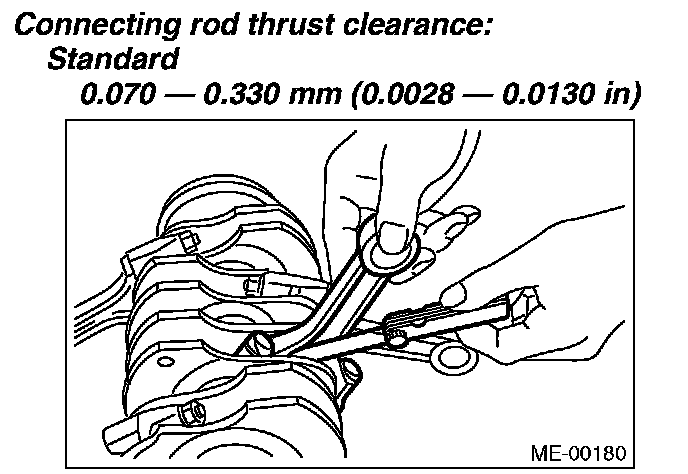
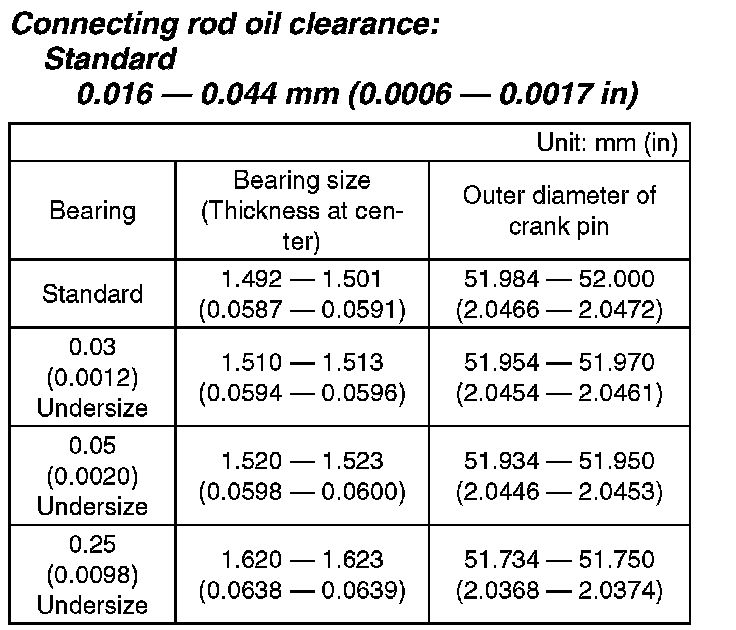
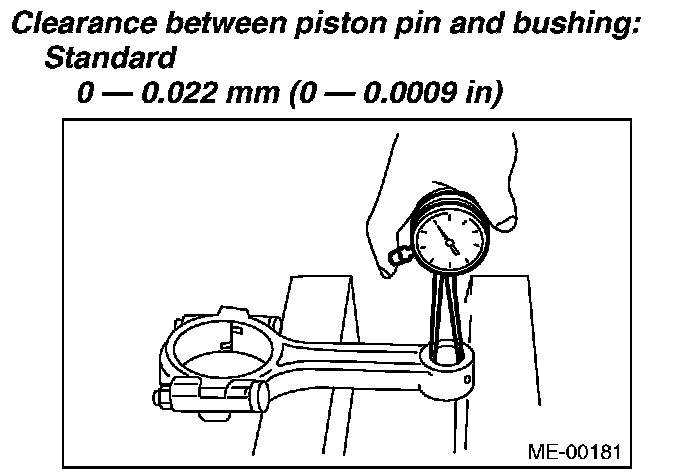
Connecting Rod Cap Fasteners 45 Nm (4.6 kgf-m, 33.2 ft-lb)
Piston Pin
Make sure piston pin can be inserted into piston pin hole by a thumb at 20° C (68° F)

Piston Rings
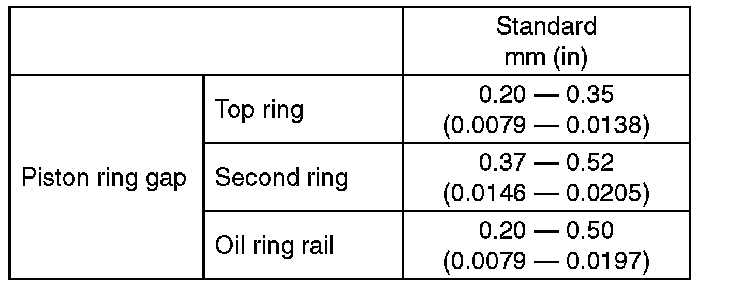
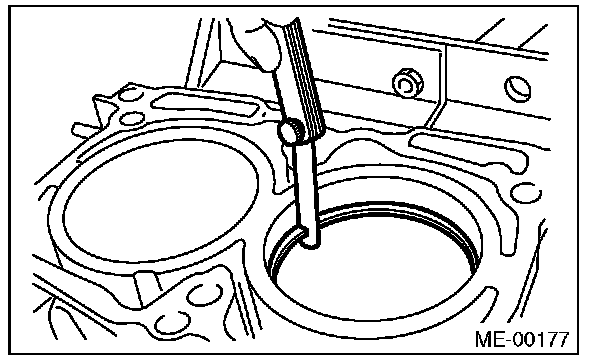


Crank Sprocket Bolt 24.5 Nm (2.5 kgf-m, 18.1 ft-lb)
Crank Pulley Bolt
First pass 47 Nm (4.8 kgf-m, 34.7 ft-lb)
Final pass Tighten 60° ± 5°
Warping limit 0.025 mm (0.00098 in)
Grinding limit 0.1 mm (0.004 in)
Standard height of cylinder block 201.0 mm (7.91 in)
Cylinder and Piston
The cylinder bore size is stamped on the front upper face of the cylinder block
Standard sized pistons are classified into two grades, "A" and "B"
These grades should be used as guidelines in selecting a standard piston
Cylinder to piston clearance at 20° C (68° F) -0.015 - 0.005 mm (-0.00059 - 0.00020 in)
Cylinder inner diameter boring limit to 100.005 mm (3.9372 in)
Crankshaft and Main Bearings
Crankshaft oil clearance (standard) 0.010- 0.030 mm (0.0004-0.0012 in)
Crankshaft Main Bearing Cap Bolts
Please refer to Cylinder Block Assembly Removal and Replacement for bolt tightening specifications and sequence. Service and Repair
Connecting Rods and Bearings
Connecting Rod Cap Fasteners 45 Nm (4.6 kgf-m, 33.2 ft-lb)
Piston Pin
Make sure piston pin can be inserted into piston pin hole by a thumb at 20° C (68° F)
Piston Rings
Crank Sprocket Bolt 24.5 Nm (2.5 kgf-m, 18.1 ft-lb)
Crank Pulley Bolt
First pass 47 Nm (4.8 kgf-m, 34.7 ft-lb)
Final pass Tighten 60° ± 5°
Factory Service Tools
Use the Manual With the Right Hardware
Pair factory procedures with proven DIY tools so the instructions are easier to execute.
Disclosure: Verified tool recommendations may earn an affiliate commission at no cost to you.
When to See a Mechanic
Stop DIY work and contact a certified mechanic immediately if any of the following apply:
- • You smell fuel, burning insulation, or see smoke.
- • Brakes feel soft, pull hard to one side, or make grinding noises.
- • The engine overheats, stalls repeatedly, or misfires under load.
- • You are missing required tools, torque specs, or safe lifting equipment.
- • You are not confident in the next step or safety outcome.