
Safety Warning
DIY auto repair can cause serious injury, fire, or vehicle damage. These guides are for informational purposes only. Always follow OEM torque specs, wear PPE, and consult a certified mechanic if you are unsure. You are solely responsible for your safety.
2008 Subaru Outback F4-2.5L SOHCFACTORY OEM SERVICE PROCEDURE
Recommended Materials
RECOMMENDED MATERIALS
1. GENERAL
To insure the best performance, always use the specified oil, gasoline, adhesive, sealant, etc. or a substitute of equivalent quality.
2. FUEL
Always use gasoline of the same or higher octane value than specified in the owner's manual. Ignoring the specifications below will result in damage or poor performance of engine and fuel injection system. Use the specified gasoline to correct performance.
Unleaded gasoline
In order to reduce air pollution, use unleaded gasoline for the vehicle equipped with catalytic converter. Using leaded gasoline may damage the catalytic converter.
3. LUBRICANTS
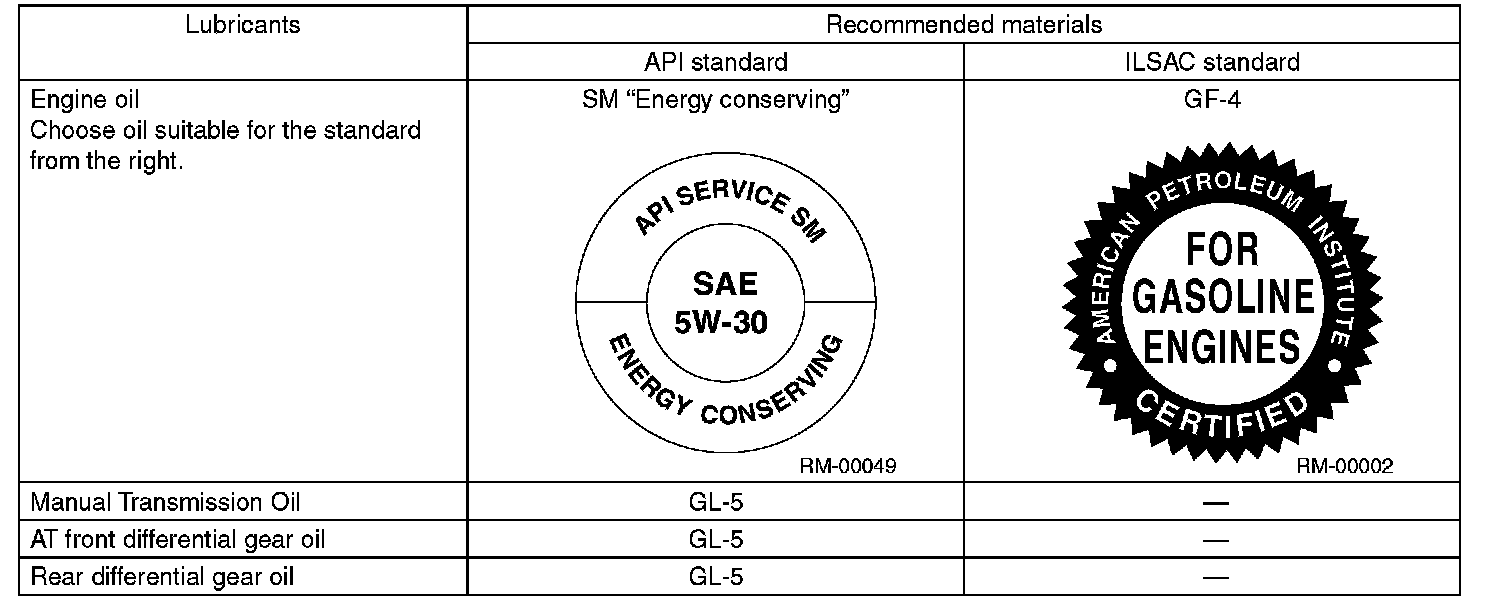
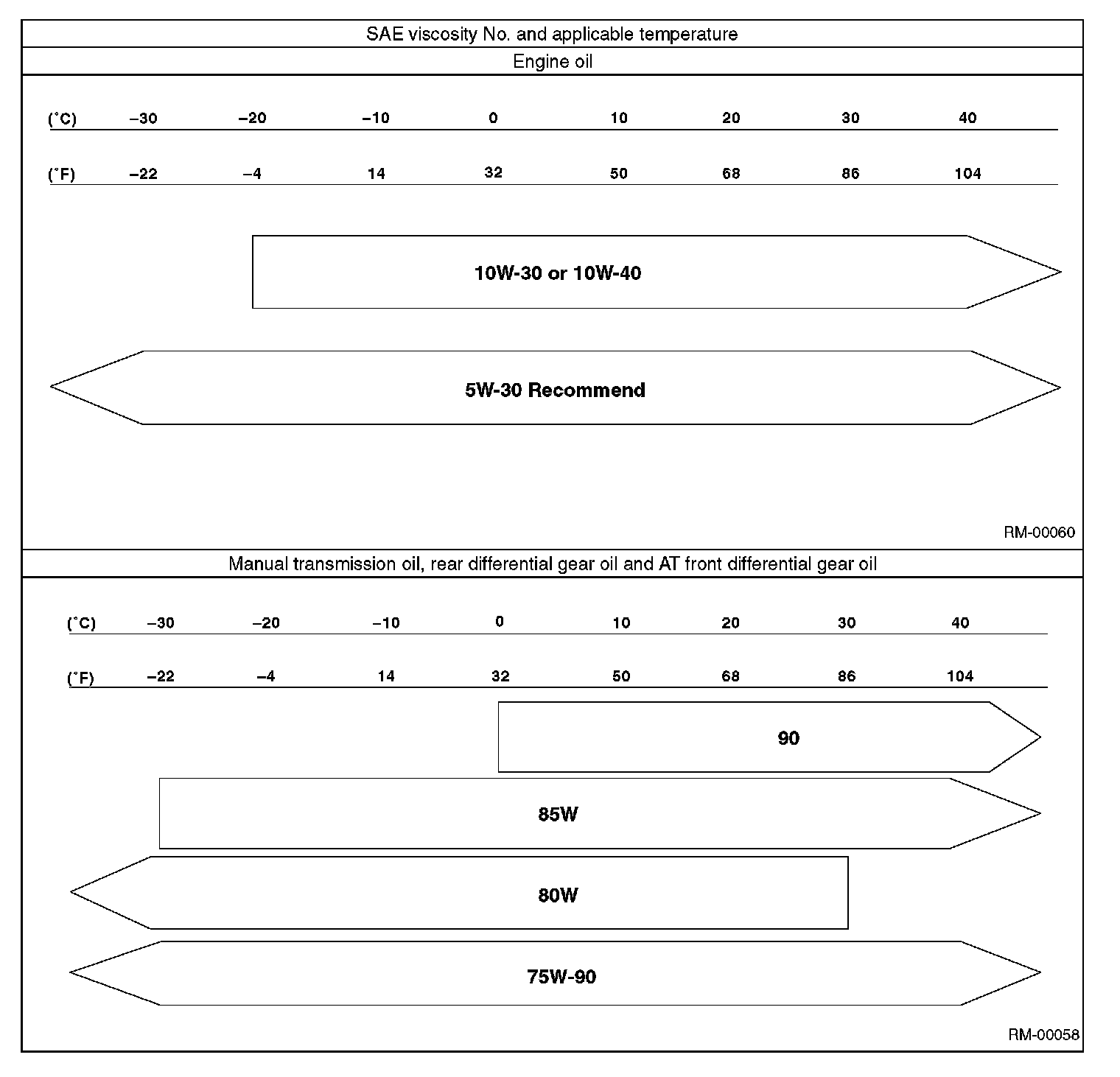
Use either lubricants in the table given or equivalent. See the table given to choose the correct SAE viscosity.
4. FLUID
Use the fluids specified in the table given. Do not mix two different kinds or makes of fluid.
CAUTION: Always use the recommended or equivalent ATF. Using material except recommended one or substitute would cause trouble.

5. COOLANT
Use genuine coolant to protect the engine.

6. REFRIGERANT
Standard air conditioners on Subaru vehicles use HFC134a refrigerant. Do not mix it with other refrigerants. Also, do not use any compressor oil other than DENSO OIL 8.

7. GREASE
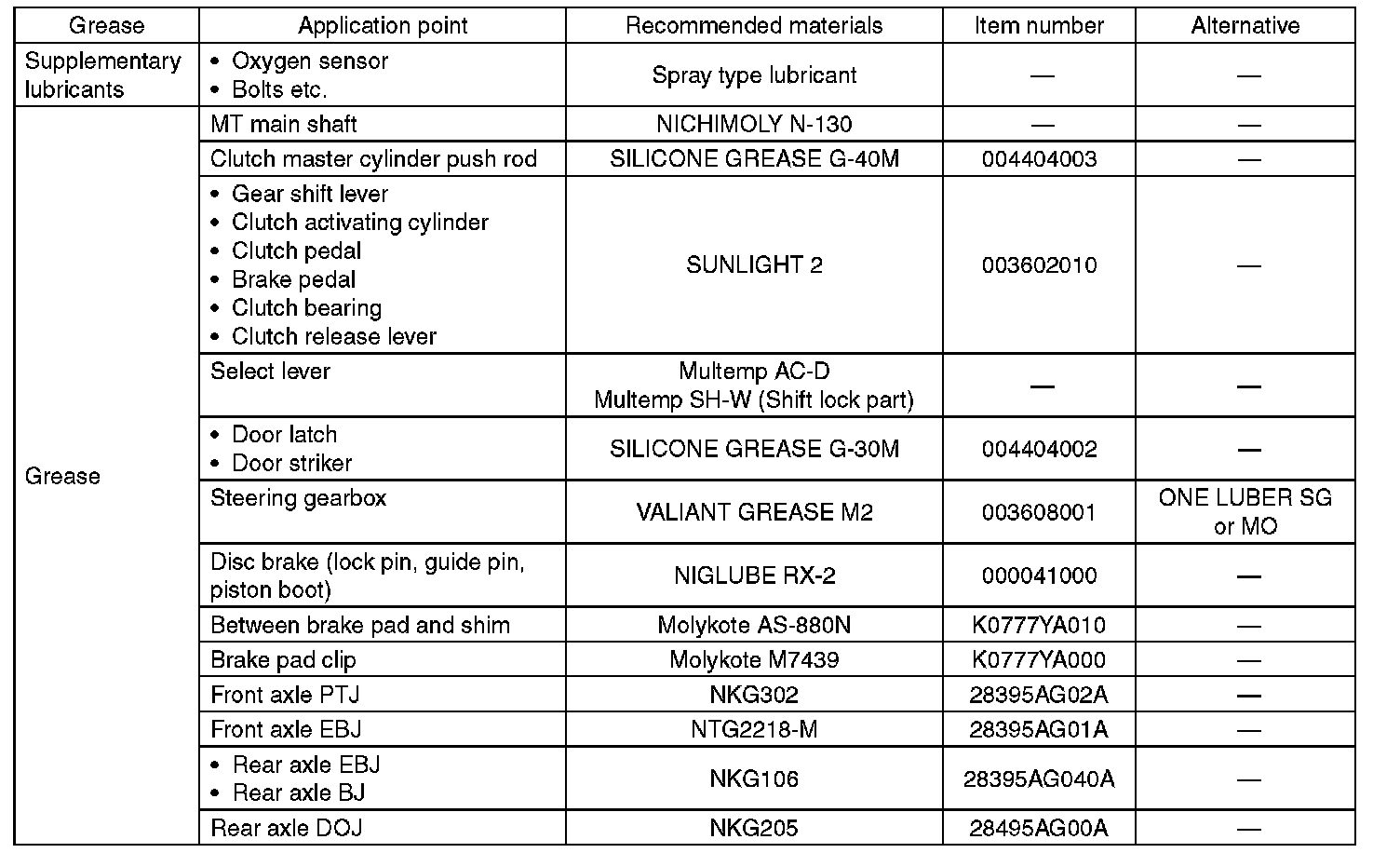
Use grease and supplementary lubricants shown in the table given.
8. ADHESIVE
Use the adhesives shown in the table given, or equivalent.

9. SEAL MATERIAL
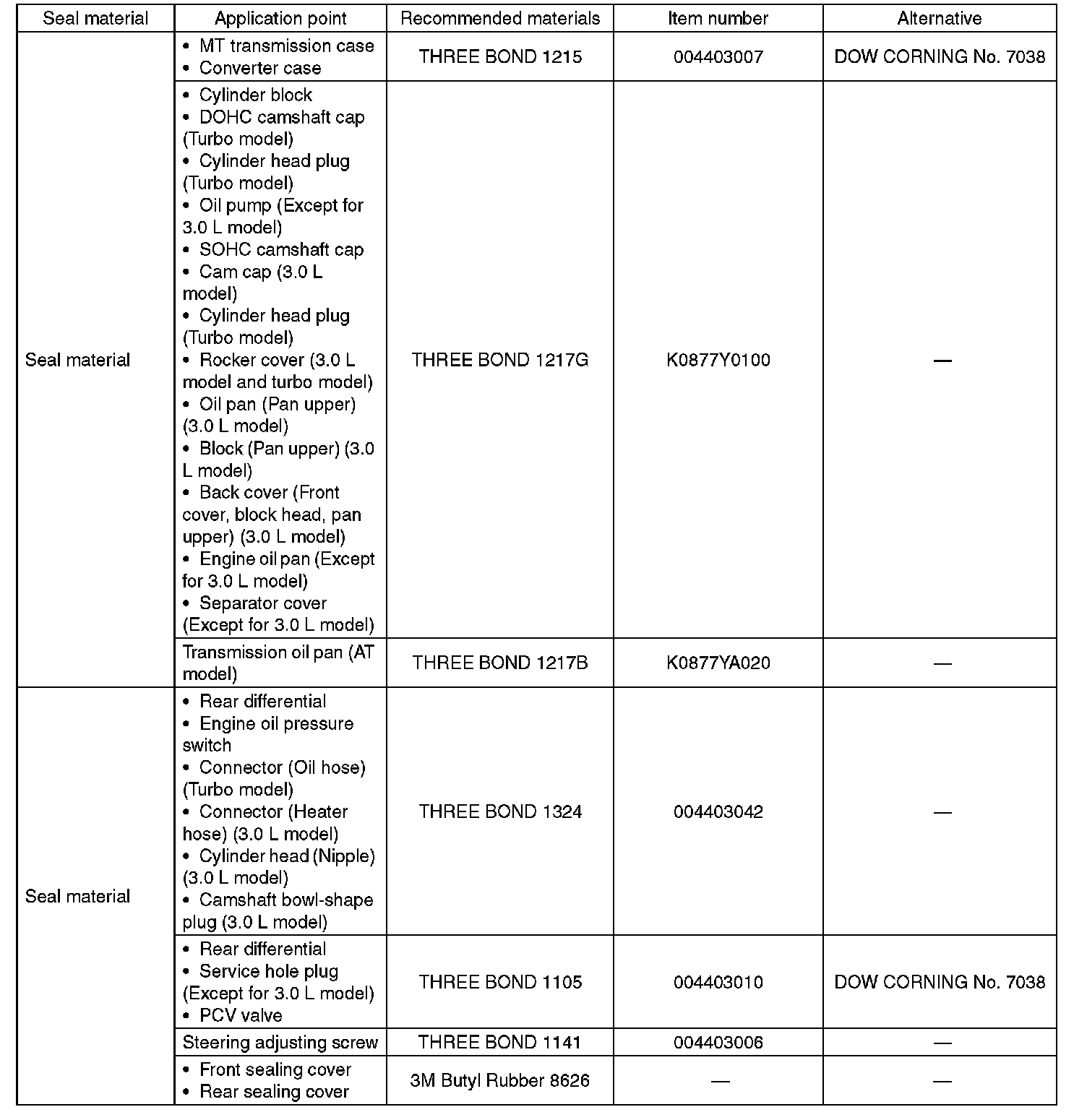
Use the seal material shown in the table given, or equivalent.
1. GENERAL
To insure the best performance, always use the specified oil, gasoline, adhesive, sealant, etc. or a substitute of equivalent quality.
2. FUEL
Always use gasoline of the same or higher octane value than specified in the owner's manual. Ignoring the specifications below will result in damage or poor performance of engine and fuel injection system. Use the specified gasoline to correct performance.
Unleaded gasoline
In order to reduce air pollution, use unleaded gasoline for the vehicle equipped with catalytic converter. Using leaded gasoline may damage the catalytic converter.
3. LUBRICANTS
Use either lubricants in the table given or equivalent. See the table given to choose the correct SAE viscosity.
4. FLUID
Use the fluids specified in the table given. Do not mix two different kinds or makes of fluid.
CAUTION: Always use the recommended or equivalent ATF. Using material except recommended one or substitute would cause trouble.
5. COOLANT
Use genuine coolant to protect the engine.
6. REFRIGERANT
Standard air conditioners on Subaru vehicles use HFC134a refrigerant. Do not mix it with other refrigerants. Also, do not use any compressor oil other than DENSO OIL 8.
7. GREASE
Use grease and supplementary lubricants shown in the table given.
8. ADHESIVE
Use the adhesives shown in the table given, or equivalent.
9. SEAL MATERIAL
Use the seal material shown in the table given, or equivalent.
Factory Service Tools
Use the Manual With the Right Hardware
Pair factory procedures with proven DIY tools so the instructions are easier to execute.
Disclosure: Verified tool recommendations may earn an affiliate commission at no cost to you.
When to See a Mechanic
Stop DIY work and contact a certified mechanic immediately if any of the following apply:
- • You smell fuel, burning insulation, or see smoke.
- • Brakes feel soft, pull hard to one side, or make grinding noises.
- • The engine overheats, stalls repeatedly, or misfires under load.
- • You are missing required tools, torque specs, or safe lifting equipment.
- • You are not confident in the next step or safety outcome.