
Safety Warning
DIY auto repair can cause serious injury, fire, or vehicle damage. These guides are for informational purposes only. Always follow OEM torque specs, wear PPE, and consult a certified mechanic if you are unsure. You are solely responsible for your safety.
2000 Subaru Forester S F4-2.5L SOHCFACTORY OEM SERVICE PROCEDURE
Function
Function
During the period the truly round rotor turns through half a rotation (180 degrees), a cycle of the suction, compression and discharge strokes is completed. Each time the rotor turns through a rotation (360 degrees), the vanes complete two cycles each, or 10 cycles in total.
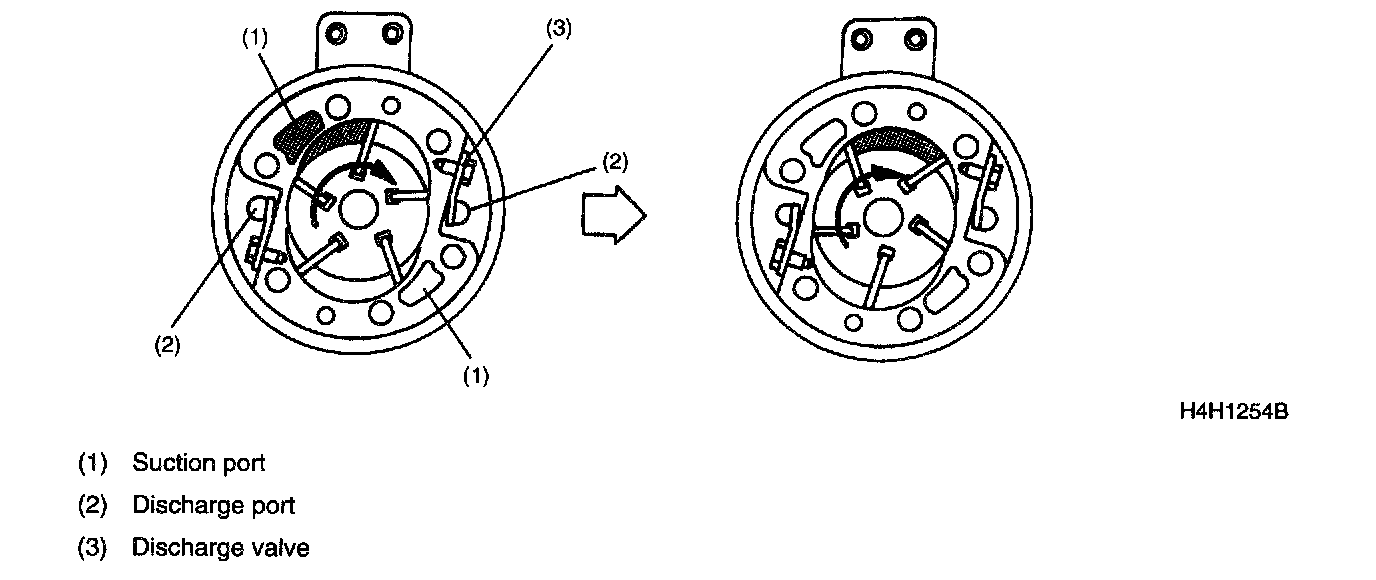
1. SUCTION
The refrigerant gas, that leaves the evaporator as the compressor turns, enters the low pressure chamber of the compressor, and is drawn in from the suction port as the vanes turn.
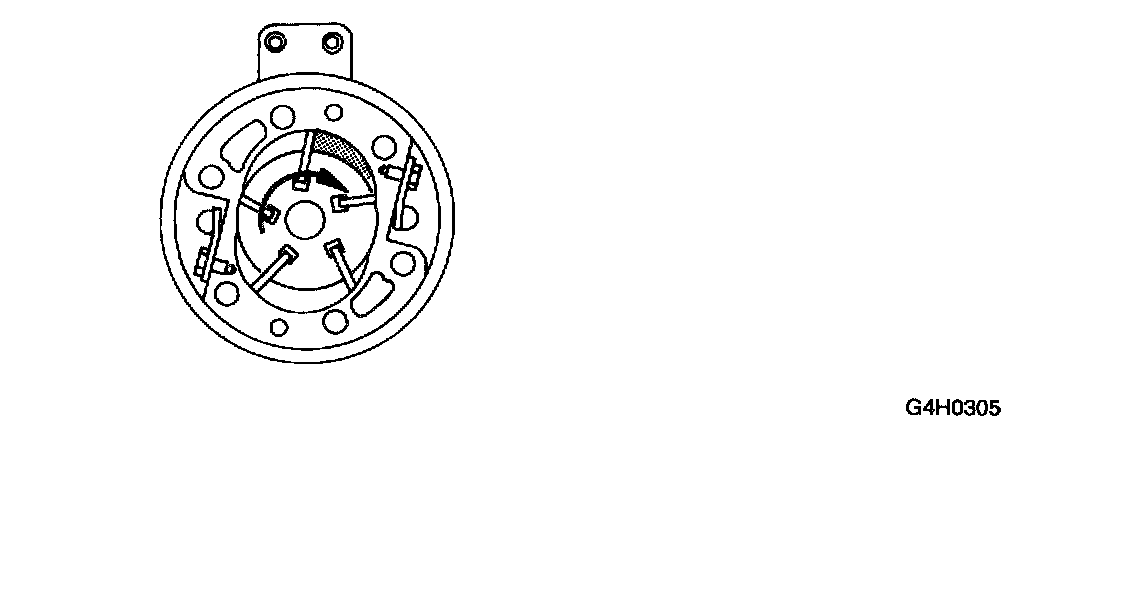
2. COMPRESSION
When suction is completed, the refrigerant gas in the cylinder chamber enclosed by the vanes is compressed as the vanes rotate. In this case, air tightness between the vane ends and cylinder inside surface is maintained by a lubricant.
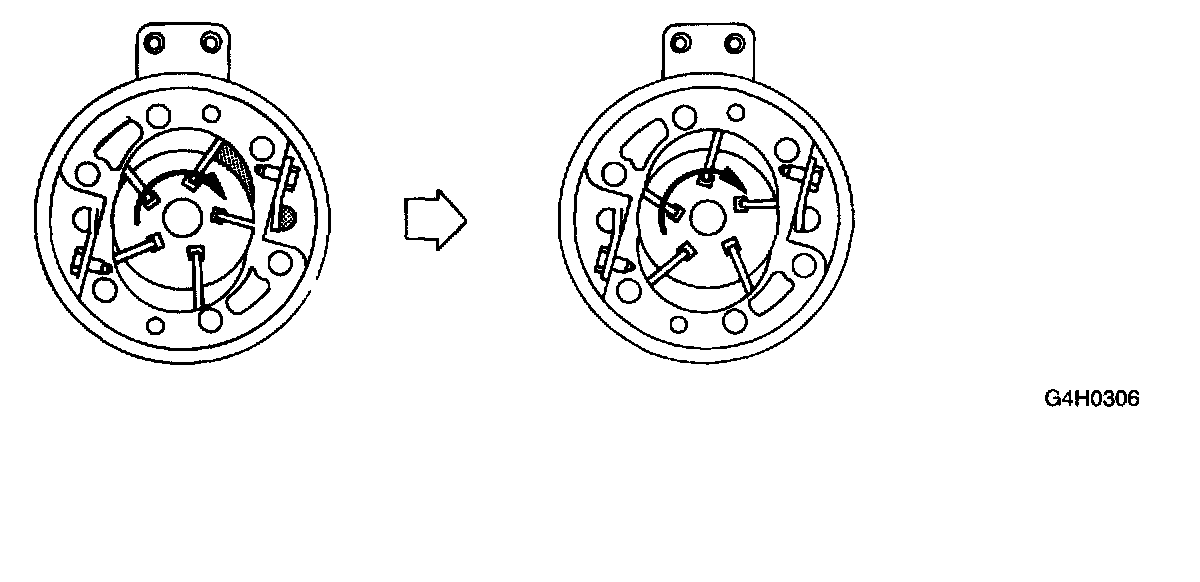
3. DISCHARGE
When continuous compression causes the pressure in the cylinder chamber to rise to the extent that the pressure exceeds the pressure in the high pressure chamber, the refrigerant gas is discharged. Even when the pressure in the cylinder chamber is lower than that in the high pressure chamber, the cylinder gas never flows back to the cylinder chamber, as the discharge valve is pressed into the closed position by the pressure in the high pressure chamber.
The compressor repeated the above-mentioned cycle. Each time the rotor turns through a rotation, the five chambers partitioned by the vanes in the cylinder go through the suction, compression and discharge strokes twice each.
During the period the truly round rotor turns through half a rotation (180 degrees), a cycle of the suction, compression and discharge strokes is completed. Each time the rotor turns through a rotation (360 degrees), the vanes complete two cycles each, or 10 cycles in total.
1. SUCTION
The refrigerant gas, that leaves the evaporator as the compressor turns, enters the low pressure chamber of the compressor, and is drawn in from the suction port as the vanes turn.
2. COMPRESSION
When suction is completed, the refrigerant gas in the cylinder chamber enclosed by the vanes is compressed as the vanes rotate. In this case, air tightness between the vane ends and cylinder inside surface is maintained by a lubricant.
3. DISCHARGE
When continuous compression causes the pressure in the cylinder chamber to rise to the extent that the pressure exceeds the pressure in the high pressure chamber, the refrigerant gas is discharged. Even when the pressure in the cylinder chamber is lower than that in the high pressure chamber, the cylinder gas never flows back to the cylinder chamber, as the discharge valve is pressed into the closed position by the pressure in the high pressure chamber.
The compressor repeated the above-mentioned cycle. Each time the rotor turns through a rotation, the five chambers partitioned by the vanes in the cylinder go through the suction, compression and discharge strokes twice each.
Factory Service Tools
Use the Manual With the Right Hardware
Pair factory procedures with proven DIY tools so the instructions are easier to execute.
Disclosure: Verified tool recommendations may earn an affiliate commission at no cost to you.
When to See a Mechanic
Stop DIY work and contact a certified mechanic immediately if any of the following apply:
- • You smell fuel, burning insulation, or see smoke.
- • Brakes feel soft, pull hard to one side, or make grinding noises.
- • The engine overheats, stalls repeatedly, or misfires under load.
- • You are missing required tools, torque specs, or safe lifting equipment.
- • You are not confident in the next step or safety outcome.