
Safety Warning
DIY auto repair can cause serious injury, fire, or vehicle damage. These guides are for informational purposes only. Always follow OEM torque specs, wear PPE, and consult a certified mechanic if you are unsure. You are solely responsible for your safety.
2000 Subaru Forester L F4-2.5L SOHCFACTORY OEM SERVICE PROCEDURE
Inspection Mode
After performing diagnostics and clearing the memory, check for any remaining unresolved trouble data:
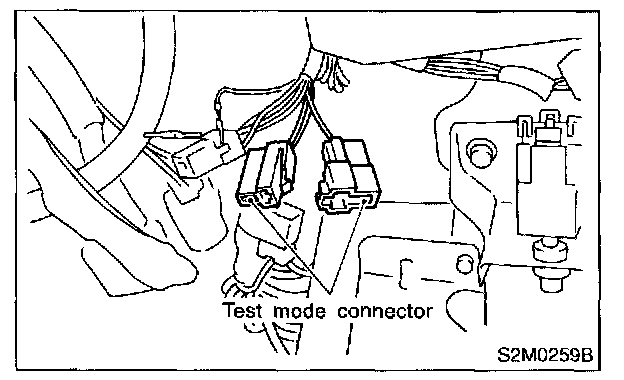
1. Connect test mode connector at the lower side of the instrument panel (on the driver's side), to the side of the center console box.
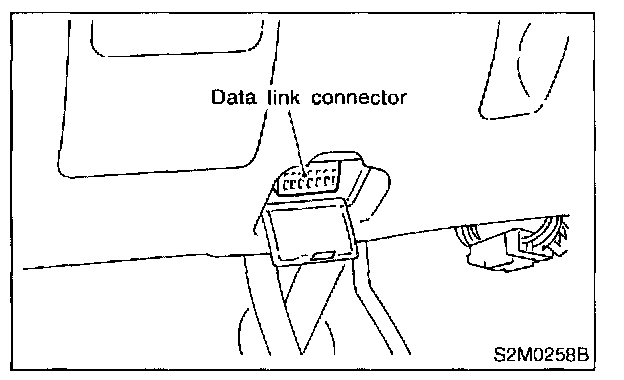
2. Connect the OBD-II general scan tool to its data link connector in the lower portion of the instrument panel (on the driver's side).
CAUTION: Do not connect the scan tools except for Subaru Select Monitor and OBD-II general scan tool.
3. Start the engine.
NOTE:
- Ensure the selector lever is placed in the "P" position before starting.(AT vehicles)
- Depress clutch pedal when starting the engine.(MT vehicles)
4. Using the selector lever or shift lever, turn the "P" position switch and the "N" position switch to ON.
5. Depress the brake pedal to turn the brake switch ON.(AT vehicles)
6. keep engine speed in the 2,500 - 3,000 rpm range for 40 seconds.
NOTE:
On models without tachometer, use the tachometer (Secondary pickup type).
7. Place the selector lever or shift lever in the "D" position (AT vehicles) or "1st" gear (MT vehicles) and drive the vehicle at 5 to 10 kmph (3 to 6 MPH).
NOTE:
- On AWD vehicles, release the parking brake.
- The speed difference between front and rear wheels may light the ABS warning light, but this indicates no malfunctions.When engine control diagnosis is finished, perform the ABS memory clearance procedure of self-diagnosis system.
8. Using the OBD-II general scan tool, check for diagnostic trouble code(s) and record the result(s).
NOTE:
- For detailed operation procedures, Refer to the OBD-II General Scan Tool Instruction Manual.
- For detailed concerning diagnostic trouble codes, Refer to the DIAGNOSTIC TROUBLE CODE (DTC) LIST. Diagnostic Trouble Code Descriptions
1. Connect test mode connector at the lower side of the instrument panel (on the driver's side), to the side of the center console box.
2. Connect the OBD-II general scan tool to its data link connector in the lower portion of the instrument panel (on the driver's side).
CAUTION: Do not connect the scan tools except for Subaru Select Monitor and OBD-II general scan tool.
3. Start the engine.
NOTE:
- Ensure the selector lever is placed in the "P" position before starting.(AT vehicles)
- Depress clutch pedal when starting the engine.(MT vehicles)
4. Using the selector lever or shift lever, turn the "P" position switch and the "N" position switch to ON.
5. Depress the brake pedal to turn the brake switch ON.(AT vehicles)
6. keep engine speed in the 2,500 - 3,000 rpm range for 40 seconds.
NOTE:
On models without tachometer, use the tachometer (Secondary pickup type).
7. Place the selector lever or shift lever in the "D" position (AT vehicles) or "1st" gear (MT vehicles) and drive the vehicle at 5 to 10 kmph (3 to 6 MPH).
NOTE:
- On AWD vehicles, release the parking brake.
- The speed difference between front and rear wheels may light the ABS warning light, but this indicates no malfunctions.When engine control diagnosis is finished, perform the ABS memory clearance procedure of self-diagnosis system.
8. Using the OBD-II general scan tool, check for diagnostic trouble code(s) and record the result(s).
NOTE:
- For detailed operation procedures, Refer to the OBD-II General Scan Tool Instruction Manual.
- For detailed concerning diagnostic trouble codes, Refer to the DIAGNOSTIC TROUBLE CODE (DTC) LIST. Diagnostic Trouble Code Descriptions
Factory Service Tools
Use the Manual With the Right Hardware
Pair factory procedures with proven DIY tools so the instructions are easier to execute.
Disclosure: Verified tool recommendations may earn an affiliate commission at no cost to you.
When to See a Mechanic
Stop DIY work and contact a certified mechanic immediately if any of the following apply:
- • You smell fuel, burning insulation, or see smoke.
- • Brakes feel soft, pull hard to one side, or make grinding noises.
- • The engine overheats, stalls repeatedly, or misfires under load.
- • You are missing required tools, torque specs, or safe lifting equipment.
- • You are not confident in the next step or safety outcome.