
Safety Warning
DIY auto repair can cause serious injury, fire, or vehicle damage. These guides are for informational purposes only. Always follow OEM torque specs, wear PPE, and consult a certified mechanic if you are unsure. You are solely responsible for your safety.
2012 Scion tC L4-2.5L (2AR-FE)FACTORY OEM SERVICE PROCEDURE
Rear Wheel Alignment
ALIGNMENT / HANDLING DIAGNOSIS: REAR WHEEL ALIGNMENT: ADJUSTMENT
1. INSPECT TIRES Component Tests and General Diagnostics
2. MEASURE VEHICLE HEIGHT Front Wheel Alignment
3. INSPECT TOE-IN
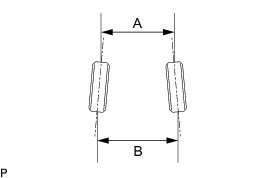
Standard Toe-in (Unloaded Vehicle):

If the toe-in is not within the specified range, inspect the suspension parts and replace them if necessary.
4. ADJUST TOE-IN
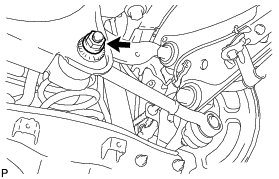
(a) Loosen the toe adjust cam nut.
(b) Turn the adjust cams by an equal amount to adjust the toe-in.
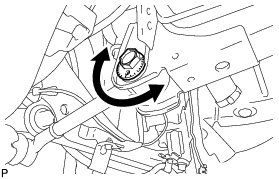
HINT
* Try to adjust the toe-in to the center value.
* The toe-in will change by approximately 3.4 mm (0.134 in.) for each graduation of the cam.
(c) Tighten the toe adjust cam nut.
Torque : 100 Nm (1020 kgf-cm, 74 ft-lbf)
5. INSPECT CAMBER
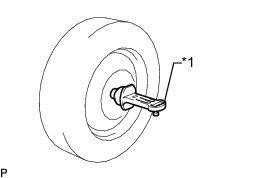
(a) Install a camber-caster-kingpin gauge or set the vehicle on a wheel alignment tester.
Text in Illustration

(b) Inspect the camber.
Standard Camber Inclination (Unloaded Vehicle):

If the measured value is not within the specified range, inspect the suspension parts for damage and wear. Replace parts as necessary as the camber cannot be properly adjusted with any damaged or worn parts.
6. PLACE FRONT WHEELS FACING STRAIGHT AHEAD
7. PERFORM YAW RATE SENSOR ZERO POINT CALIBRATION
Programming and Relearning
Factory Service Tools
Use the Manual With the Right Hardware
Pair factory procedures with proven DIY tools so the instructions are easier to execute.
Disclosure: Verified tool recommendations may earn an affiliate commission at no cost to you.
When to See a Mechanic
Stop DIY work and contact a certified mechanic immediately if any of the following apply:
- • You smell fuel, burning insulation, or see smoke.
- • Brakes feel soft, pull hard to one side, or make grinding noises.
- • The engine overheats, stalls repeatedly, or misfires under load.
- • You are missing required tools, torque specs, or safe lifting equipment.
- • You are not confident in the next step or safety outcome.