
Safety Warning
DIY auto repair can cause serious injury, fire, or vehicle damage. These guides are for informational purposes only. Always follow OEM torque specs, wear PPE, and consult a certified mechanic if you are unsure. You are solely responsible for your safety.
2008 Saturn Astra L4-1.8LFACTORY OEM SERVICE PROCEDURE
Fuel Level Sensor: Service and Repair
Fuel Level Sensor Replacement
Removal Procedure
Important:
* The fuel tank must be drained with a suitable, commercially-available fuel removal unit and suction hose - follow safety regulations and national legislation. The fuel tank is fitted with a refill limit float valve. This is located on the filler neck in the fuel tank. To prevent damaging the refill limit float valve, a suitable suction hose must be used.
* In the presence of fuel vapors or escaping fuel - observe safety regulations and national legislation. Store drained fuel in a suitable, sealable container.
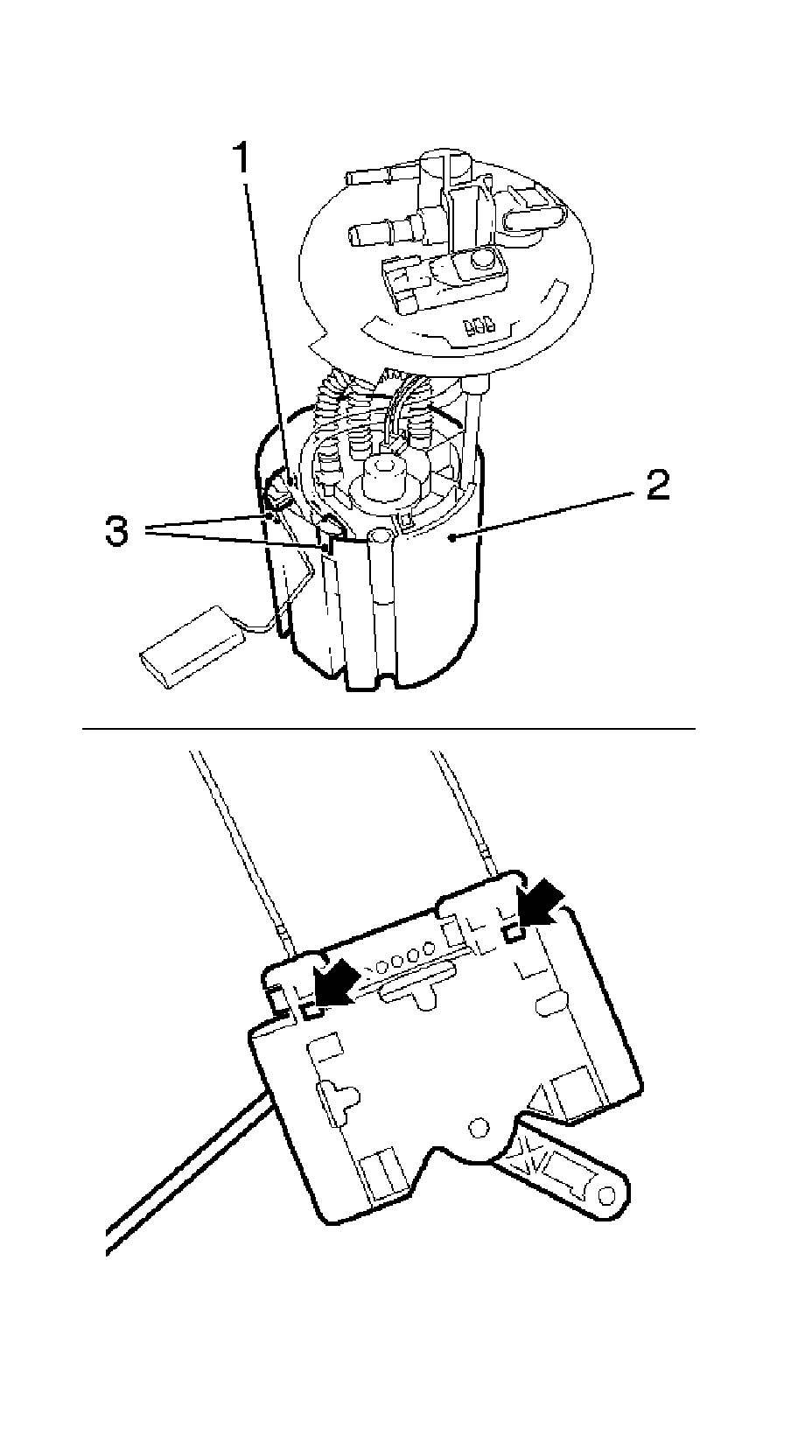
1. Remove the fuel tank. Refer to Fuel Tank Replacement (Service and Repair) .
Important: Do not pull on the shaft of fuel tank sensor.
2. Remove the fuel tank sensor (1).
* Release the 2 retainers (3).
* Carefully pull from guide upward .
Important: The wire connectors are to be pulled out carefully for disassembling of the connection wires.
* Disconnect the 2 wires.
Important: The cable connectors is to be depressed by a blunt rod-shaped article.
* Depress the 2 snap-on tongue (arrows) of the cable connectors .
Installation Procedure
Important: Do not pull on shaft of fuel tank sensor.
1. Install the fuel tank sensor.
* Lock the 2 retainers .
* Carefully pull in guide downward.
Important: The wire connectors are to be pulled in carefully for disassembling of the connection wires.
* Connect the 2 wires.
2. Install the fuel tank. Refer to Fuel Tank Replacement (Service and Repair) .
Factory Service Tools
Use the Manual With the Right Hardware
Pair factory procedures with proven DIY tools so the instructions are easier to execute.
Disclosure: Verified tool recommendations may earn an affiliate commission at no cost to you.
When to See a Mechanic
Stop DIY work and contact a certified mechanic immediately if any of the following apply:
- • You smell fuel, burning insulation, or see smoke.
- • Brakes feel soft, pull hard to one side, or make grinding noises.
- • The engine overheats, stalls repeatedly, or misfires under load.
- • You are missing required tools, torque specs, or safe lifting equipment.
- • You are not confident in the next step or safety outcome.