
Safety Warning
DIY auto repair can cause serious injury, fire, or vehicle damage. These guides are for informational purposes only. Always follow OEM torque specs, wear PPE, and consult a certified mechanic if you are unsure. You are solely responsible for your safety.
2000 Saturn LS L4-2.2L VIN FFACTORY OEM SERVICE PROCEDURE
Alignment: Description and Operation
Wheel alignment refers to the angular relationship between a vehicles wheels, suspension attaching points, and the ground. Vehicles with properly aligned front and rear suspensions handle predictably, and provide good straight line stability on the highway with minimal tire wear. In real world driving conditions, wheel alignment settings change over time due to suspension component wear or damage; they must be periodically checked and adjusted as necessary.
THRUST ANGLE
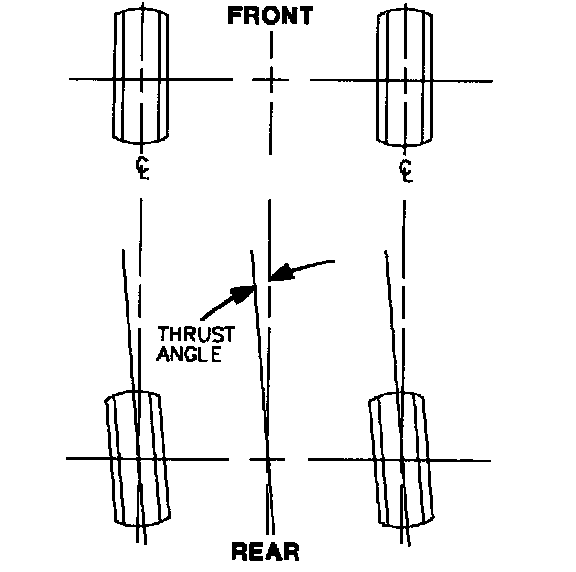
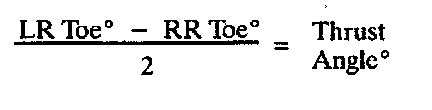
Thrust angle is the angle between the geometric centerline of the vehicle and the direction that the rear wheels track. Ideally, the thrust angle is equal to zero.
CAMBER
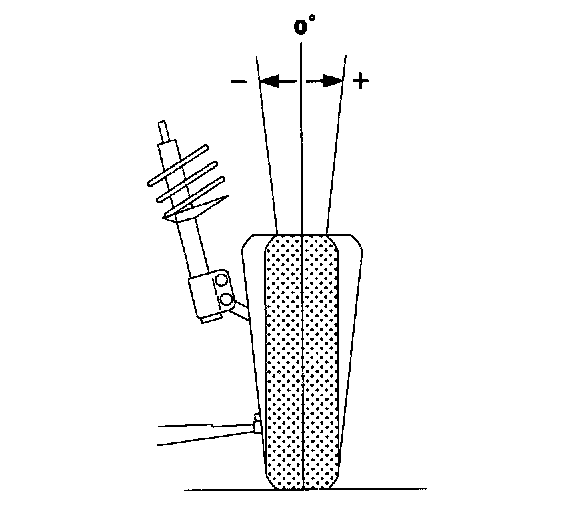
Camber is a measure of wheel tilt from the vertical direction, when the wheel is viewed from the front or rear of the vehicle. Camber is negative when the top of the wheel tilts inward and positive when the top of the wheel tilts outward.
CASTER
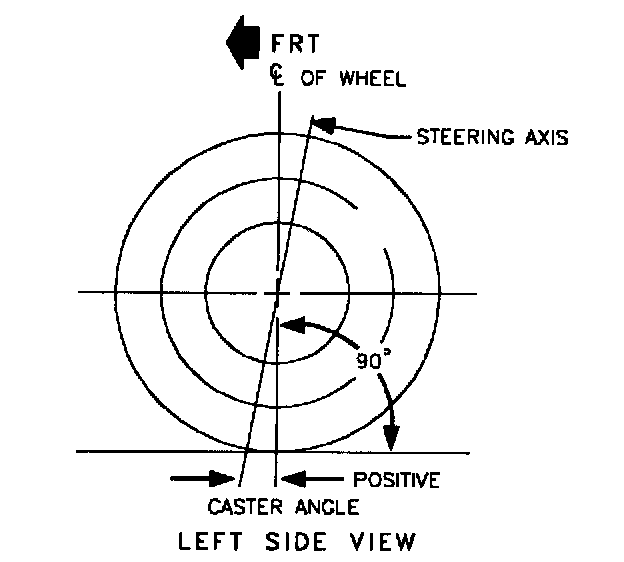
Caster is a measure of the angle between the steering axis and vertical when viewed from the side of the vehicle with the wheel in the straight ahead position. The steering axis is determined by the location of the lower control arm ball joint and the center of the strut-to-body attachment. A line drawn through the center of the ball joint and the strut-to-body joint represents the steering axis. When the center point of the strut-to-body attachment is rearward of the ball joint, the caster is positive. When the center of the strut-to-body attachment is forward of the ball joint, the caster is negative.
TOE
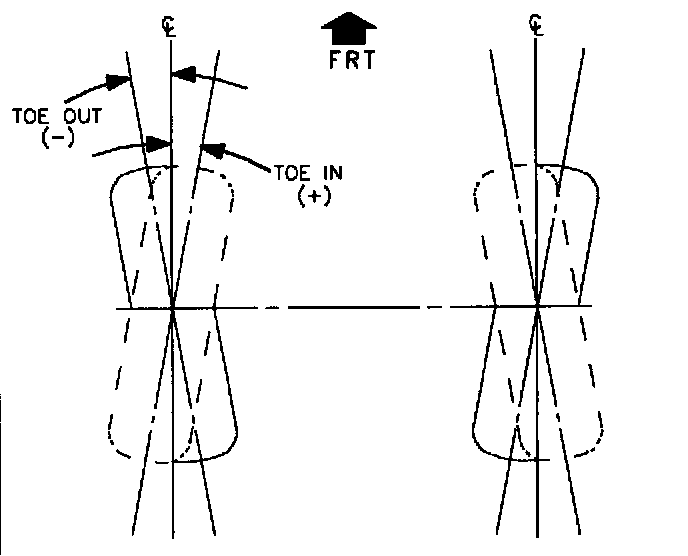
Toe is a measure of how far a wheel is turned in or out from the straight ahead direction. When the front of a wheel is turned in, the toe is positive. When turned out, the toe is negative.
THRUST ANGLE
Thrust angle is the angle between the geometric centerline of the vehicle and the direction that the rear wheels track. Ideally, the thrust angle is equal to zero.
CAMBER
Camber is a measure of wheel tilt from the vertical direction, when the wheel is viewed from the front or rear of the vehicle. Camber is negative when the top of the wheel tilts inward and positive when the top of the wheel tilts outward.
CASTER
Caster is a measure of the angle between the steering axis and vertical when viewed from the side of the vehicle with the wheel in the straight ahead position. The steering axis is determined by the location of the lower control arm ball joint and the center of the strut-to-body attachment. A line drawn through the center of the ball joint and the strut-to-body joint represents the steering axis. When the center point of the strut-to-body attachment is rearward of the ball joint, the caster is positive. When the center of the strut-to-body attachment is forward of the ball joint, the caster is negative.
TOE
Toe is a measure of how far a wheel is turned in or out from the straight ahead direction. When the front of a wheel is turned in, the toe is positive. When turned out, the toe is negative.
Factory Service Tools
Use the Manual With the Right Hardware
Pair factory procedures with proven DIY tools so the instructions are easier to execute.
Disclosure: Verified tool recommendations may earn an affiliate commission at no cost to you.
When to See a Mechanic
Stop DIY work and contact a certified mechanic immediately if any of the following apply:
- • You smell fuel, burning insulation, or see smoke.
- • Brakes feel soft, pull hard to one side, or make grinding noises.
- • The engine overheats, stalls repeatedly, or misfires under load.
- • You are missing required tools, torque specs, or safe lifting equipment.
- • You are not confident in the next step or safety outcome.