
Safety Warning
DIY auto repair can cause serious injury, fire, or vehicle damage. These guides are for informational purposes only. Always follow OEM torque specs, wear PPE, and consult a certified mechanic if you are unsure. You are solely responsible for your safety.
2002 Pontiac Sunfire L4-2.2L VIN FFACTORY OEM SERVICE PROCEDURE
Powertrain Control Module (PCM) Replacement
REMOVAL PROCEDURE
NOTE: In order to prevent internal damage to the PCM, the ignition must be OFF when disconnecting or reconnecting the PCM connector.
Service should normally consist of either replacement of the PCM or EEPROM re-programming.
If the diagnostic procedures call for the PCM to be replaced, the PCM should be inspected first in order to verify the PCM is the correct part.
DTC P0602 indicates the EEPROM programming has malfunctioned. When DTC P0602 is set, re-program the EEPROM.
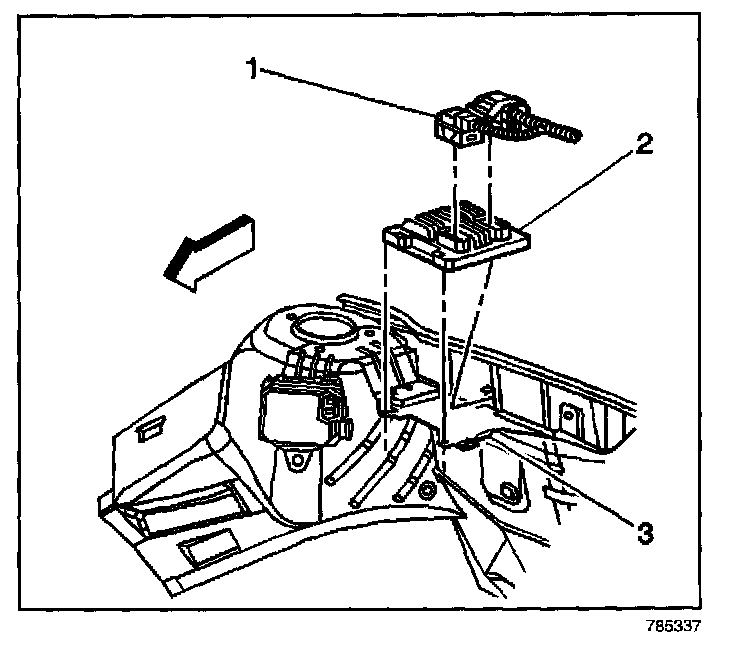
1. Disconnect the negative battery cable.
NOTE: Refer to PCM and ESD Notice in Service Precautions.
2. Push down the locking tab and pull up on the release lever and disconnect the PCM harness connectors (1).
3. Depress the PCM retaining tab.
4. Lift the PCM (2) from the PCM bracket (3).
INSTALLATION PROCEDURE
Remove the new PCM from the packaging and inspect the service number to verify the number is the same number, or an updated number, as the faulty PCM.
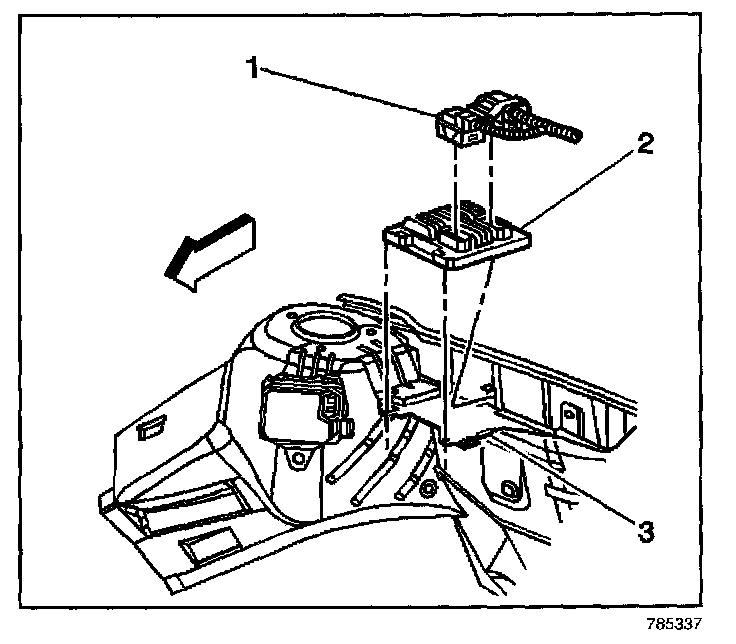
1. Push the PCM (2) into the PCM bracket (3). The retaining tab will lock in place.
NOTE: Refer to PCM and ESD Notice in Service Precautions.
2. Install the PCM harness connectors (1) and lock down the release levers.
3. Connect the negative battery cable.
IMPORTANT: The replacement PCM must be reprogrammed and the crankshaft position system variation learn procedure must be performed.
4. Program the PCM. Programming and Relearning
NOTE: In order to prevent internal damage to the PCM, the ignition must be OFF when disconnecting or reconnecting the PCM connector.
Service should normally consist of either replacement of the PCM or EEPROM re-programming.
If the diagnostic procedures call for the PCM to be replaced, the PCM should be inspected first in order to verify the PCM is the correct part.
DTC P0602 indicates the EEPROM programming has malfunctioned. When DTC P0602 is set, re-program the EEPROM.
1. Disconnect the negative battery cable.
NOTE: Refer to PCM and ESD Notice in Service Precautions.
2. Push down the locking tab and pull up on the release lever and disconnect the PCM harness connectors (1).
3. Depress the PCM retaining tab.
4. Lift the PCM (2) from the PCM bracket (3).
INSTALLATION PROCEDURE
Remove the new PCM from the packaging and inspect the service number to verify the number is the same number, or an updated number, as the faulty PCM.
1. Push the PCM (2) into the PCM bracket (3). The retaining tab will lock in place.
NOTE: Refer to PCM and ESD Notice in Service Precautions.
2. Install the PCM harness connectors (1) and lock down the release levers.
3. Connect the negative battery cable.
IMPORTANT: The replacement PCM must be reprogrammed and the crankshaft position system variation learn procedure must be performed.
4. Program the PCM. Programming and Relearning
Factory Service Tools
Use the Manual With the Right Hardware
Pair factory procedures with proven DIY tools so the instructions are easier to execute.
Disclosure: Verified tool recommendations may earn an affiliate commission at no cost to you.
When to See a Mechanic
Stop DIY work and contact a certified mechanic immediately if any of the following apply:
- • You smell fuel, burning insulation, or see smoke.
- • Brakes feel soft, pull hard to one side, or make grinding noises.
- • The engine overheats, stalls repeatedly, or misfires under load.
- • You are missing required tools, torque specs, or safe lifting equipment.
- • You are not confident in the next step or safety outcome.