
Safety Warning
DIY auto repair can cause serious injury, fire, or vehicle damage. These guides are for informational purposes only. Always follow OEM torque specs, wear PPE, and consult a certified mechanic if you are unsure. You are solely responsible for your safety.
2000 Pontiac Firefly (CANADA) L4-1.3LFACTORY OEM SERVICE PROCEDURE
Compression Check: Testing and Inspection
Perform a compression test in order to determine the cylinder compression pressure. Use a compression test in order to diagnose a lack of power, of excessive oil consumption, or of poor fuel economy.
1. Verify that the battery is completely charged or almost completely charged.
Important: Allow the engine to warm up to normal operating temperature.

2. Disconnect the electrical connectors at both ignition coils.
3. Remove the two ignition coils (4) and the secondary spark plug wires from the valve rocker-arm cover.
4. Remove the four spark plugs from the engine.
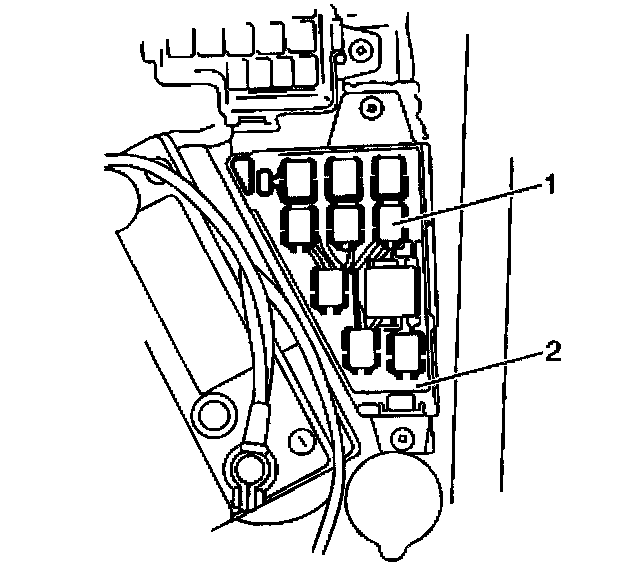
5. Remove the Main Relay (1) from the Relay Box (2).
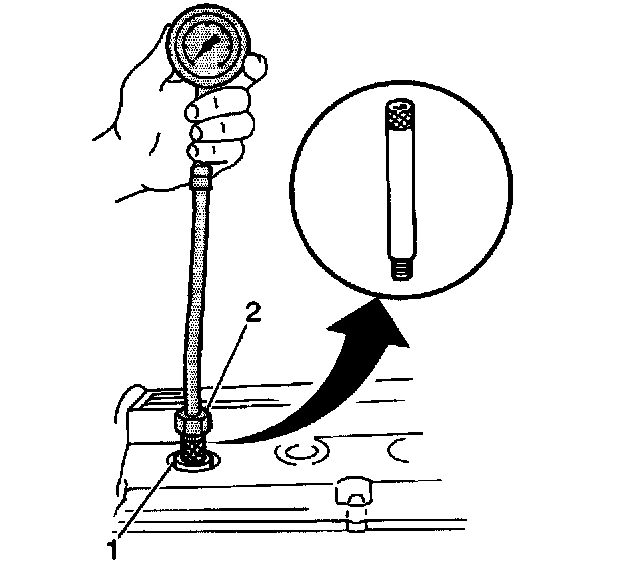
6. Install a compression gauge (2) into a spark plug hole. If necessary use an extension for the compression gauge.
7. On vehicles with a manual transmission, depress the clutch pedal.
8. Depress the accelerator pedal to the floor for a wide open throttle.
9. Crank the engine through 4 compression strokes for each cylinder being tested.
Important: The maximum allowable difference for compression pressure between any two cylinders is 100 kPa (15 psi).
10. Measure the highest pressure reading on the compression gauge.
^ The standard compression pressure is 1350 kPa (192 psi).
^ The minimum allowable compression pressure is 1100 kPa (156 psi).
11. Repeat the compression test procedures for the remaining three cylinders.
12. Remove the compression gauge from the engine.
13. Install the four spark plugs.
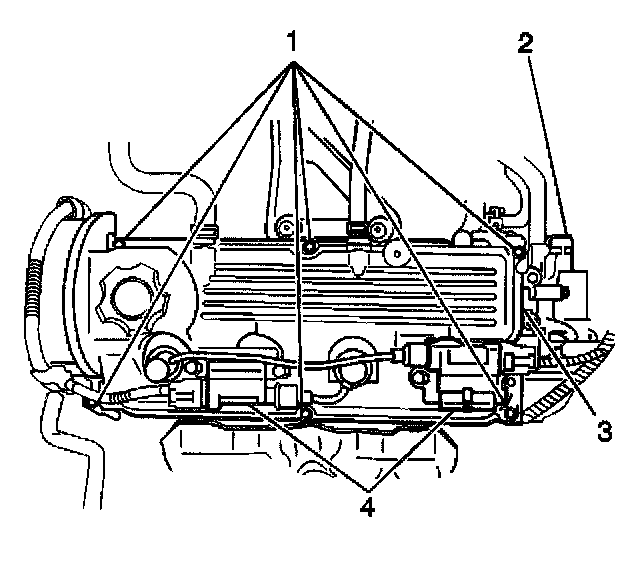
14. Install the secondary spark plug wires and the two ignition coils (4).
15. Reconnect the electrical connectors at both ignition coils.
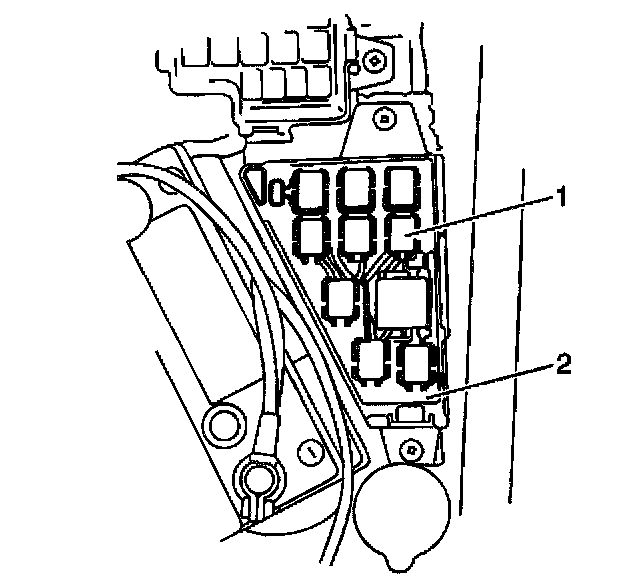
16. Reconnect the Main Relay (1) to the Relay Box (2).
17. Inspect for the following conditions:
^ Normal operation
The pistons, the piston rings, and the valves are operating correctly if the cylinder compression pressure increases quickly and evenly to the compression standard of 1500 kPa (218 psi).
^ Faulty piston rings
The following actions indicate that the piston rings are faulty:
- The cylinder compression is low on the first stroke.
- The cylinder compression increases on the following strokes but does not reach the compression standard. Add oil in order to improve the compression pressure.
^ Faulty valves
The following actions indicate that the valves are faulty:
- The cylinder compression is low on the first stroke.
- The cylinder compression does not increase on the following strokes.
1. Verify that the battery is completely charged or almost completely charged.
Important: Allow the engine to warm up to normal operating temperature.
2. Disconnect the electrical connectors at both ignition coils.
3. Remove the two ignition coils (4) and the secondary spark plug wires from the valve rocker-arm cover.
4. Remove the four spark plugs from the engine.
5. Remove the Main Relay (1) from the Relay Box (2).
6. Install a compression gauge (2) into a spark plug hole. If necessary use an extension for the compression gauge.
7. On vehicles with a manual transmission, depress the clutch pedal.
8. Depress the accelerator pedal to the floor for a wide open throttle.
9. Crank the engine through 4 compression strokes for each cylinder being tested.
Important: The maximum allowable difference for compression pressure between any two cylinders is 100 kPa (15 psi).
10. Measure the highest pressure reading on the compression gauge.
^ The standard compression pressure is 1350 kPa (192 psi).
^ The minimum allowable compression pressure is 1100 kPa (156 psi).
11. Repeat the compression test procedures for the remaining three cylinders.
12. Remove the compression gauge from the engine.
13. Install the four spark plugs.
14. Install the secondary spark plug wires and the two ignition coils (4).
15. Reconnect the electrical connectors at both ignition coils.
16. Reconnect the Main Relay (1) to the Relay Box (2).
17. Inspect for the following conditions:
^ Normal operation
The pistons, the piston rings, and the valves are operating correctly if the cylinder compression pressure increases quickly and evenly to the compression standard of 1500 kPa (218 psi).
^ Faulty piston rings
The following actions indicate that the piston rings are faulty:
- The cylinder compression is low on the first stroke.
- The cylinder compression increases on the following strokes but does not reach the compression standard. Add oil in order to improve the compression pressure.
^ Faulty valves
The following actions indicate that the valves are faulty:
- The cylinder compression is low on the first stroke.
- The cylinder compression does not increase on the following strokes.
Factory Service Tools
Use the Manual With the Right Hardware
Pair factory procedures with proven DIY tools so the instructions are easier to execute.
Disclosure: Verified tool recommendations may earn an affiliate commission at no cost to you.
When to See a Mechanic
Stop DIY work and contact a certified mechanic immediately if any of the following apply:
- • You smell fuel, burning insulation, or see smoke.
- • Brakes feel soft, pull hard to one side, or make grinding noises.
- • The engine overheats, stalls repeatedly, or misfires under load.
- • You are missing required tools, torque specs, or safe lifting equipment.
- • You are not confident in the next step or safety outcome.