
Safety Warning
DIY auto repair can cause serious injury, fire, or vehicle damage. These guides are for informational purposes only. Always follow OEM torque specs, wear PPE, and consult a certified mechanic if you are unsure. You are solely responsible for your safety.
2012 Mini Cooper (R56) L4-1.6L (N16)FACTORY OEM SERVICE PROCEDURE
Compression Check: Testing and Inspection
11 00 039 Checking Compression Of All Cylinders (N16 And N18)

- Read out fault memory of DME engine management module
- Check stored faults
- Rectify faults
- Delete fault memory

IMPORTANT:
High tension - mortal danger.
Disconnect power supply to ignition coils.
Read and comply with notes on compression pressure check.
Necessary preliminary tasks:
- Remove spark plugs.
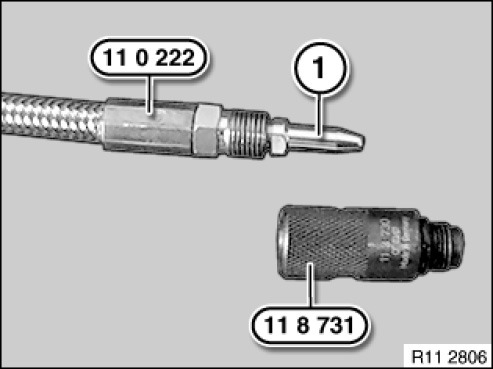
Unscrew tip (1) from special tool 11 0 222.
IMPORTANT: Then check the Schrader valve that is now visible for secure seating.

Prepare special tool 11 0 222 in conjunction with 11 8 732 and 11 8 731.
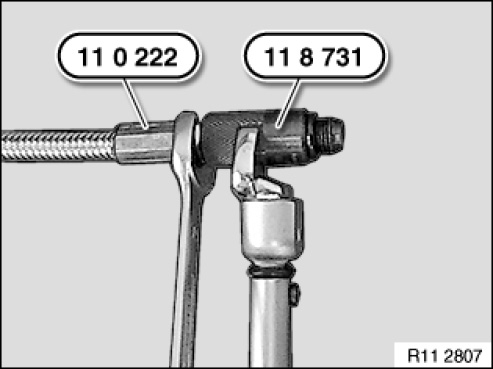
Screw special tool 11 0 222 onto special tool 11 8 731 to 10 Nm.
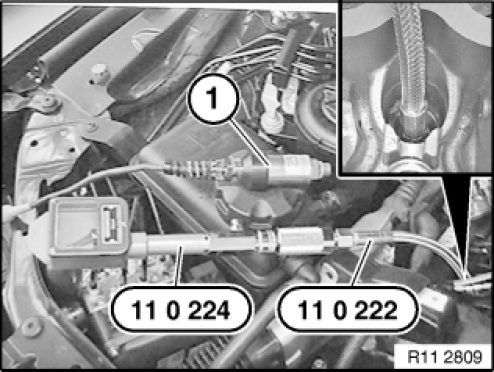
IMPORTANT: Do not to forget to coat spark plug thread of special tool 11 8 731 with oil.
Screw special tool 11 0 222 by hand into spark plug thread and connect special tool 11 0 224.
Use adapter lead (1) if the compression pressure is being checked with the BMW diagnosis system.
Depress accelerator pedal and actuate starter until compression pressure stops rising.
- Nominal values, compression pressure
Assemble engine.
Delete fault memory.
Factory Service Tools
Use the Manual With the Right Hardware
Pair factory procedures with proven DIY tools so the instructions are easier to execute.
Disclosure: Verified tool recommendations may earn an affiliate commission at no cost to you.
When to See a Mechanic
Stop DIY work and contact a certified mechanic immediately if any of the following apply:
- • You smell fuel, burning insulation, or see smoke.
- • Brakes feel soft, pull hard to one side, or make grinding noises.
- • The engine overheats, stalls repeatedly, or misfires under load.
- • You are missing required tools, torque specs, or safe lifting equipment.
- • You are not confident in the next step or safety outcome.