
Safety Warning
DIY auto repair can cause serious injury, fire, or vehicle damage. These guides are for informational purposes only. Always follow OEM torque specs, wear PPE, and consult a certified mechanic if you are unsure. You are solely responsible for your safety.
2004 Mini Cooper (R50) L4-1.6L (W10)FACTORY OEM SERVICE PROCEDURE
Coolant Temperature Sensor/Switch (For Computer): Testing and Inspection
Engine Coolant Temperature Sensor

The Engine Coolant Temperature Sensor is a Negative Temperature Coefficient thermistor sensor located in the coolant system. The sensor is located in the cylinder head next to the thermostat housing. It is accessed easier with the air box removed.
The Engine Coolant Temperature Sensor is a NTC type sensor. It is used to monitor the engine coolant temperature and has two wires both connected to the EMS2000. The signal is used for fuel control and ignition timing dependent on the engine temperature. The signal is also used to control the radiator fan speed as well as supplying a signal on the CAN-bus to drive the coolant temperature gauge in the instrument cluster. A 5 volt reference signal is supplied to the coolant temp sensor by the EMS2000. High voltage readings at the EMS2000 indicate high sensor resistance, or low temperature. Low voltage readings indicate low sensor resistance or high temperature.
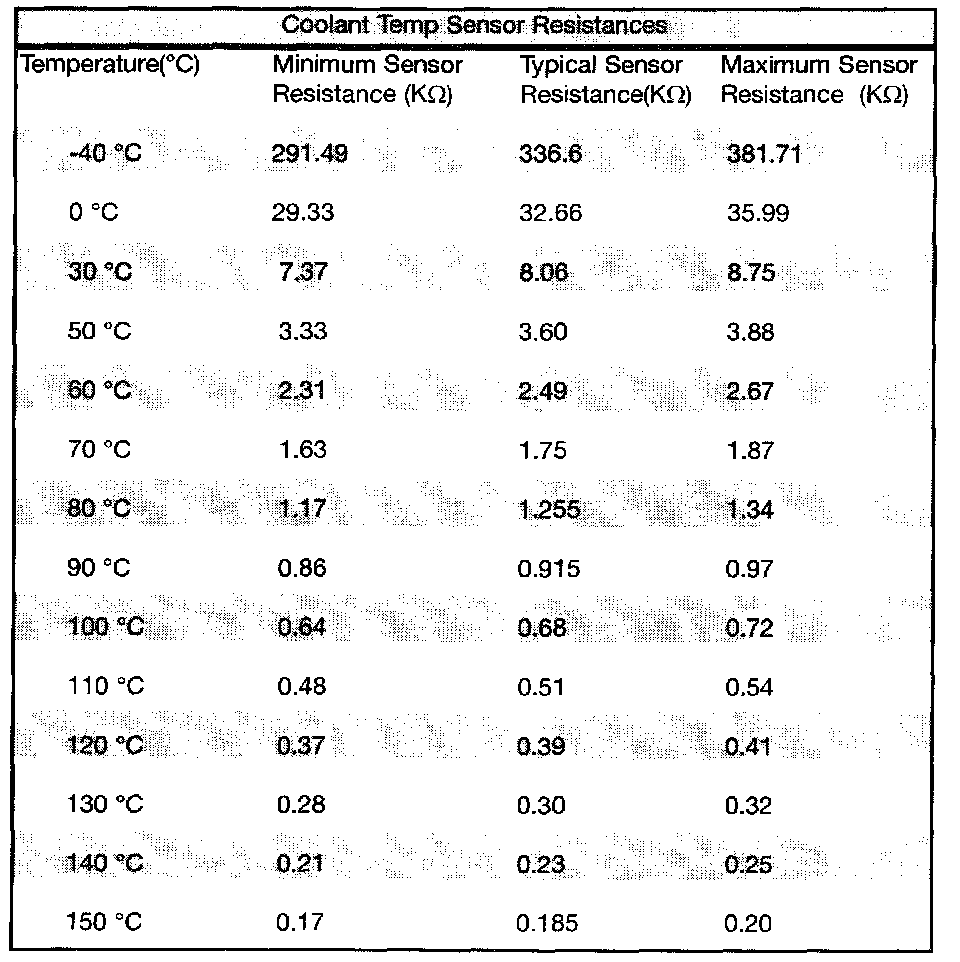
Coolant Temp Sensor Resistance:
Coolant Temperature Sensor Failure Symptoms
- The vehicle may be difficult to start, may run lean when the engine is cold or slightly rich when the engine is hot (default to 'emergency program' mode).
- Driveability of the vehicle will be affected.
- If the sensor output signal fails open, shorted to ground, shorted to 12V or shorted to 5V the EMS2000 will replace the temperature value with a default value.
- If the sensor ground is shorted to 12V or shorted to 5V, temperature gauge will go to full hot and engine cooling fan goes to high when fault is recognized.
Coolant Temperature Sensor Testing
- Ensure that voltage changes and does not remain constant at 0 or 5 volts
- Check Sensor Resistance
Factory Service Tools
Use the Manual With the Right Hardware
Pair factory procedures with proven DIY tools so the instructions are easier to execute.
Disclosure: Verified tool recommendations may earn an affiliate commission at no cost to you.
When to See a Mechanic
Stop DIY work and contact a certified mechanic immediately if any of the following apply:
- • You smell fuel, burning insulation, or see smoke.
- • Brakes feel soft, pull hard to one side, or make grinding noises.
- • The engine overheats, stalls repeatedly, or misfires under load.
- • You are missing required tools, torque specs, or safe lifting equipment.
- • You are not confident in the next step or safety outcome.