
Safety Warning
DIY auto repair can cause serious injury, fire, or vehicle damage. These guides are for informational purposes only. Always follow OEM torque specs, wear PPE, and consult a certified mechanic if you are unsure. You are solely responsible for your safety.
2011 Mazda RX8 2RTR-1.3LFACTORY OEM SERVICE PROCEDURE
Spark Plug: Testing and Inspection
SPARK PLUG INSPECTION [13B-MSP]
Specification
Spark plug type
- Leading side: N3H5 18 110A (RE7C-L)*1, N3Y8 18 110A (RE7C-L)*1, N3Y9 18 110A (RE6C-L)*2
- Trailing side: N3H1 18 110D (RE9B-T)*1, N3Y1 18 110A (RE9B-T)*1
*1
Standard equipment
*2
Hot type plug: Available only for customers who often drive their car at very low speed which causes the plugs to foul easily.
Plug Gap Inspection
CAUTION:
1 To avoid possible damage to the tip, do not adjust the plug gap.
1 To prevent damaging the tip, use a wire type plug gap gauge when inspecting the plug gap.
1. Measure the spark plug gap using a wire type plug gap gauge.
1 If it is more than the maximum specification, replace the spark plug.
Standard spark plug gap
- 1.15-1.25 mm {0.046-0.049 in}
Maximum spark plug gap
- Leading side: 1.5 mm {0.059 in}
- Trailing side: 1.4 mm {0.055 in}
Cleaning
CAUTION:
1 To avoid possible damage to the spark plug tip, do not use a wire brush for cleaning.
NOTE:
1 To avoid possible damage to the tip, use gasoline to clean the spark plugs after removing dirt.
Visual Inspection
1. Inspect the following items:
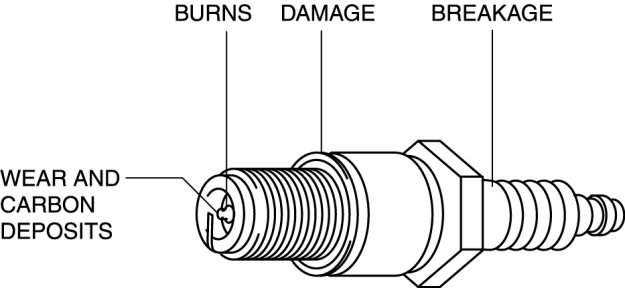
- If any of the following malfunctions are indicated, replace the spark plug.
- Insulator breakage
- Worn electrode
- Damaged gasket
- Badly burned insulator (sparking side)
Resistance Inspection
1. Measure the resistance of the spark plug using a tester as shown in the figure.
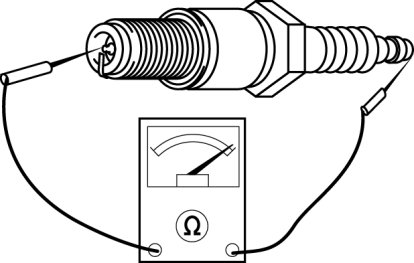
- If not within the specification, replace the spark plug.
Spark plug resistance [25°C {77 °F}]
- 3.0-7.5 kilohms
Factory Service Tools
Use the Manual With the Right Hardware
Pair factory procedures with proven DIY tools so the instructions are easier to execute.
Disclosure: Verified tool recommendations may earn an affiliate commission at no cost to you.
When to See a Mechanic
Stop DIY work and contact a certified mechanic immediately if any of the following apply:
- • You smell fuel, burning insulation, or see smoke.
- • Brakes feel soft, pull hard to one side, or make grinding noises.
- • The engine overheats, stalls repeatedly, or misfires under load.
- • You are missing required tools, torque specs, or safe lifting equipment.
- • You are not confident in the next step or safety outcome.