
Safety Warning
DIY auto repair can cause serious injury, fire, or vehicle damage. These guides are for informational purposes only. Always follow OEM torque specs, wear PPE, and consult a certified mechanic if you are unsure. You are solely responsible for your safety.
2009 Mazda Tribute 4WD L4-2.5LFACTORY OEM SERVICE PROCEDURE
Electrical System General Procedures
ELECTRICAL PARTS
Battery Cable

- Before disconnecting connectors or removing electrical parts, disconnect the negative battery cable.
Wiring Harness
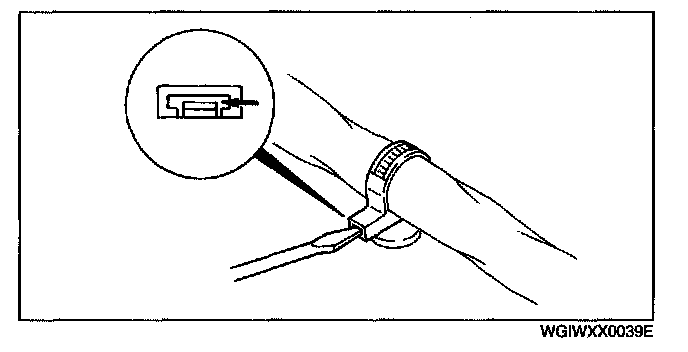
- remove the wiring harness from the clip in the engine room, pry up the hook of the clip using a flathead screwdriver.
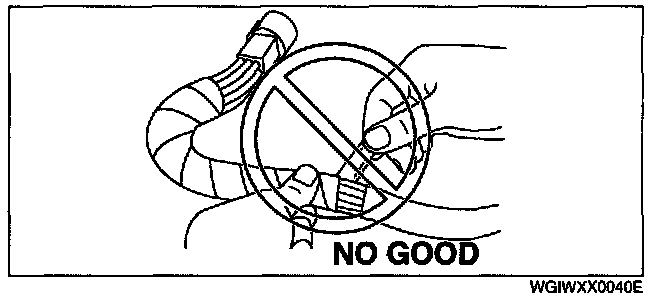
CAUTION: Do not remove the Harness protective tape. Otherwise, the wires could rub against the body, which could result In water penetration and electrical shorting.
CONNECTORS
Data Link Connector
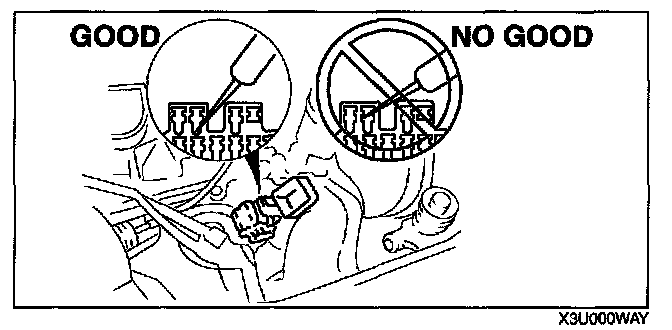
- Insert the probe into the terminal when connecting a jumper wire to the data link connector.
CAUTION: Inserting a jumper wire probe into the data link connector terminal may damage the terminal.
Disconnecting Connectors
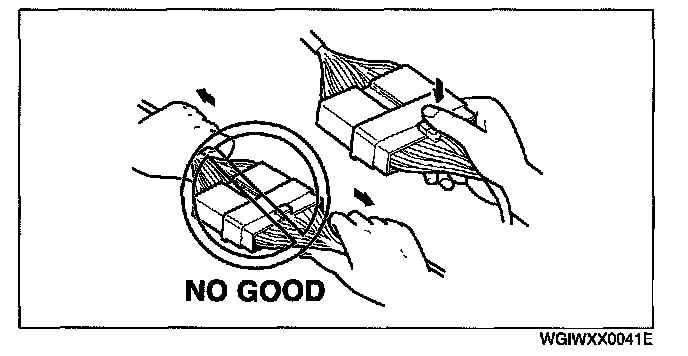
- When disconnecting connector, grasp the connectors, not the wires.
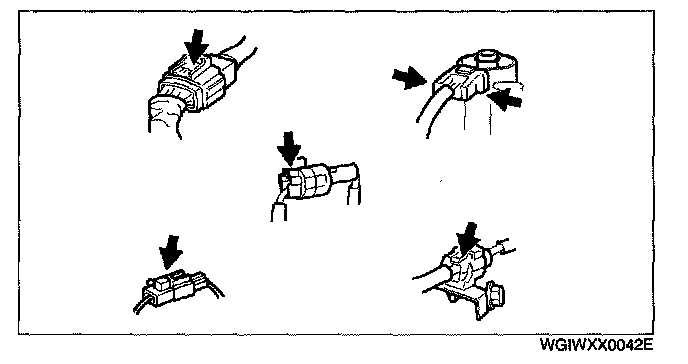
- Connectors can be disconnected by pressing or pulling the lock lever as shown.
Locking Connector

- When locking connectors, listen for a click indicating they are securely locked.
Inspection
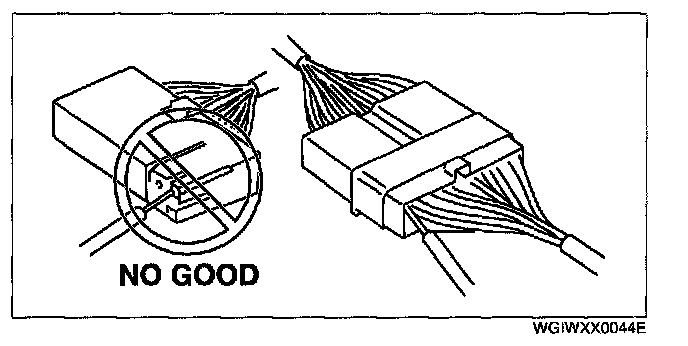
- When a tester is used to inspect for continuity or measuring voltage, insert the tester probe from the wiring harness side.
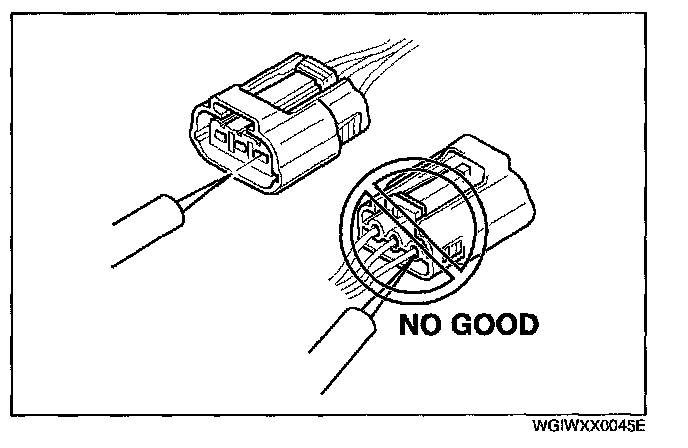
- Inspect the terminals of waterproof connectors from the connector side since they cannot be accessed from the wiring harness side.
CAUTION: To prevent damage to the terminal, wrap a thin wire around the tester probe before inserting into terminal.
Terminals
Inspection
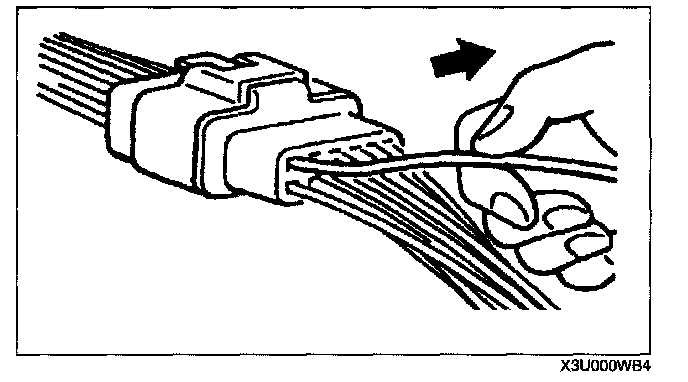
- Pull lightly on individual wires to verify that they are secured in the terminal.
Replacement
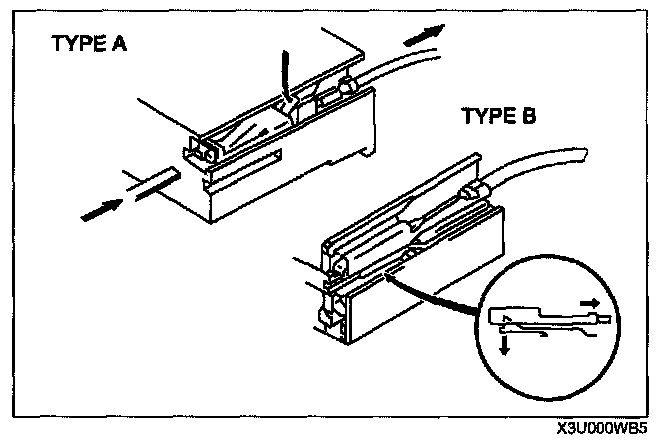
- Use the appropriate tools to remove a terminal as shown. When installing a terminal, be sure to insert it until it locks securely.
- Insert a thin piece of metal from the terminal side of the connector and with the terminal locking tab pressed down, pull the terminal out from the connector.
Sensors, Switches, And Relays
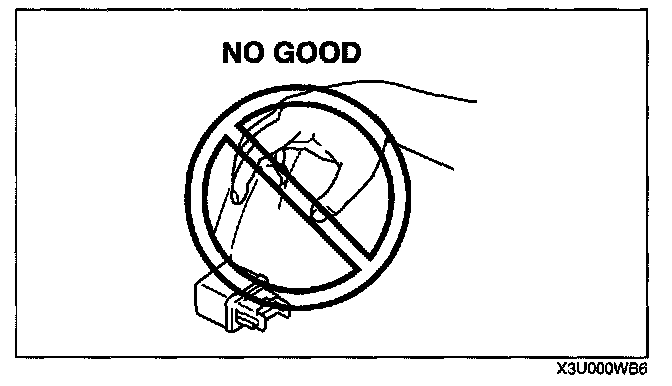
- Handle sensors, switches, and relays carefully. Do not drop them or strike them against other objects.
Fuse
Replacement

- When replacing a fuse, be sure to replace it with one of the same capacity. If a fuse fails again, the circuit probably has a short and the wiring should be inspected.
- Be sure the negative battery terminal is disconnected before replacing a main fuse.

- When replacing a pullout fuse, use the fuse puller.
ELECTRICAL TROUBLESHOOTING TOOLS
Jumper Wire

- A jumper wire is used to create a temporary circuit. Connect the jumper wire between the terminals of a circuit to by pass a switch.
CAUTION: Do not connect a jumper wire from the power source line to a body ground. This may cause burning or other damage to wiring harnesses or electronic components.
Voltmeter
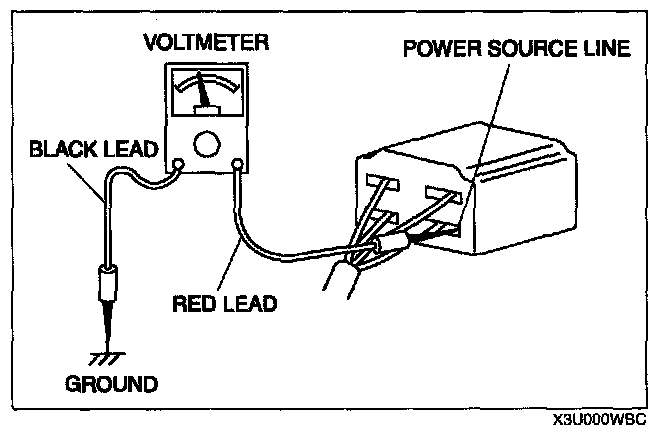
- The DC voltmeter is used to measure circuit voltage. A voltmeter with a range of 15 V or more is used by connecting the positive (+) probe (red lead wire) to the point where voltage will be measured and the negative (-) probe (black lead wire) to a body ground.
Ohmmeter
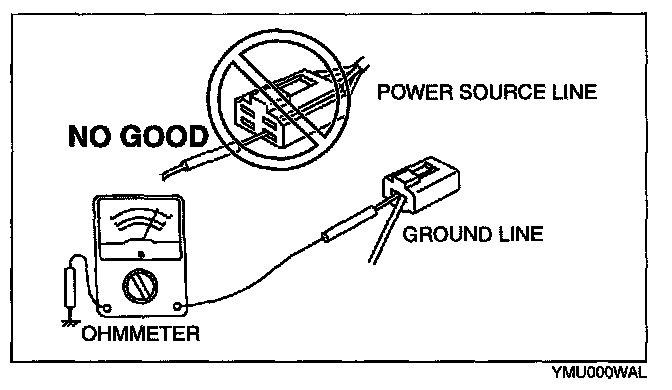
- The ohmmeter is used to measure the resistance between two points in a circuit and to inspect for continuity and short circuits.
CAUTION: Do not connect the ohmmeter to any circuit where voltage is applied. This will damage the ohmmeter.
Battery Cable
- Before disconnecting connectors or removing electrical parts, disconnect the negative battery cable.
Wiring Harness
- remove the wiring harness from the clip in the engine room, pry up the hook of the clip using a flathead screwdriver.
CAUTION: Do not remove the Harness protective tape. Otherwise, the wires could rub against the body, which could result In water penetration and electrical shorting.
CONNECTORS
Data Link Connector
- Insert the probe into the terminal when connecting a jumper wire to the data link connector.
CAUTION: Inserting a jumper wire probe into the data link connector terminal may damage the terminal.
Disconnecting Connectors
- When disconnecting connector, grasp the connectors, not the wires.
- Connectors can be disconnected by pressing or pulling the lock lever as shown.
Locking Connector
- When locking connectors, listen for a click indicating they are securely locked.
Inspection
- When a tester is used to inspect for continuity or measuring voltage, insert the tester probe from the wiring harness side.
- Inspect the terminals of waterproof connectors from the connector side since they cannot be accessed from the wiring harness side.
CAUTION: To prevent damage to the terminal, wrap a thin wire around the tester probe before inserting into terminal.
Terminals
Inspection
- Pull lightly on individual wires to verify that they are secured in the terminal.
Replacement
- Use the appropriate tools to remove a terminal as shown. When installing a terminal, be sure to insert it until it locks securely.
- Insert a thin piece of metal from the terminal side of the connector and with the terminal locking tab pressed down, pull the terminal out from the connector.
Sensors, Switches, And Relays
- Handle sensors, switches, and relays carefully. Do not drop them or strike them against other objects.
Fuse
Replacement
- When replacing a fuse, be sure to replace it with one of the same capacity. If a fuse fails again, the circuit probably has a short and the wiring should be inspected.
- Be sure the negative battery terminal is disconnected before replacing a main fuse.
- When replacing a pullout fuse, use the fuse puller.
ELECTRICAL TROUBLESHOOTING TOOLS
Jumper Wire
- A jumper wire is used to create a temporary circuit. Connect the jumper wire between the terminals of a circuit to by pass a switch.
CAUTION: Do not connect a jumper wire from the power source line to a body ground. This may cause burning or other damage to wiring harnesses or electronic components.
Voltmeter
- The DC voltmeter is used to measure circuit voltage. A voltmeter with a range of 15 V or more is used by connecting the positive (+) probe (red lead wire) to the point where voltage will be measured and the negative (-) probe (black lead wire) to a body ground.
Ohmmeter
- The ohmmeter is used to measure the resistance between two points in a circuit and to inspect for continuity and short circuits.
CAUTION: Do not connect the ohmmeter to any circuit where voltage is applied. This will damage the ohmmeter.
Factory Service Tools
Use the Manual With the Right Hardware
Pair factory procedures with proven DIY tools so the instructions are easier to execute.
Disclosure: Verified tool recommendations may earn an affiliate commission at no cost to you.
When to See a Mechanic
Stop DIY work and contact a certified mechanic immediately if any of the following apply:
- • You smell fuel, burning insulation, or see smoke.
- • Brakes feel soft, pull hard to one side, or make grinding noises.
- • The engine overheats, stalls repeatedly, or misfires under load.
- • You are missing required tools, torque specs, or safe lifting equipment.
- • You are not confident in the next step or safety outcome.
Rather have a pro handle this?
A certified mobile mechanic comes to your home or office. They bring the tools, you stay comfortable. No tow truck, no waiting room, no surprises.
Comes to youSame-day available12-month warranty
Get a Free QuoteNo obligation. See pricing before you book.