
Safety Warning
DIY auto repair can cause serious injury, fire, or vehicle damage. These guides are for informational purposes only. Always follow OEM torque specs, wear PPE, and consult a certified mechanic if you are unsure. You are solely responsible for your safety.
2007 Mazda MX-5 Miata L4-2.0LFACTORY OEM SERVICE PROCEDURE
Using the M-MDS
Using the M-MDS
NOTE
- PIDs for the following parts are not available on this model. Go to the appropriate part inspection.
- CMP sensor
- Main relay
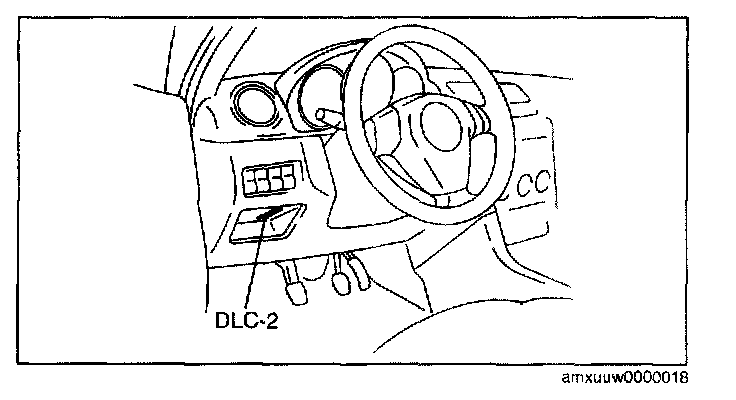
1. Connect the SST (M-MDS) to the DLC-2.
2. Turn the ignition switch to ON position.
3. Measure the PID value.
- If PID value is not within the specification, follow the instructions in "Inspection item(s)" column.
NOTE
- The PID/DATA MONITOR function monitors the calculated value of the input/output signals in the PCM. Therefore, an output device malfunction is not directly indicated as a malfunction of the monitored value for the output device. If a monitored value of an output device is out of specification, inspect the monitored value of the input device related to the output control.
- For input/output signals except those of the monitoring items, use a voltmeter to measure the PCM terminal voltage.
- The simulation items that are used in the ENGINE CONTROL SYSTEM OPERATION INSPECTION are as follows.
- ACCS, ALTF, ARPMDES, EVAPCP, FAN1, FAN2, FAN3, FP, FUELPW1, GENVDSD, HTR11, HTR12, IMTV, INJ_1, INJ_2, INJ_3, INJ_4, SEGRP, test, VT DUTY1 Wt
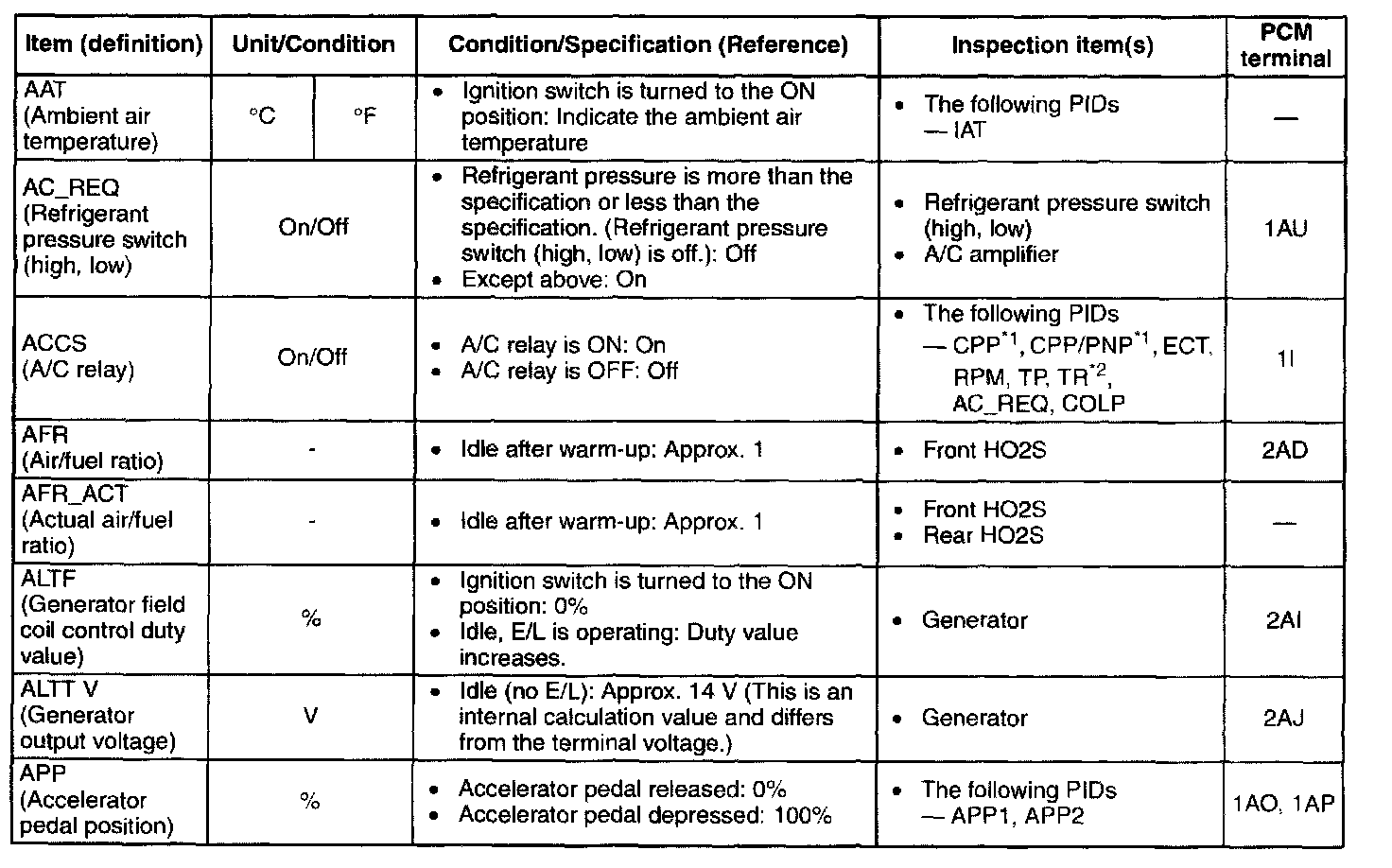
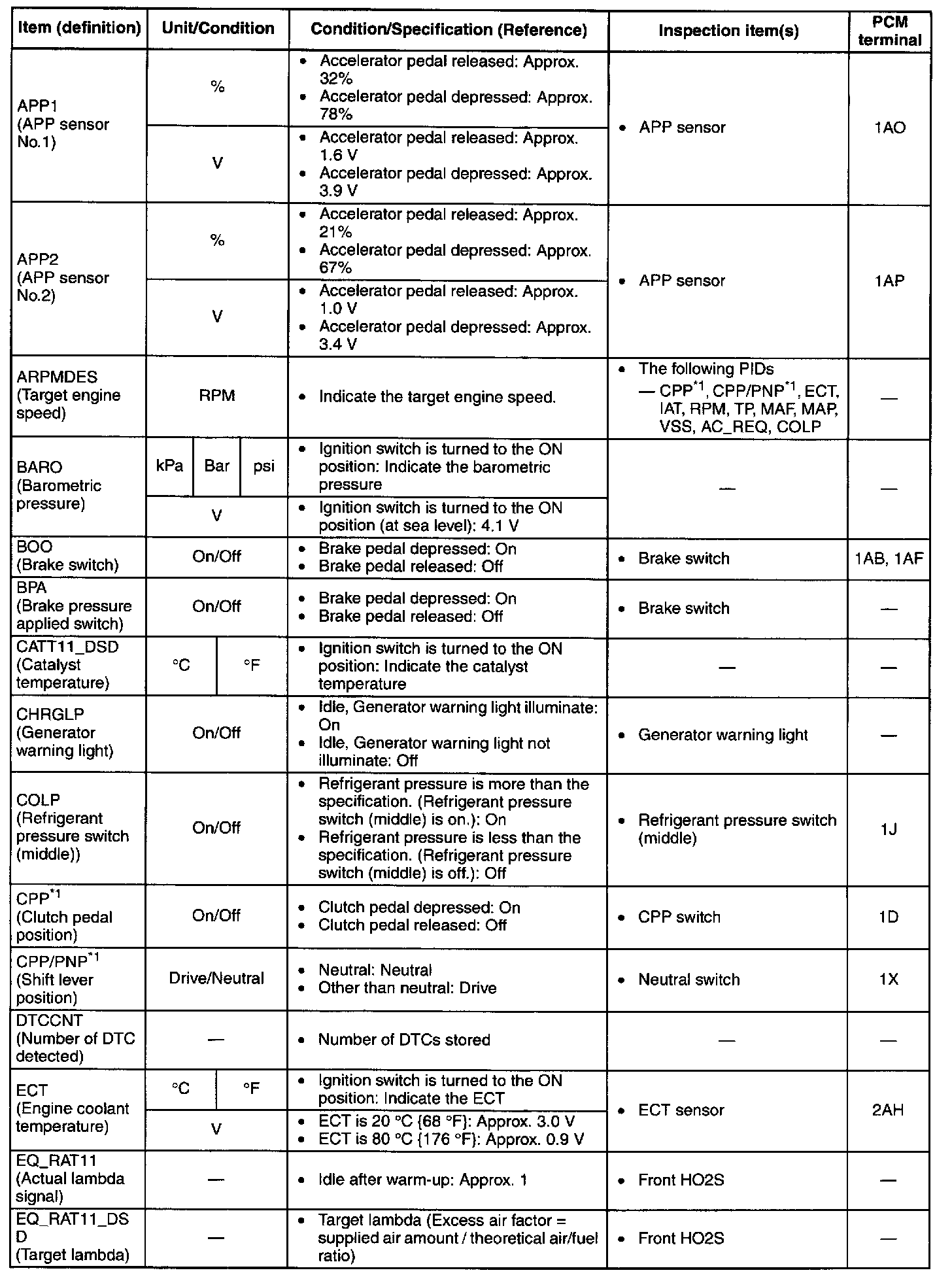

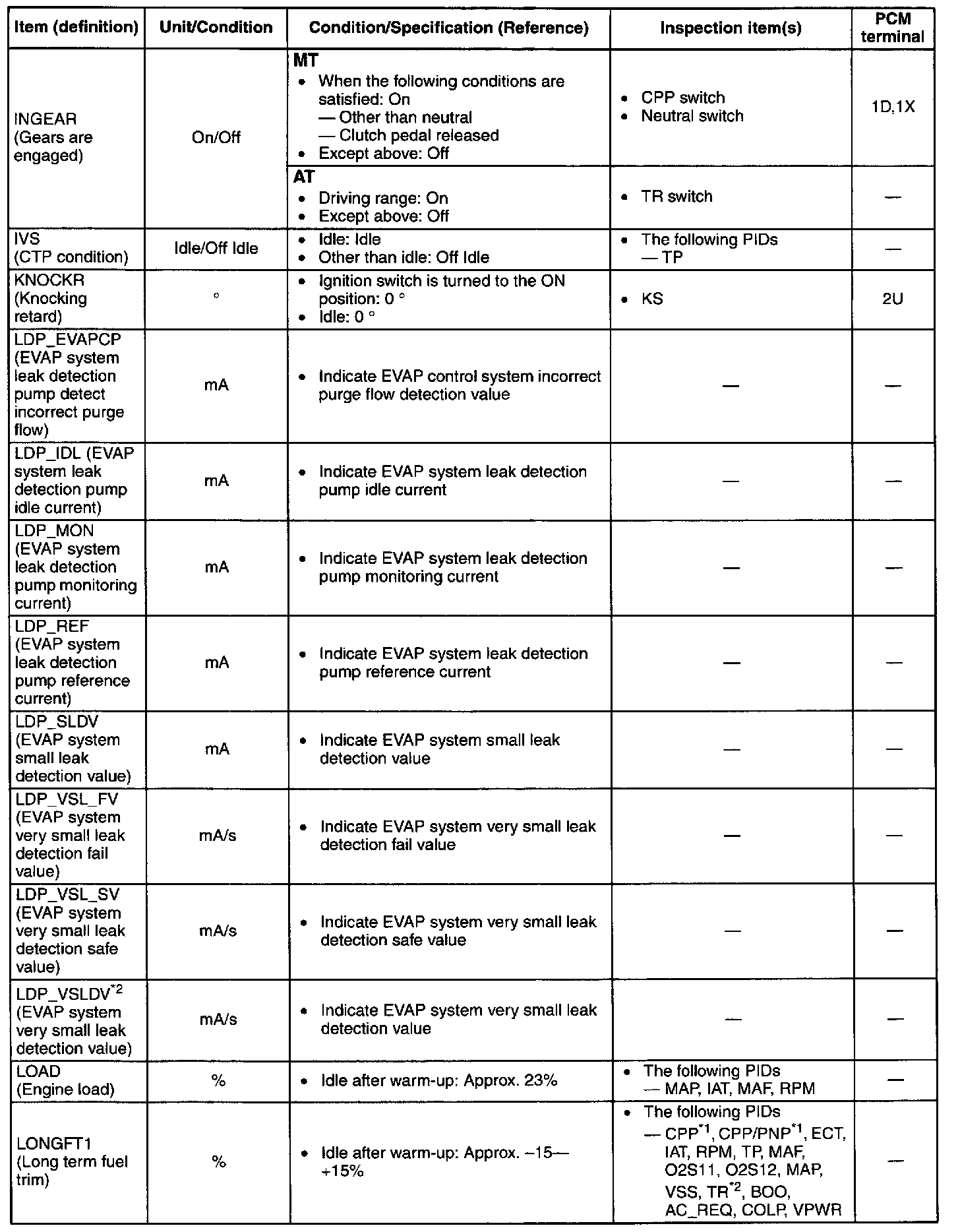
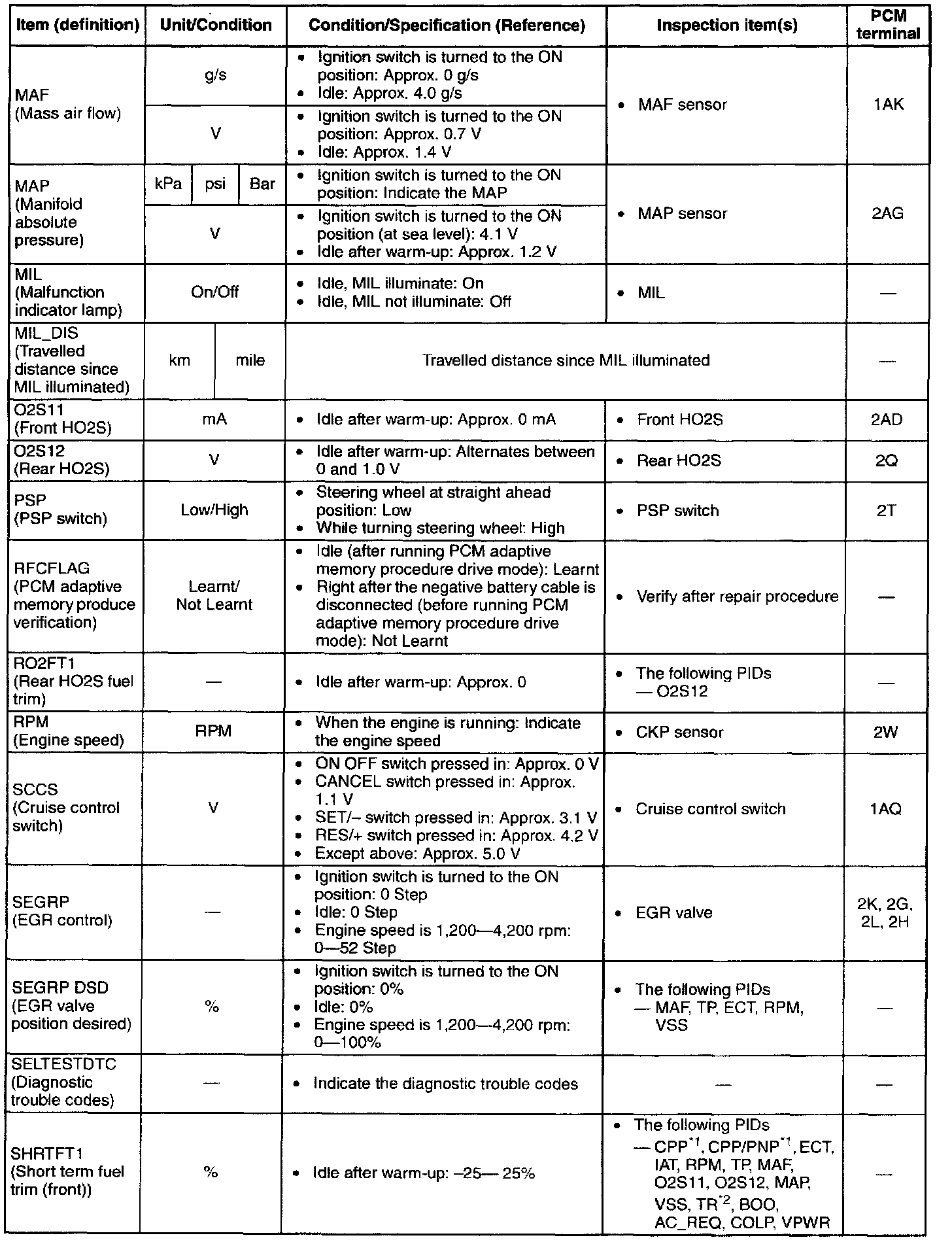
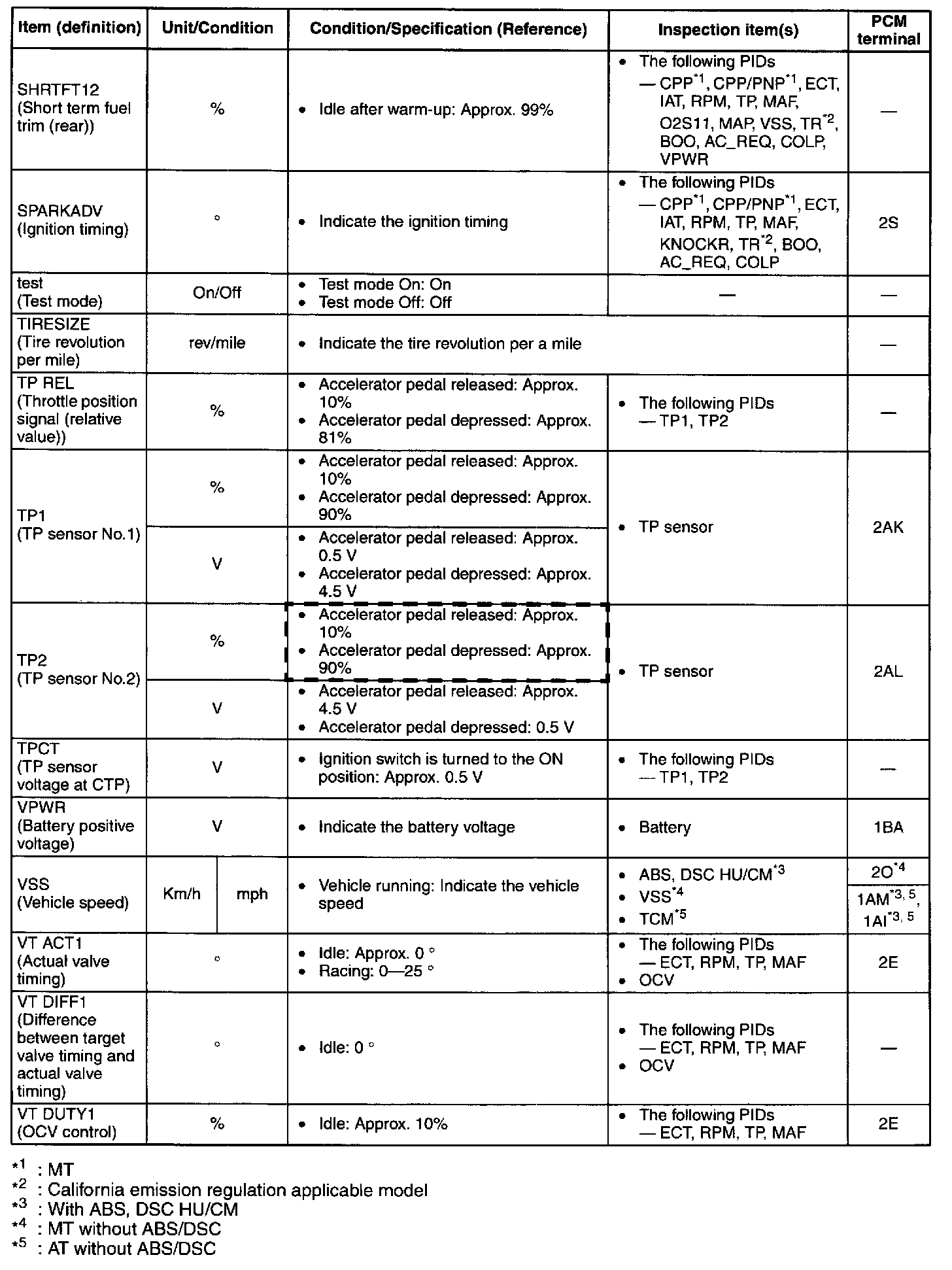
PID/DATA Monitor Table (reference)
NOTE
- PIDs for the following parts are not available on this model. Go to the appropriate part inspection.
- CMP sensor
- Main relay
1. Connect the SST (M-MDS) to the DLC-2.
2. Turn the ignition switch to ON position.
3. Measure the PID value.
- If PID value is not within the specification, follow the instructions in "Inspection item(s)" column.
NOTE
- The PID/DATA MONITOR function monitors the calculated value of the input/output signals in the PCM. Therefore, an output device malfunction is not directly indicated as a malfunction of the monitored value for the output device. If a monitored value of an output device is out of specification, inspect the monitored value of the input device related to the output control.
- For input/output signals except those of the monitoring items, use a voltmeter to measure the PCM terminal voltage.
- The simulation items that are used in the ENGINE CONTROL SYSTEM OPERATION INSPECTION are as follows.
- ACCS, ALTF, ARPMDES, EVAPCP, FAN1, FAN2, FAN3, FP, FUELPW1, GENVDSD, HTR11, HTR12, IMTV, INJ_1, INJ_2, INJ_3, INJ_4, SEGRP, test, VT DUTY1 Wt
PID/DATA Monitor Table (reference) Part 1:
PID/DATA Monitor Table (reference) Part 2:
PID/DATA Monitor Table (reference) Part 3:
PID/DATA Monitor Table (reference) Part 4:
PID/DATA Monitor Table (reference) Part 5:
PID/DATA Monitor Table (reference) Part 6:
PID/DATA Monitor Table (reference)
Factory Service Tools
Use the Manual With the Right Hardware
Pair factory procedures with proven DIY tools so the instructions are easier to execute.
Disclosure: Verified tool recommendations may earn an affiliate commission at no cost to you.
When to See a Mechanic
Stop DIY work and contact a certified mechanic immediately if any of the following apply:
- • You smell fuel, burning insulation, or see smoke.
- • Brakes feel soft, pull hard to one side, or make grinding noises.
- • The engine overheats, stalls repeatedly, or misfires under load.
- • You are missing required tools, torque specs, or safe lifting equipment.
- • You are not confident in the next step or safety outcome.