
Safety Warning
DIY auto repair can cause serious injury, fire, or vehicle damage. These guides are for informational purposes only. Always follow OEM torque specs, wear PPE, and consult a certified mechanic if you are unsure. You are solely responsible for your safety.
2007 Mazda 5 L4-2.3LFACTORY OEM SERVICE PROCEDURE
Vehicle Towing
TOWING
Towing

- Proper lifting and towing are necessary to prevent damage to the vehicle. Government and local laws must be followed.
- A towed vehicle usually should have its front wheels off the ground. If excessive damage or other conditions prevent this, use wheel dollies.
- When towing with the rear wheels on the ground, release the parking brake.
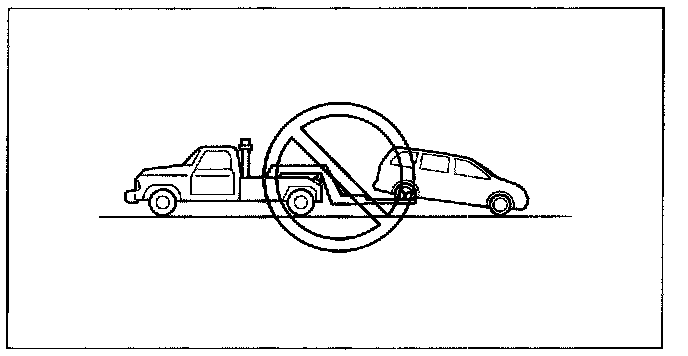
CAUTION: Do not tow the vehicle pointed backward with driving wheel on the ground. This may cause internal damage to the transaxle.

CAUTION: Do not tow with sling-type equipment. This could damage your vehicle. Use wheel-lift or flat bed equipment.
Tiedown Hooks
CAUTION:
- The tiedown hooks should be used only in an emergency (to get the vehicle out of a ditch or a snow bank, for example).
- When using the tiedown hooks, always pull the cable or chain in a straight direction with respect to the hook. Apply no sideways force.
- Do not use the tiedown hooks under the front and rear for towing. They are designed ONLY for tying down the vehicle when it is being transported. Using them for towing will damage the bumper.
Front
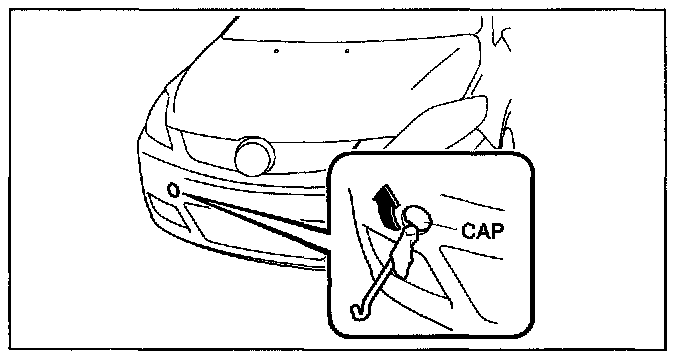
1. Remove the tiedown eyelet, lug wrench and jack lever from the trunk.
2. Wrap the jack lever with a soft cloth to prevent damage to the bumper and open the cap located on the front bumper.
CAUTION: The cap cannot be completely removed. Do not use excessive force as it may damage the cap or scratch the painted bumper surface.
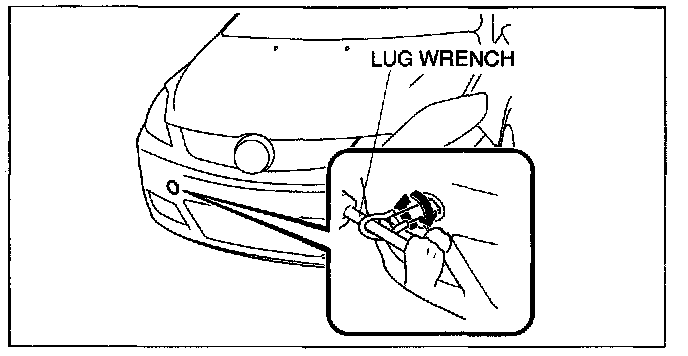
3. Securely install the tiedown eyelet using the lug wrench.
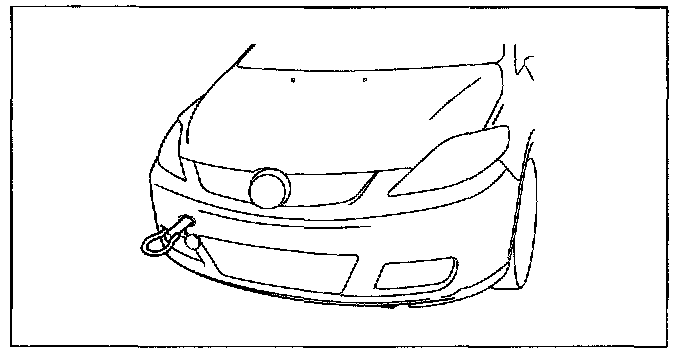
4. Hook the tying rope to the tiedown eyelet.
CAUTION: If the tiedown eyelet is not securely tightened, it may loosen or disengage from the bumper when tying down the vehicle. Make sure that the tiedown eyelet is securely tightened to the bumper.

Rear
Towing
- Proper lifting and towing are necessary to prevent damage to the vehicle. Government and local laws must be followed.
- A towed vehicle usually should have its front wheels off the ground. If excessive damage or other conditions prevent this, use wheel dollies.
- When towing with the rear wheels on the ground, release the parking brake.
CAUTION: Do not tow the vehicle pointed backward with driving wheel on the ground. This may cause internal damage to the transaxle.
CAUTION: Do not tow with sling-type equipment. This could damage your vehicle. Use wheel-lift or flat bed equipment.
Tiedown Hooks
CAUTION:
- The tiedown hooks should be used only in an emergency (to get the vehicle out of a ditch or a snow bank, for example).
- When using the tiedown hooks, always pull the cable or chain in a straight direction with respect to the hook. Apply no sideways force.
- Do not use the tiedown hooks under the front and rear for towing. They are designed ONLY for tying down the vehicle when it is being transported. Using them for towing will damage the bumper.
Front
1. Remove the tiedown eyelet, lug wrench and jack lever from the trunk.
2. Wrap the jack lever with a soft cloth to prevent damage to the bumper and open the cap located on the front bumper.
CAUTION: The cap cannot be completely removed. Do not use excessive force as it may damage the cap or scratch the painted bumper surface.
3. Securely install the tiedown eyelet using the lug wrench.
4. Hook the tying rope to the tiedown eyelet.
CAUTION: If the tiedown eyelet is not securely tightened, it may loosen or disengage from the bumper when tying down the vehicle. Make sure that the tiedown eyelet is securely tightened to the bumper.
Rear
Factory Service Tools
Use the Manual With the Right Hardware
Pair factory procedures with proven DIY tools so the instructions are easier to execute.
Disclosure: Verified tool recommendations may earn an affiliate commission at no cost to you.
When to See a Mechanic
Stop DIY work and contact a certified mechanic immediately if any of the following apply:
- • You smell fuel, burning insulation, or see smoke.
- • Brakes feel soft, pull hard to one side, or make grinding noises.
- • The engine overheats, stalls repeatedly, or misfires under load.
- • You are missing required tools, torque specs, or safe lifting equipment.
- • You are not confident in the next step or safety outcome.