
Safety Warning
DIY auto repair can cause serious injury, fire, or vehicle damage. These guides are for informational purposes only. Always follow OEM torque specs, wear PPE, and consult a certified mechanic if you are unsure. You are solely responsible for your safety.
2007 Mazda 3 L4-2.3LFACTORY OEM SERVICE PROCEDURE
Towing Information: Service and Repair
TOWING
Towing
- Proper lifting and towing are necessary to prevent damage to the vehicle. State and local laws must be followed.
- A towed vehicle usually should have its front wheels off the ground. If excessive damage or other conditions prevent this, use wheel dollies.
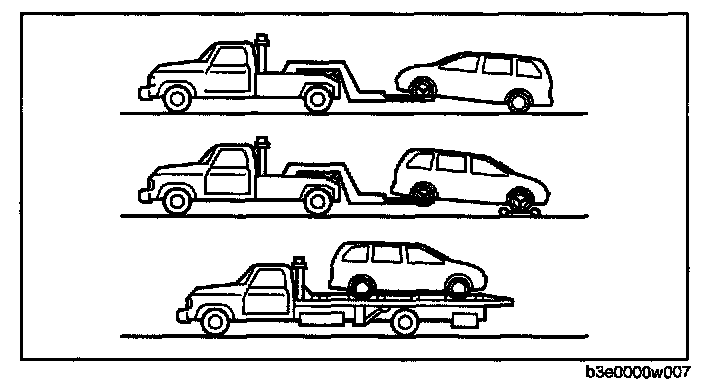
- When towing with the rear wheels on the ground, release the parking brake.
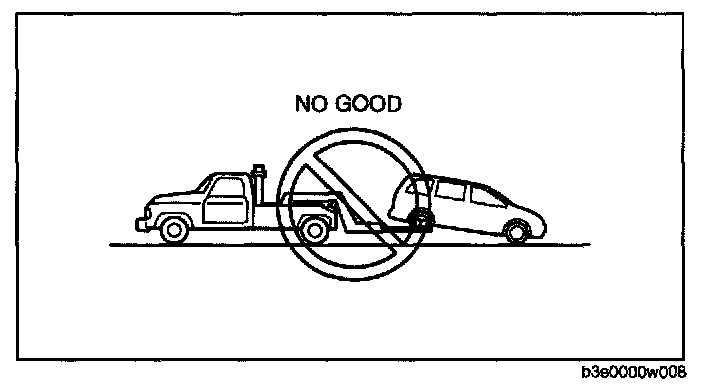
CAUTION: Do not tow the vehicle pointed backward with driving wheel on the ground. This may cause internal damage to the transaxle.
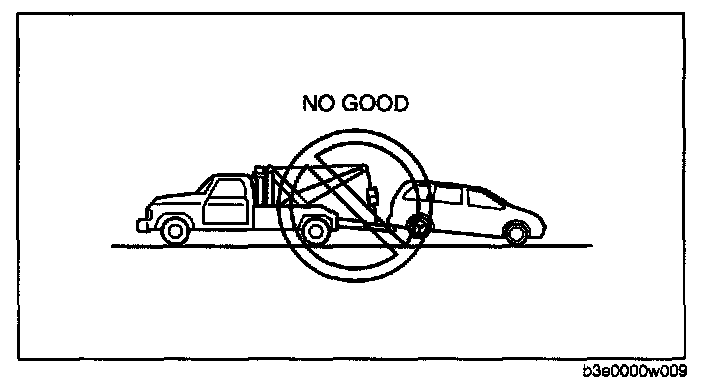
CAUTION: Do not tow with sling-type equipment. This could damage your vehicle. Use wheel-lift or flatbed equipment.
Tiedown Hooks
CAUTION: Don't use the tiding hook under the rear for tiedown. It is designed ONLY for tying down the vehicle when it's being transported. Using it for tiedown will damage the bumper.
NOTE: When tiedown with chain or cable, wrap the chain or cable with a soft cloth near the bumper to prevent damage to the bumper.
1. Remove the tiedown eyelet from trunk.
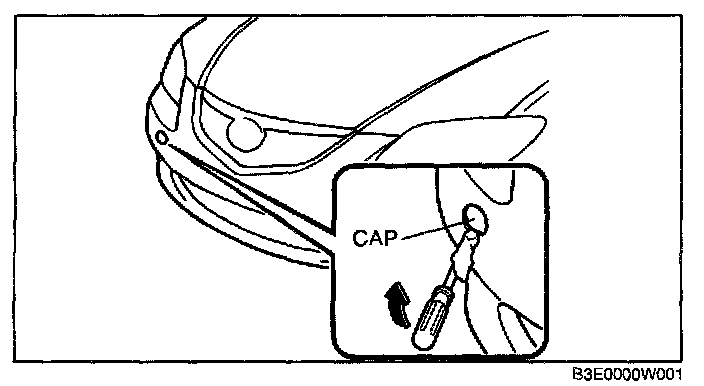
2. Wrap a screwdriver or similar tool with a soft cloth to prevent damage to the painted bumper and open the cap located on the front bumper.
CAUTION: The cap cannot be completely removed. Do not use excessive force as it may damage the cap or scratch the painted bumper surface.

3. Securely install the tiedown eyelet using the wheel brace.
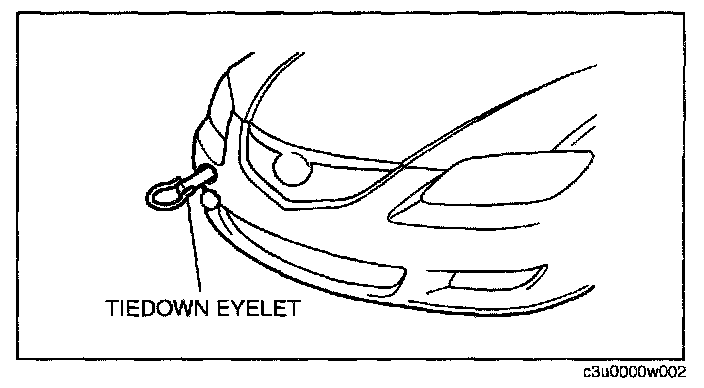
4. Hook the tying rope to the tiedown eyelet.
CAUTION: If the tiedown eyelet is not securely tightened, it may loosen or disengage from the bumper when tying down the vehicle. Make sure that the tiedown eyelet is securely tightened to the bumper.
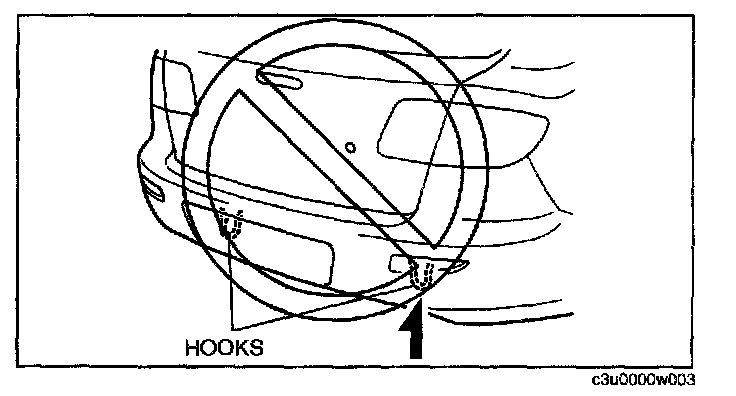
CAUTION: Do not use the hooks under the rear bumper for towing and tying down, as they cannot hold the load and it will damage the bumper.

TIEDOWN HOOK
CAUTION: Do not use the tie down hook for towing the vehicle. Use it only for securing the vehicle.
Towing
- Proper lifting and towing are necessary to prevent damage to the vehicle. State and local laws must be followed.
- A towed vehicle usually should have its front wheels off the ground. If excessive damage or other conditions prevent this, use wheel dollies.
- When towing with the rear wheels on the ground, release the parking brake.
CAUTION: Do not tow the vehicle pointed backward with driving wheel on the ground. This may cause internal damage to the transaxle.
CAUTION: Do not tow with sling-type equipment. This could damage your vehicle. Use wheel-lift or flatbed equipment.
Tiedown Hooks
CAUTION: Don't use the tiding hook under the rear for tiedown. It is designed ONLY for tying down the vehicle when it's being transported. Using it for tiedown will damage the bumper.
NOTE: When tiedown with chain or cable, wrap the chain or cable with a soft cloth near the bumper to prevent damage to the bumper.
1. Remove the tiedown eyelet from trunk.
2. Wrap a screwdriver or similar tool with a soft cloth to prevent damage to the painted bumper and open the cap located on the front bumper.
CAUTION: The cap cannot be completely removed. Do not use excessive force as it may damage the cap or scratch the painted bumper surface.
3. Securely install the tiedown eyelet using the wheel brace.
4. Hook the tying rope to the tiedown eyelet.
CAUTION: If the tiedown eyelet is not securely tightened, it may loosen or disengage from the bumper when tying down the vehicle. Make sure that the tiedown eyelet is securely tightened to the bumper.
CAUTION: Do not use the hooks under the rear bumper for towing and tying down, as they cannot hold the load and it will damage the bumper.
TIEDOWN HOOK
CAUTION: Do not use the tie down hook for towing the vehicle. Use it only for securing the vehicle.
Factory Service Tools
Use the Manual With the Right Hardware
Pair factory procedures with proven DIY tools so the instructions are easier to execute.
Disclosure: Verified tool recommendations may earn an affiliate commission at no cost to you.
When to See a Mechanic
Stop DIY work and contact a certified mechanic immediately if any of the following apply:
- • You smell fuel, burning insulation, or see smoke.
- • Brakes feel soft, pull hard to one side, or make grinding noises.
- • The engine overheats, stalls repeatedly, or misfires under load.
- • You are missing required tools, torque specs, or safe lifting equipment.
- • You are not confident in the next step or safety outcome.