
Safety Warning
DIY auto repair can cause serious injury, fire, or vehicle damage. These guides are for informational purposes only. Always follow OEM torque specs, wear PPE, and consult a certified mechanic if you are unsure. You are solely responsible for your safety.
2007 Mazda 3 L4-2.3LFACTORY OEM SERVICE PROCEDURE
Procedures
AUTOMATIC TRANSAXLE FLUID (ATF) INSPECTION [FS5A-EL]
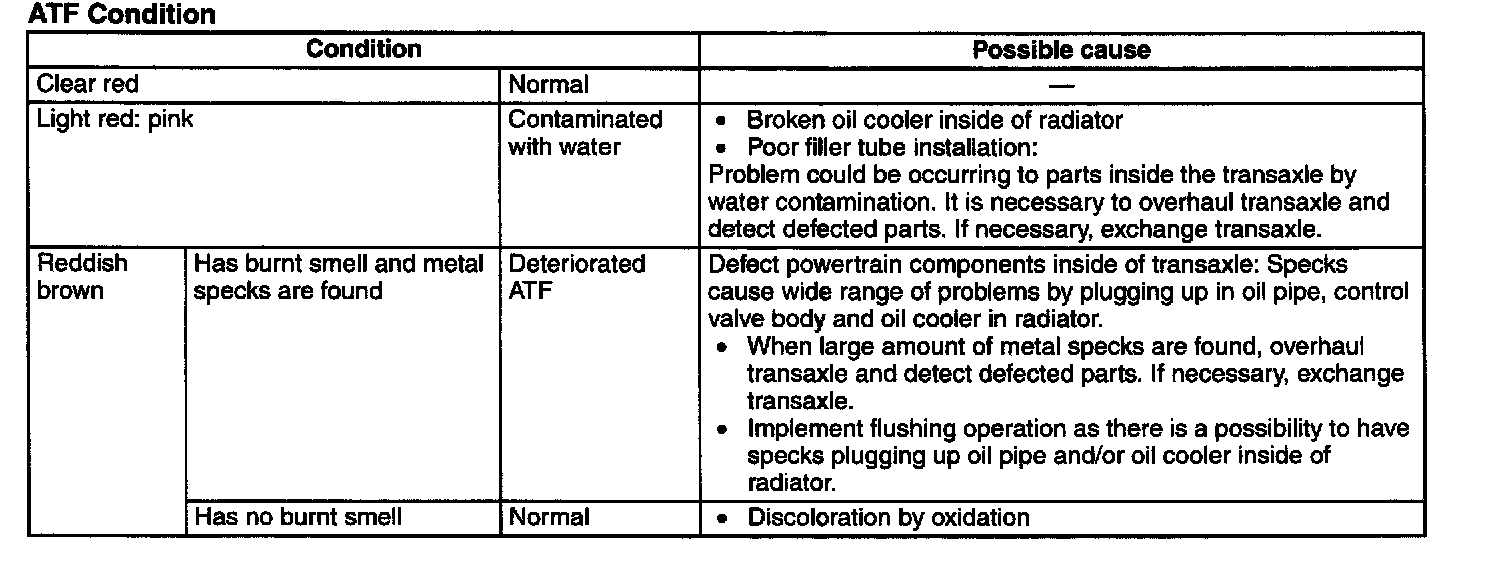
Automatic Transaxle Fluid (ATF) Condition Inspection
1. One way of determining whether the transaxle should be disassembled is by noting:
^ If the ATF is muddy or varnished.
^ If the ATF smells strange or unusual.
Automatic Transaxle Fluid (ATF) Level Inspection
Caution:
^ If there is no ATF adhering to the dipstick after warming up the engine, there is insufficient ATF. Therefore do not drive the vehicle as it could damage the ATX.
^ If a final inspection of the ATF level is performed without driving the vehicle, or the ATF amount is inspected while the ATF temperature is not at about 60 - 70° C (140 - 158° F), the ATX could be damaged because the ATF level inspection would be incorrect.
^ If too much ATF is added, the ATF temperature will increase and oil could leak from the breather hose.
Note: The dipstick of the FS5A-EL type measures the ATF level on the differential side and, under the condition that the ATF temperature on the differential side does not rise even after warming up the engine, ATF adhering to the end of the dipstick is normal.
1. Park the vehicle on level ground.
2. Apply the parking brake and position wheel chocks securely to prevent the vehicle from rolling.
3. Verify visually that there is no ATF leakage from the oil hose or housing.
Caution: If the oil level decreases dramatically while warming up the engine, do not shift the selector lever as it could damage the ATX.
4. Start the engine and warm it up in the P position.
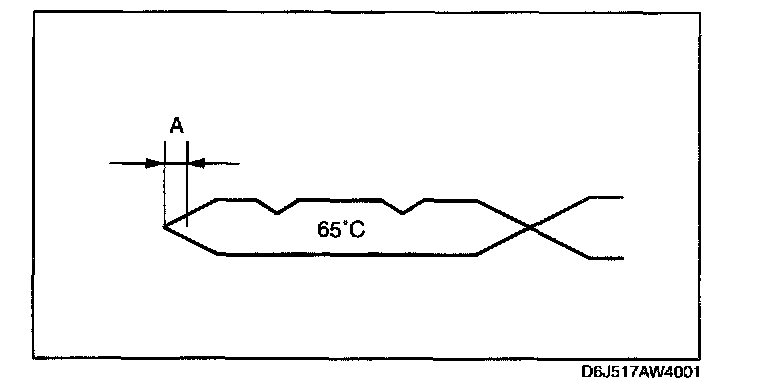
5. Verify that the ATF level is in the range while the engine is idling.
ATF adherence range A: Within 5 mm (0.197 in)
^ If necessary add ATF to the specification.
ATF type ATF M-V
6. Shift the selector lever and pause momentarily in each range (P-M) while depressing the brake pedal.
7. Shift the selector lever to P position.
8. Drive on city roads at a minimum of 5 km.
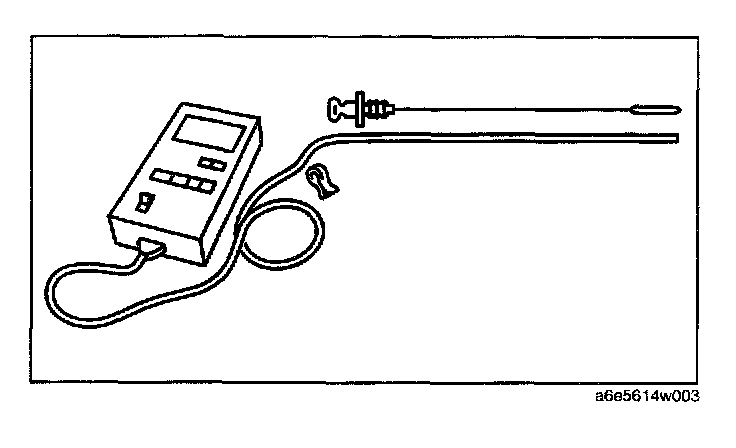
9. Adjust the length or thermometer probe so that the length is the same as the depth gauge, and hold the probe with a paper holder. Insert into the filler tube and measure the temperature.
10. Warm up the engine until the ATF reaches 60 - 70° C (140 - 158° F).
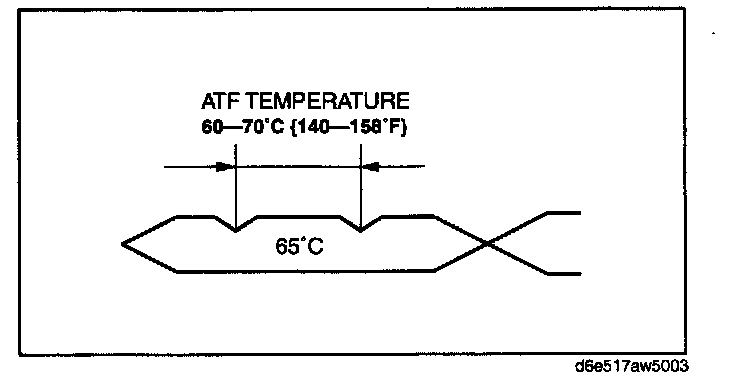
11. Verity that the ATF level is in the range while the engine is idling.
^ If necessary, add ATF to the specification.
ATF type ATF M-V
Automatic Transaxle Fluid (ATF) Condition Inspection
1. One way of determining whether the transaxle should be disassembled is by noting:
^ If the ATF is muddy or varnished.
^ If the ATF smells strange or unusual.
ATF Condition:
Automatic Transaxle Fluid (ATF) Level Inspection
Caution:
^ If there is no ATF adhering to the dipstick after warming up the engine, there is insufficient ATF. Therefore do not drive the vehicle as it could damage the ATX.
^ If a final inspection of the ATF level is performed without driving the vehicle, or the ATF amount is inspected while the ATF temperature is not at about 60 - 70° C (140 - 158° F), the ATX could be damaged because the ATF level inspection would be incorrect.
^ If too much ATF is added, the ATF temperature will increase and oil could leak from the breather hose.
Note: The dipstick of the FS5A-EL type measures the ATF level on the differential side and, under the condition that the ATF temperature on the differential side does not rise even after warming up the engine, ATF adhering to the end of the dipstick is normal.
1. Park the vehicle on level ground.
2. Apply the parking brake and position wheel chocks securely to prevent the vehicle from rolling.
3. Verify visually that there is no ATF leakage from the oil hose or housing.
Caution: If the oil level decreases dramatically while warming up the engine, do not shift the selector lever as it could damage the ATX.
4. Start the engine and warm it up in the P position.
5. Verify that the ATF level is in the range while the engine is idling.
ATF adherence range A: Within 5 mm (0.197 in)
^ If necessary add ATF to the specification.
ATF type ATF M-V
6. Shift the selector lever and pause momentarily in each range (P-M) while depressing the brake pedal.
7. Shift the selector lever to P position.
8. Drive on city roads at a minimum of 5 km.
9. Adjust the length or thermometer probe so that the length is the same as the depth gauge, and hold the probe with a paper holder. Insert into the filler tube and measure the temperature.
10. Warm up the engine until the ATF reaches 60 - 70° C (140 - 158° F).
11. Verity that the ATF level is in the range while the engine is idling.
^ If necessary, add ATF to the specification.
ATF type ATF M-V
Factory Service Tools
Use the Manual With the Right Hardware
Pair factory procedures with proven DIY tools so the instructions are easier to execute.
Disclosure: Verified tool recommendations may earn an affiliate commission at no cost to you.
When to See a Mechanic
Stop DIY work and contact a certified mechanic immediately if any of the following apply:
- • You smell fuel, burning insulation, or see smoke.
- • Brakes feel soft, pull hard to one side, or make grinding noises.
- • The engine overheats, stalls repeatedly, or misfires under load.
- • You are missing required tools, torque specs, or safe lifting equipment.
- • You are not confident in the next step or safety outcome.