
Safety Warning
DIY auto repair can cause serious injury, fire, or vehicle damage. These guides are for informational purposes only. Always follow OEM torque specs, wear PPE, and consult a certified mechanic if you are unsure. You are solely responsible for your safety.
2000 Lincoln LS V8-3.9L VIN AFACTORY OEM SERVICE PROCEDURE
Transmission Position Sensor/Switch: Service and Repair
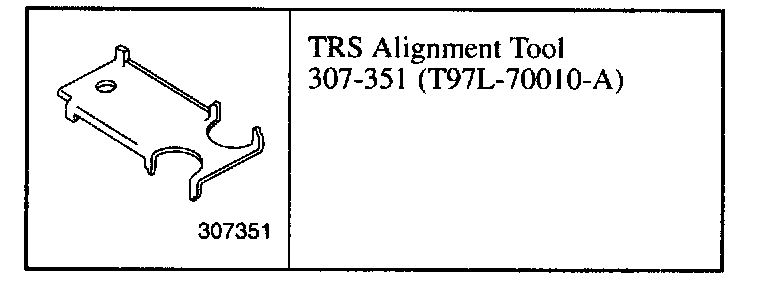
Special Tools:
Removal
1. Raise and support the vehicle.
2. Remove the three-way catalytic converter.
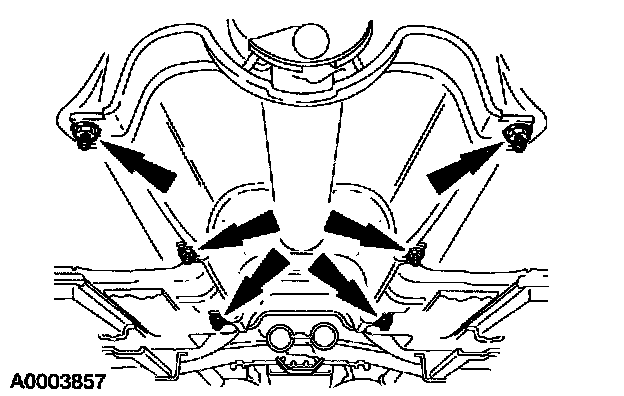
3. Remove the eight retainers and the heat shield.
4. CAUTION: Index-mark (color paint) the bolts, washers, nuts, and the flex coupling to the transmission flange and the pinion flange to assure assembly in the exact same location. Components not assembled in their original locations can cause driveshaft imbalance.
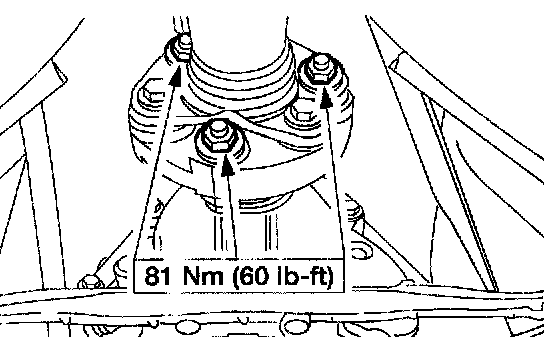
Index-mark the components.
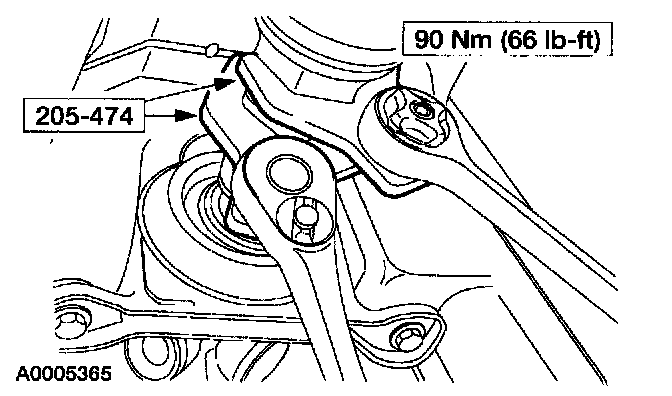
5. Using the special tools, loosen the nut.
6. CAUTION: Do not remove the bolts retaining the flex coupling to the driveshaft.
Note: The bolt heads are serrated. Hold the bolt and loosen the nut.
Remove the three nuts, washers and bolts.
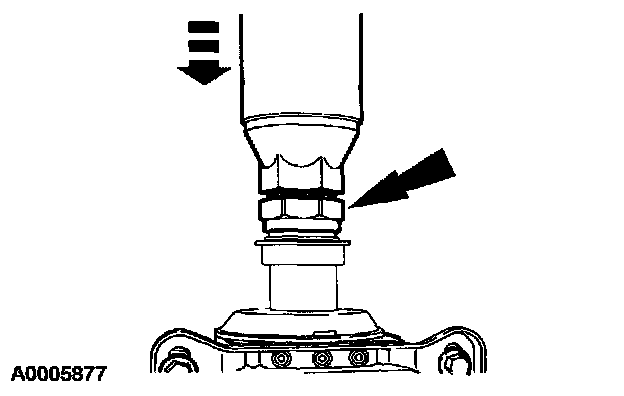
7. Slide the front shaft assembly rearward and support.
- Tighten the nut to prevent separation of the front and rear shaft assemblies.
8. WARNING: Secure the transmission to the transmission jack with a safety chain. Failure to follow these instructions may result in personal injury.
Support the transmission with a transmission jack.
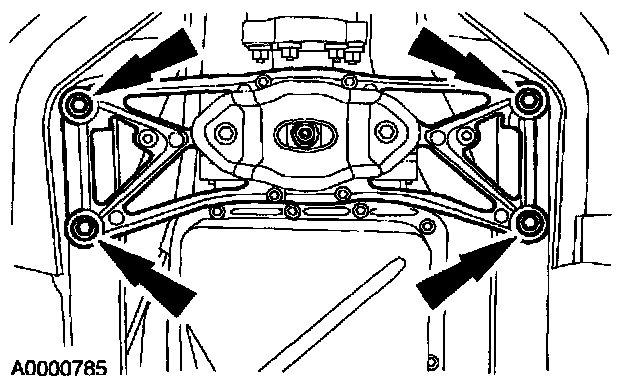
9. Remove the transmission mount and lower the transmission enough to gain access to the digital transmission range (TR) sensor.
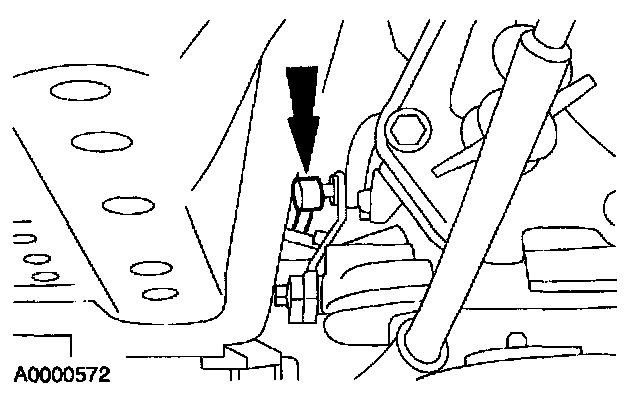
10. Disconnect the shift cable.
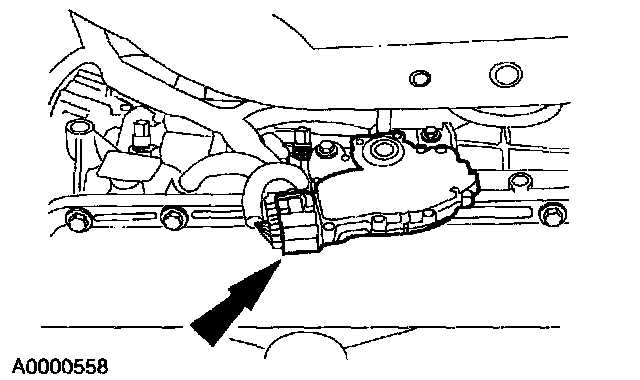
11. Disconnect the digital TR sensor connector.
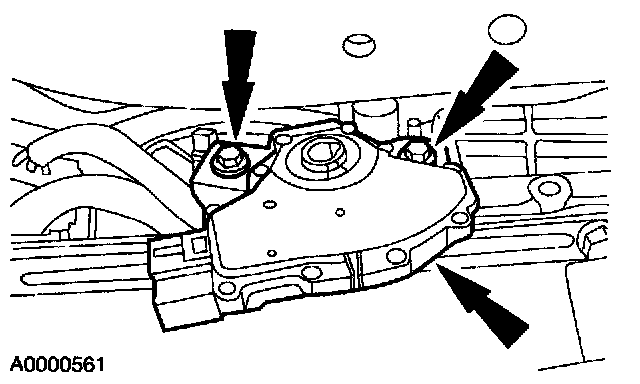
12. Remove the digital TR sensor.
Installation
1. CAUTION: The digital transmission range sensor must fit flush against the boss on the case to prevent damage to the sensor.
Install the digital TR sensor and loosely install the screws.
2. CAUTION: Tightening one screw before tightening the other may cause the sensor to bind or become damaged.
Note: The manual lever must be in the Neutral position.
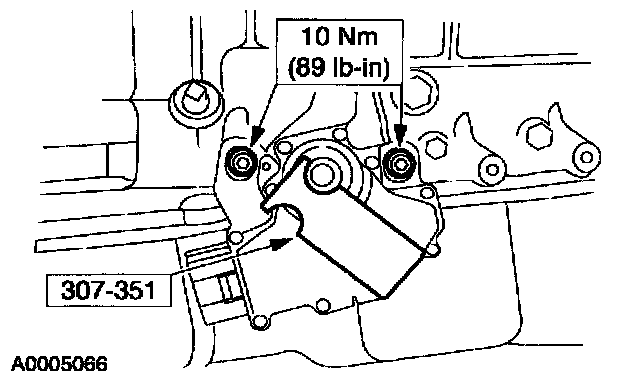
Using the special tool, align the digital TR sensor and tighten the screws in an alternating sequence.
3. Reconnect the digital TR sensor connector.
4. Connect the shift cable.
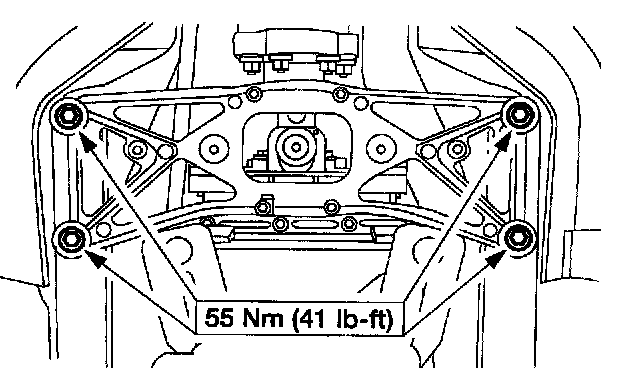
5. Install the rear mount.
6. Verify that the shift cable is adjusted.
7. Add one gram of grease to both alignment bushing cavities.
- Use Premium Long Life Grease XG-1-C or equivalent meeting Ford specification ESA-M1C75-B.
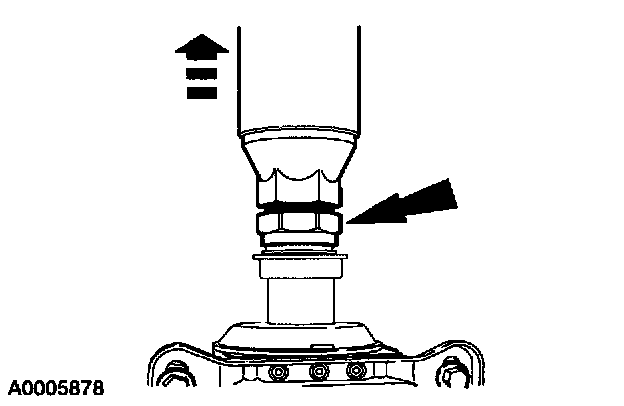
8. Loosen the nut and slide the front shaft assembly forward.
9. CAUTION: Align the index marks or driveshaft imbalance can occur.
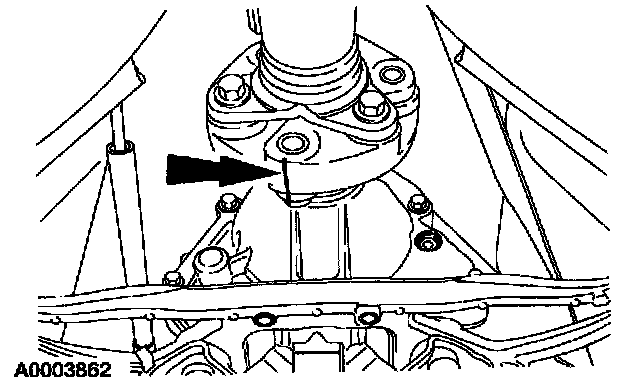
Align index marks and position the alignment bushing on the transmission flange piloting system.
10. CAUTION: Install the bolts, washers and nuts in their original positions or driveshaft imbalance can occur. Install the driveshaft flex coupling bolts with the head of the bolt seated against the flange, and the nuts seated against the flex coupling. Install the short bolts in the front and the long bolts in the rear.
Note: The bolt heads are serrated. Hold the bolt and tighten the nut.
Install the bolts, washers and nuts.
- Coat the nut and bolt threads with Threadlock 262E2FZ-19554-B or equivalent meeting Ford specification WSK-M2G351-A6.
11. Using the special tools, tighten the nut.
12. Install the heat shield.
13. Install the three-way catalytic converter.
14. Lower the vehicle.
Factory Service Tools
Use the Manual With the Right Hardware
Pair factory procedures with proven DIY tools so the instructions are easier to execute.
Disclosure: Verified tool recommendations may earn an affiliate commission at no cost to you.
When to See a Mechanic
Stop DIY work and contact a certified mechanic immediately if any of the following apply:
- • You smell fuel, burning insulation, or see smoke.
- • Brakes feel soft, pull hard to one side, or make grinding noises.
- • The engine overheats, stalls repeatedly, or misfires under load.
- • You are missing required tools, torque specs, or safe lifting equipment.
- • You are not confident in the next step or safety outcome.