
Safety Warning
DIY auto repair can cause serious injury, fire, or vehicle damage. These guides are for informational purposes only. Always follow OEM torque specs, wear PPE, and consult a certified mechanic if you are unsure. You are solely responsible for your safety.
2000 Lincoln LS V8-3.9L VIN AFACTORY OEM SERVICE PROCEDURE
Fuel Pressure Sensor: Service and Repair
REMOVAL
WARNING:
^ DO NOT SMOKE OR CARRY LIGHTED TOBACCO OR OPEN FLAME OF ANY TYPE WHEN WORKING ON OR NEAR ANY FUEL-RELATED COMPONENTS. HIGHLY FLAMMABLE MIXTURES ARE ALWAYS PRESENT AND MAY BE IGNITED, RESULTING IN POSSIBLE PERSONAL INJURY.
^ FUEL IN THE FUEL SYSTEM REMAINS UNDER HIGH PRESSURE EVEN WHEN THE ENGINE IS NOT RUNNING. BEFORE WORKING ON OR DISCONNECTING ANY OF THE FUEL LINES OR FUEL SYSTEM COMPONENTS THE FUEL SYSTEM PRESSURE MUST BE RELIEVED. FAILURE TO DO SO MAY RESULT IN PERSONAL INJURY.
1. Disconnect the battery ground cable. For additional information, refer Battery.
NOTE: When the battery is disconnected and reconnected, some abnormal drive symptoms may occur while the vehicle relearns its adaptive strategy. The vehicle may need to be driven to relearn the strategy.
2. Relieve the fuel system pressure. For additional information, refer to Fuel Delivery and Air Induction.
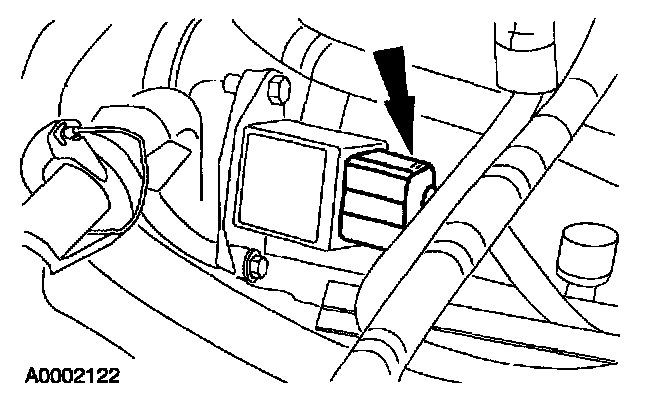
3. Disconnect the fuel pressure sensor electrical connector.
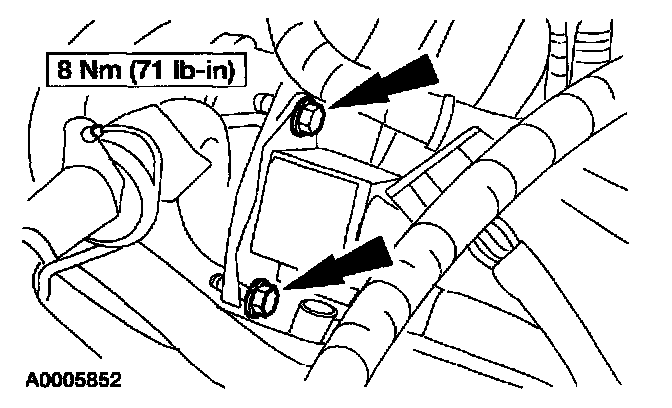
4. Remove the bolts.
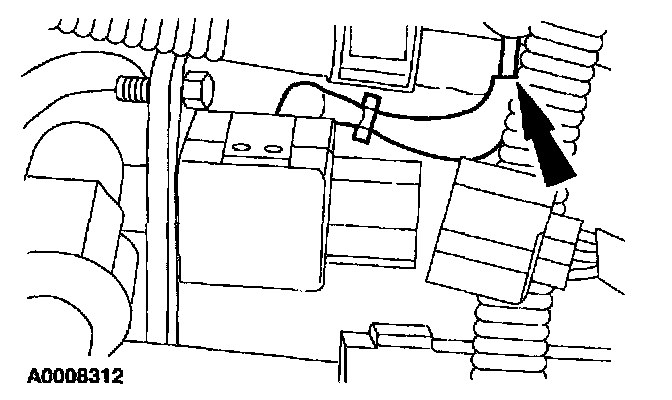
5. Disconnect the fuel pressure sensor vacuum hose and remove the fuel pressure sensor.
INSTALLATION
1. To install, reverse the removal procedure.
WARNING: DO NOT SMOKE OR CARRY LIGHTED TOBACCO OR OPEN FLAME OF ANY TYPE WHEN WORKING ON OR NEAR ANY FUEL-RELATED COMPONENTS. HIGHLY FLAMMABLE MIXTURES ARE ALWAYS PRESENT AND MAY BE IGNITED, RESULTING IN POSSIBLE PERSONAL INJURY.
NOTE: Lubricate the new seal and O-ring seals with clean Super Premium SAE 5W-30 Motor Oil XO-5W30-QSP or equivalent meeting Ford specification ESE-M2C153-G.
WARNING:
^ DO NOT SMOKE OR CARRY LIGHTED TOBACCO OR OPEN FLAME OF ANY TYPE WHEN WORKING ON OR NEAR ANY FUEL-RELATED COMPONENTS. HIGHLY FLAMMABLE MIXTURES ARE ALWAYS PRESENT AND MAY BE IGNITED, RESULTING IN POSSIBLE PERSONAL INJURY.
^ FUEL IN THE FUEL SYSTEM REMAINS UNDER HIGH PRESSURE EVEN WHEN THE ENGINE IS NOT RUNNING. BEFORE WORKING ON OR DISCONNECTING ANY OF THE FUEL LINES OR FUEL SYSTEM COMPONENTS THE FUEL SYSTEM PRESSURE MUST BE RELIEVED. FAILURE TO DO SO MAY RESULT IN PERSONAL INJURY.
1. Disconnect the battery ground cable. For additional information, refer Battery.
NOTE: When the battery is disconnected and reconnected, some abnormal drive symptoms may occur while the vehicle relearns its adaptive strategy. The vehicle may need to be driven to relearn the strategy.
2. Relieve the fuel system pressure. For additional information, refer to Fuel Delivery and Air Induction.
3. Disconnect the fuel pressure sensor electrical connector.
4. Remove the bolts.
5. Disconnect the fuel pressure sensor vacuum hose and remove the fuel pressure sensor.
INSTALLATION
1. To install, reverse the removal procedure.
WARNING: DO NOT SMOKE OR CARRY LIGHTED TOBACCO OR OPEN FLAME OF ANY TYPE WHEN WORKING ON OR NEAR ANY FUEL-RELATED COMPONENTS. HIGHLY FLAMMABLE MIXTURES ARE ALWAYS PRESENT AND MAY BE IGNITED, RESULTING IN POSSIBLE PERSONAL INJURY.
NOTE: Lubricate the new seal and O-ring seals with clean Super Premium SAE 5W-30 Motor Oil XO-5W30-QSP or equivalent meeting Ford specification ESE-M2C153-G.
Factory Service Tools
Use the Manual With the Right Hardware
Pair factory procedures with proven DIY tools so the instructions are easier to execute.
Disclosure: Verified tool recommendations may earn an affiliate commission at no cost to you.
When to See a Mechanic
Stop DIY work and contact a certified mechanic immediately if any of the following apply:
- • You smell fuel, burning insulation, or see smoke.
- • Brakes feel soft, pull hard to one side, or make grinding noises.
- • The engine overheats, stalls repeatedly, or misfires under load.
- • You are missing required tools, torque specs, or safe lifting equipment.
- • You are not confident in the next step or safety outcome.