
Safety Warning
DIY auto repair can cause serious injury, fire, or vehicle damage. These guides are for informational purposes only. Always follow OEM torque specs, wear PPE, and consult a certified mechanic if you are unsure. You are solely responsible for your safety.
2012 Lexus ES 350 V6-3.5L (2GR-FE)FACTORY OEM SERVICE PROCEDURE
Alignment: Specifications
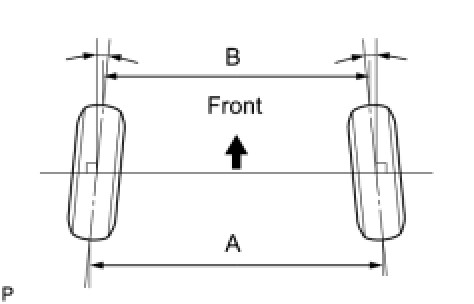
Front Wheel Alignment

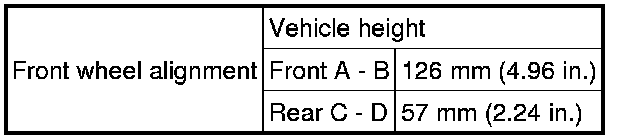
Measuring points:
A
Ground clearance of front wheel center
B
Ground clearance of lower suspension arm No. 2 bushing set bolt head center
C
Ground clearance of rear wheel center
D
Ground clearance of strut rod set bolt center
NOTICE:
* Before inspecting the wheel alignment, adjust the vehicle height to the specified value.
* Be sure to perform measurement on a level surface.
* If it is necessary to go under the vehicle for measurement, confirm that the parking brake is applied and the vehicle is secured with chocks.

HINT
If toe-in is not within the specified range, adjust it at the rack ends.




NOTICE:
* Perform the inspection while the vehicle is unloaded.
* The maximum tolerance of the right and left difference for the camber and caster is 45' (0.75°) or less.
Rear Wheel Alignment

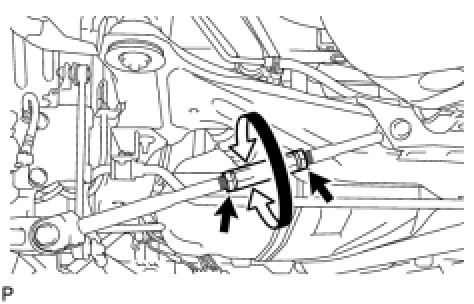
HINT
* Try to adjust toe-in to the center of the specified range.
* One turn of each adjusting tube will adjust toe-in by approximately 10.8 mm (0.425 in.).

HINT
Camber is not adjustable. If the measurement is not within the specification range, inspect the suspension parts for damage and/or wear, and replace them if necessary.
PERFORM YAW RATE SENSOR ZERO POINT CALIBRATION
HINT
Perform yaw rate sensor zero point calibration Programming and Relearning.
CHECK STEERING ANGLE SENSOR ZERO POINT CALIBRATION
HINT
Check steering angle sensor zero point calibration C1290.
Factory Service Tools
Use the Manual With the Right Hardware
Pair factory procedures with proven DIY tools so the instructions are easier to execute.
Disclosure: Verified tool recommendations may earn an affiliate commission at no cost to you.
When to See a Mechanic
Stop DIY work and contact a certified mechanic immediately if any of the following apply:
- • You smell fuel, burning insulation, or see smoke.
- • Brakes feel soft, pull hard to one side, or make grinding noises.
- • The engine overheats, stalls repeatedly, or misfires under load.
- • You are missing required tools, torque specs, or safe lifting equipment.
- • You are not confident in the next step or safety outcome.