
Safety Warning
DIY auto repair can cause serious injury, fire, or vehicle damage. These guides are for informational purposes only. Always follow OEM torque specs, wear PPE, and consult a certified mechanic if you are unsure. You are solely responsible for your safety.
2007 Lexus SC 430 V8-4.3L (3UZ-FE)FACTORY OEM SERVICE PROCEDURE
Keyless Entry Transmitter Battery: Testing and Inspection
INSPECTION
1. INSPECT BATTERY CAPACITY
HINT:
- When checking the amount of energy left in the battery (lithium battery), the battery must be checked while it is installed in the transmitter (a resistance of 1.2 kOhms is applied to the battery). When the battery energy is checked by itself (uninstalled), the voltage reading will be more than 2.5 V until the energy is depleted.
- If the transmitter is malfunctioning, the voltage reading of the energy left in the battery will be inaccurate.
a. Remove the battery (lithium battery) from the transmitter.
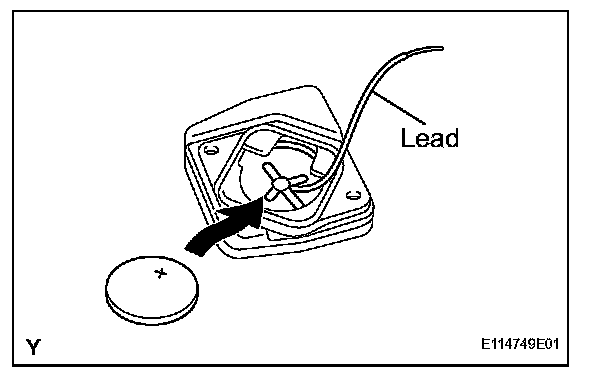
b. Connect a wire to the negative (-) terminal of the transmitter and install the battery.
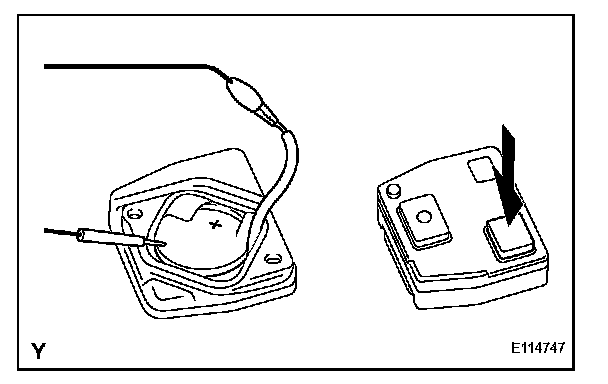
c. Connect the tester positive (+) lead to the (+) battery (lithium battery) and the tester negative (-) lead to the lead.
d. Press one of the transmission switches on the transmitter for approximately 1 second.
e. Press the transmission switch on the transmitter again to check the voltage.
Standard: 2.2 V or higher
HINT:
- When the temperature of the battery is low, the inspection cannot be made correctly. When the outcome of the test is less than 2.2 V, conduct the test again after leaving the battery in a place with a temperature of 18 °C (64 °F) for more 30 minutes.
- Read the voltage immediately after the switch is pressed. When 0.8 seconds have passed after the switch is pressed, the automatic power-off function starts and resistance applied to the battery will cease. The voltage of the battery will be 2.5 V or more.
- Press the switch at least 3 times before reading the voltage.
If the battery has just been returned to 18 °C (64 °F), the voltage may be unusually high for the first or second voltage reading.
1. INSPECT BATTERY CAPACITY
HINT:
- When checking the amount of energy left in the battery (lithium battery), the battery must be checked while it is installed in the transmitter (a resistance of 1.2 kOhms is applied to the battery). When the battery energy is checked by itself (uninstalled), the voltage reading will be more than 2.5 V until the energy is depleted.
- If the transmitter is malfunctioning, the voltage reading of the energy left in the battery will be inaccurate.
a. Remove the battery (lithium battery) from the transmitter.
b. Connect a wire to the negative (-) terminal of the transmitter and install the battery.
c. Connect the tester positive (+) lead to the (+) battery (lithium battery) and the tester negative (-) lead to the lead.
d. Press one of the transmission switches on the transmitter for approximately 1 second.
e. Press the transmission switch on the transmitter again to check the voltage.
Standard: 2.2 V or higher
HINT:
- When the temperature of the battery is low, the inspection cannot be made correctly. When the outcome of the test is less than 2.2 V, conduct the test again after leaving the battery in a place with a temperature of 18 °C (64 °F) for more 30 minutes.
- Read the voltage immediately after the switch is pressed. When 0.8 seconds have passed after the switch is pressed, the automatic power-off function starts and resistance applied to the battery will cease. The voltage of the battery will be 2.5 V or more.
- Press the switch at least 3 times before reading the voltage.
If the battery has just been returned to 18 °C (64 °F), the voltage may be unusually high for the first or second voltage reading.
Factory Service Tools
Use the Manual With the Right Hardware
Pair factory procedures with proven DIY tools so the instructions are easier to execute.
Disclosure: Verified tool recommendations may earn an affiliate commission at no cost to you.
When to See a Mechanic
Stop DIY work and contact a certified mechanic immediately if any of the following apply:
- • You smell fuel, burning insulation, or see smoke.
- • Brakes feel soft, pull hard to one side, or make grinding noises.
- • The engine overheats, stalls repeatedly, or misfires under load.
- • You are missing required tools, torque specs, or safe lifting equipment.
- • You are not confident in the next step or safety outcome.