
Safety Warning
DIY auto repair can cause serious injury, fire, or vehicle damage. These guides are for informational purposes only. Always follow OEM torque specs, wear PPE, and consult a certified mechanic if you are unsure. You are solely responsible for your safety.
2007 Lexus ES 350 V6-3.5L (2GR-FE)FACTORY OEM SERVICE PROCEDURE
Ignition Timing: Testing and Inspection
IGNITION TIMING
INSPECT IGNITION TIMING
(a) Warm up the engine.
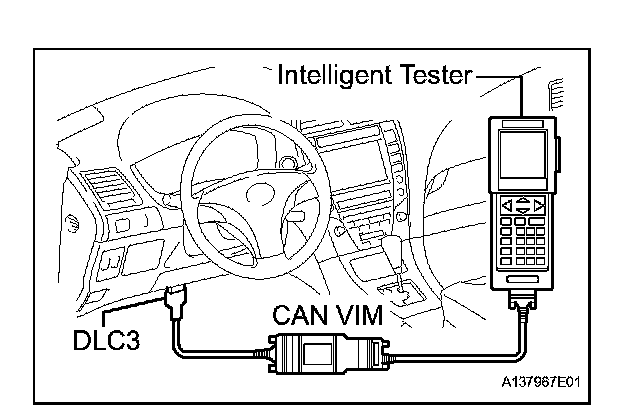
(b) When using the intelligent tester: Check the ignition timing.
(1) Connect the intelligent tester to the DLC3.
(2) Enter DATA LIST mode with the intelligent tester.
Ignition timing: 8 to 12° BTDC at idle
HINT: Refer to the intelligent tester operator's manual for help when selecting the DATA LIST.
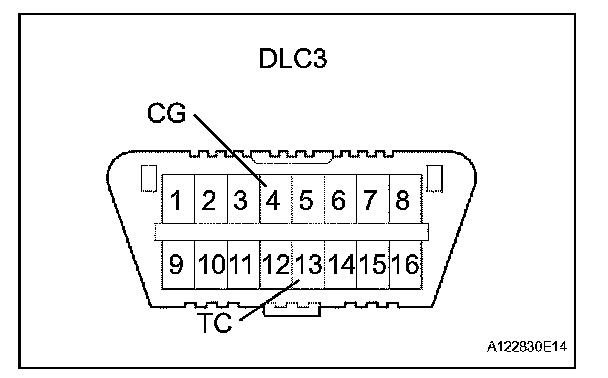
(c) When not using the intelligent tester: Check the ignition timing.
(1) Using SST, connect terminals 13 (TC) and 4 (CG) of the DLC3.
SST 09843-18040
NOTICE:
^ Confirm the terminal numbers before connecting them. Connection with a wrong terminal can damage the engine.
^ Turn off all electrical systems before connecting the terminals.
^ Perform this inspection after the cooling fan motor is turned off.
(2) Remove the cool air intake duct seal.
(3) Remove the engine room side cover LH.
(4) Remove the engine room side cover RH.
(5) Remove the V-bank cover.
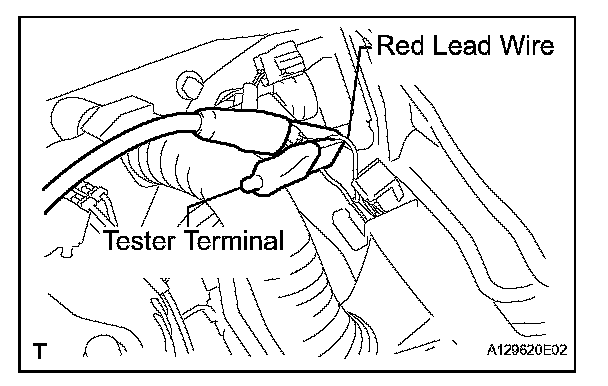
(6) Pull out the red lead wire harness.
(7) Connect the tester terminal of the timing light to the red lead wire as shown in the illustration.
NOTICE: Use a timing light which can detect the first signal.
(8) Check the ignition timing at idle.
Ignition timing: 8 to 12° BTDC at idle
NOTICE: When checking the ignition timing, the transmission should be in neutral.
HINT: Run the engine at 1,000 to 1,300 rpm for 5 seconds, and then check that the engine rpm returns to idle speed.
(9) Disconnect terminals 13 (TC) and 4 (CG) of the DLC3.
(10) Check the ignition timing at idle.
Ignition timing: 12 to 22° BTDC at idle
(11) Confirm that the ignition timing moves to the advanced angle side when the engine rpm is increased.
(12) Remove the timing light.
INSPECT IGNITION TIMING
(a) Warm up the engine.
(b) When using the intelligent tester: Check the ignition timing.
(1) Connect the intelligent tester to the DLC3.
(2) Enter DATA LIST mode with the intelligent tester.
Ignition timing: 8 to 12° BTDC at idle
HINT: Refer to the intelligent tester operator's manual for help when selecting the DATA LIST.
DLC3:
(c) When not using the intelligent tester: Check the ignition timing.
(1) Using SST, connect terminals 13 (TC) and 4 (CG) of the DLC3.
SST 09843-18040
NOTICE:
^ Confirm the terminal numbers before connecting them. Connection with a wrong terminal can damage the engine.
^ Turn off all electrical systems before connecting the terminals.
^ Perform this inspection after the cooling fan motor is turned off.
(2) Remove the cool air intake duct seal.
(3) Remove the engine room side cover LH.
(4) Remove the engine room side cover RH.
(5) Remove the V-bank cover.
(6) Pull out the red lead wire harness.
(7) Connect the tester terminal of the timing light to the red lead wire as shown in the illustration.
NOTICE: Use a timing light which can detect the first signal.
(8) Check the ignition timing at idle.
Ignition timing: 8 to 12° BTDC at idle
NOTICE: When checking the ignition timing, the transmission should be in neutral.
HINT: Run the engine at 1,000 to 1,300 rpm for 5 seconds, and then check that the engine rpm returns to idle speed.
(9) Disconnect terminals 13 (TC) and 4 (CG) of the DLC3.
(10) Check the ignition timing at idle.
Ignition timing: 12 to 22° BTDC at idle
(11) Confirm that the ignition timing moves to the advanced angle side when the engine rpm is increased.
(12) Remove the timing light.
Factory Service Tools
Use the Manual With the Right Hardware
Pair factory procedures with proven DIY tools so the instructions are easier to execute.
Disclosure: Verified tool recommendations may earn an affiliate commission at no cost to you.
When to See a Mechanic
Stop DIY work and contact a certified mechanic immediately if any of the following apply:
- • You smell fuel, burning insulation, or see smoke.
- • Brakes feel soft, pull hard to one side, or make grinding noises.
- • The engine overheats, stalls repeatedly, or misfires under load.
- • You are missing required tools, torque specs, or safe lifting equipment.
- • You are not confident in the next step or safety outcome.