
Safety Warning
DIY auto repair can cause serious injury, fire, or vehicle damage. These guides are for informational purposes only. Always follow OEM torque specs, wear PPE, and consult a certified mechanic if you are unsure. You are solely responsible for your safety.
2007 Lexus ES 350 V6-3.5L (2GR-FE)FACTORY OEM SERVICE PROCEDURE
Keyless Entry Transmitter: Service and Repair
Door Control Transmitter:
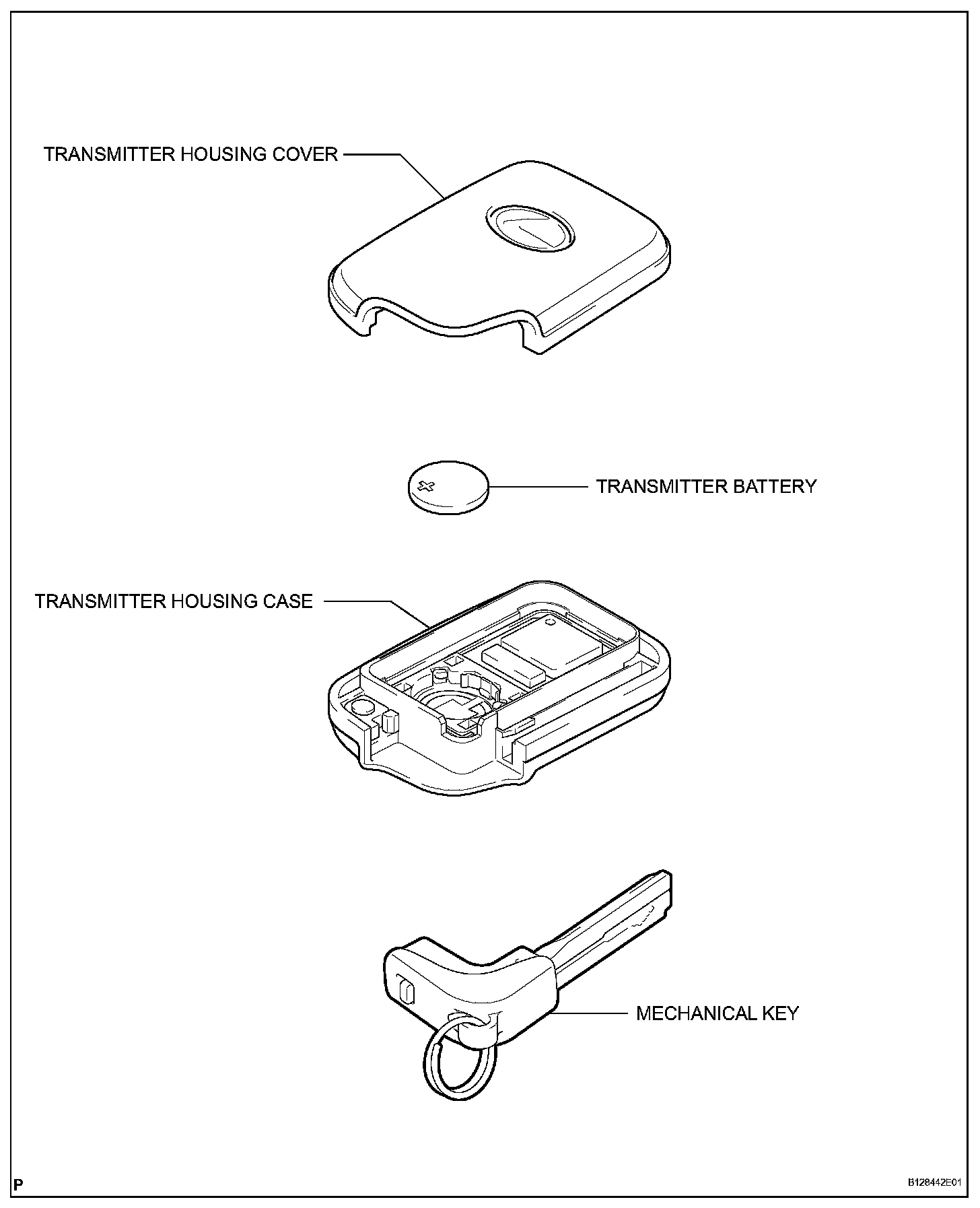
DOOR CONTROL TRANSMITTER
REMOVAL
1. REMOVE TRANSMITTER BATTERY
NOTE: Take extra care when handling these precision electronic components.
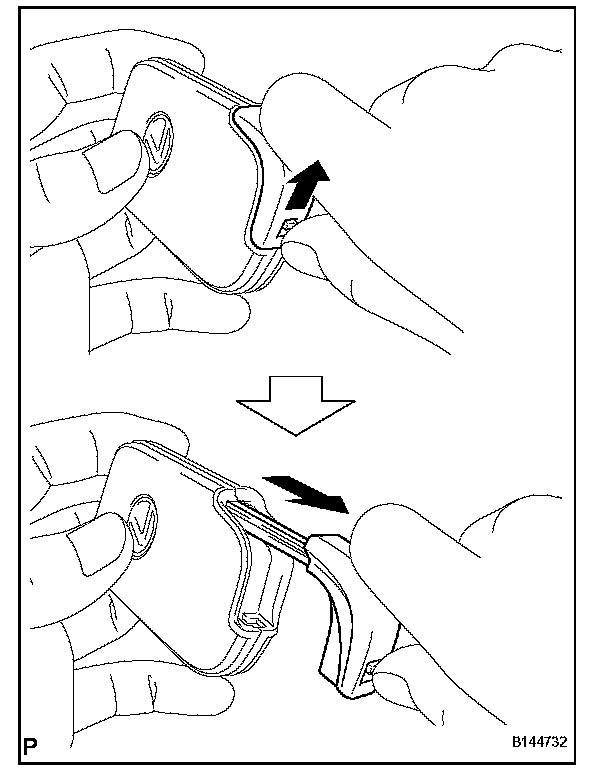
a. Remove the mechanical key.
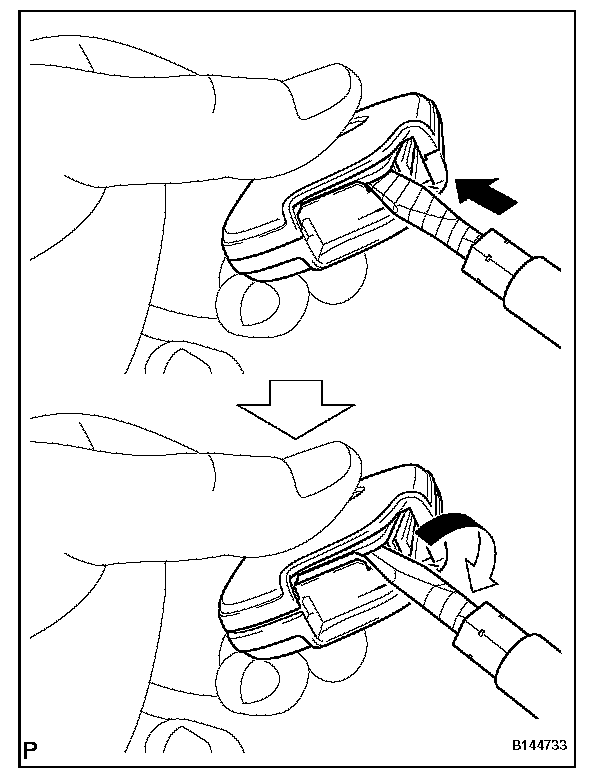
b. Insert a screwdriver into the gap, and turn the screwdriver to detach the cover.
HINT: Tape the screwdriver tip before use.
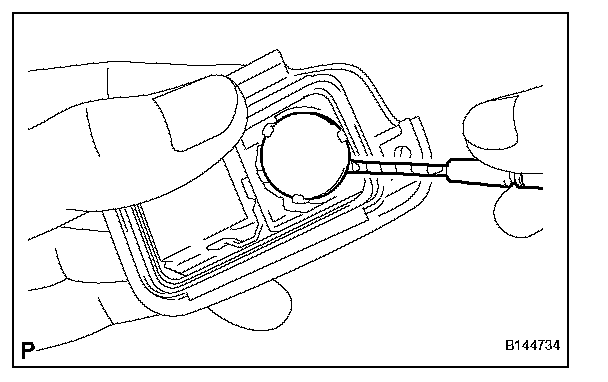
c. Insert a screwdriver into the gap and gently remove the battery (lithium battery).
NOTE:
- Do not push the terminals with your finger.
- Do not forcibly pry up the battery (lithium battery) because doing so will deform the terminals.
- Do not touch the battery with wet hands. Water may result in corrosion.
- Do not touch or move any components inside the transmitter because handling the components may interfere with proper operation of the transmitter.
INSTALLATION
1. INSTALL TRANSMITTER BATTERY
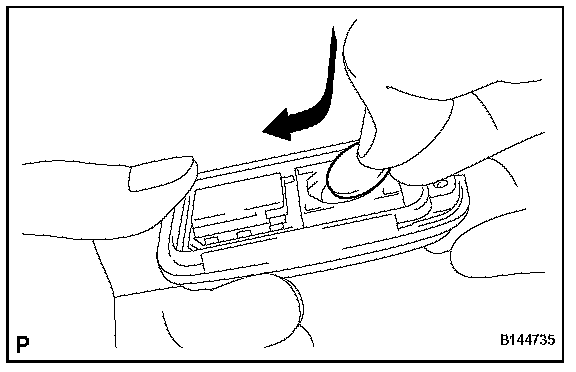
a. Install a new battery (lithium battery) with the positive (+) side up as given in the illustration.
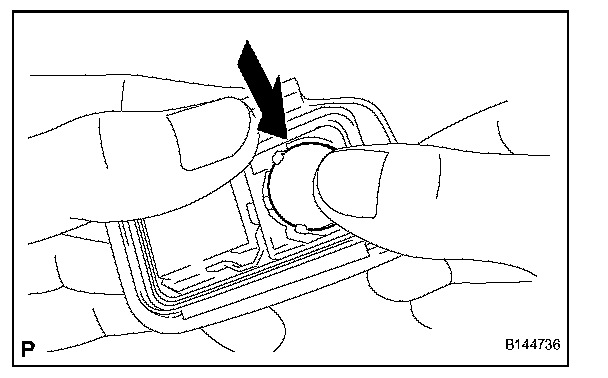
b. Press down gently on the battery to set it in place.
NOTE:
- Be sure that the positive and negative sides of the transmitter battery are positioned correctly.
- Be careful not to bend the terminals of the transmitter battery during installation.
- Keep the interior of the transmitter case free of dust, water and oil.
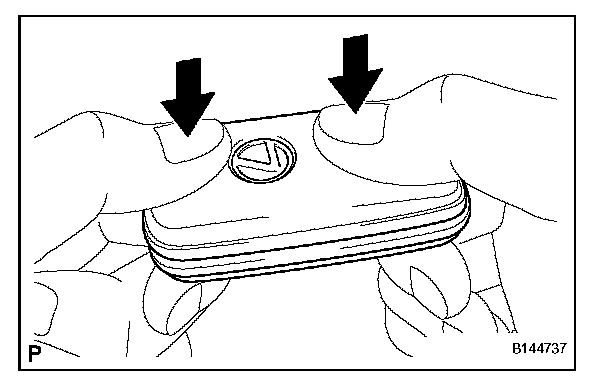
c. Install the cover by pressing down on it as given in the illustration.
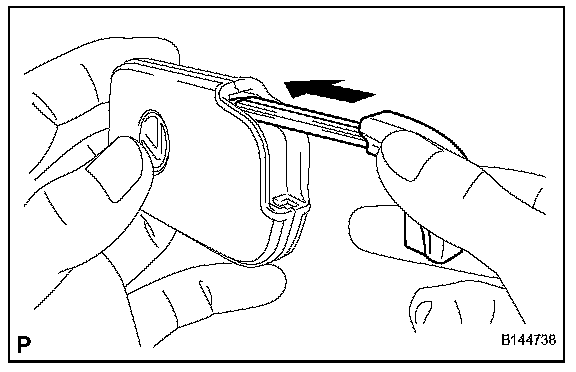
d. Install the mechanical key.
HINT: After the installation, press one of the transmitter's switches and check that the LED illuminates.
Factory Service Tools
Use the Manual With the Right Hardware
Pair factory procedures with proven DIY tools so the instructions are easier to execute.
Disclosure: Verified tool recommendations may earn an affiliate commission at no cost to you.
When to See a Mechanic
Stop DIY work and contact a certified mechanic immediately if any of the following apply:
- • You smell fuel, burning insulation, or see smoke.
- • Brakes feel soft, pull hard to one side, or make grinding noises.
- • The engine overheats, stalls repeatedly, or misfires under load.
- • You are missing required tools, torque specs, or safe lifting equipment.
- • You are not confident in the next step or safety outcome.