
Safety Warning
DIY auto repair can cause serious injury, fire, or vehicle damage. These guides are for informational purposes only. Always follow OEM torque specs, wear PPE, and consult a certified mechanic if you are unsure. You are solely responsible for your safety.
2004 Lexus LS 430 V8-4.3L (3UZ-FE)FACTORY OEM SERVICE PROCEDURE
Electronic Control
ELECTRONIC CONTROL
a. REMOVAL AND INSTALLATION OF BATTERY TERMINAL
NOTE: After disconnecting the negative (-) terminal, it is necessary to perform the initialization of certain systems.
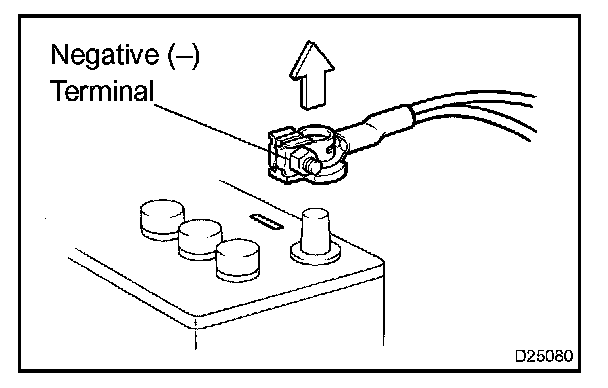
1. Before performing electronic work, disconnect the battery negative (-) terminal cable beforehand to prevent component and wire damage caused by accidental short circuits.
2. When disconnecting the terminal cable, turn the ignition switch and lighting switch OFF and loosen the terminal nut completely. Perform these operations without twisting or prying the terminal. Remove the battery cable from the battery post.
3. Clock settings, radio settings, DTCs and other data are erased when the battery cable is removed. Before removing the battery cable, record any necessary data.
b. HANDLING OF ELECTRONIC PARTS
1. Do not open the cover or case of the ECU unless absolutely necessary. If the IC terminals are touched, the IC may be rendered inoperative by static electricity.
2. To disconnect electronic connectors, pull the connector itself, not the wires.
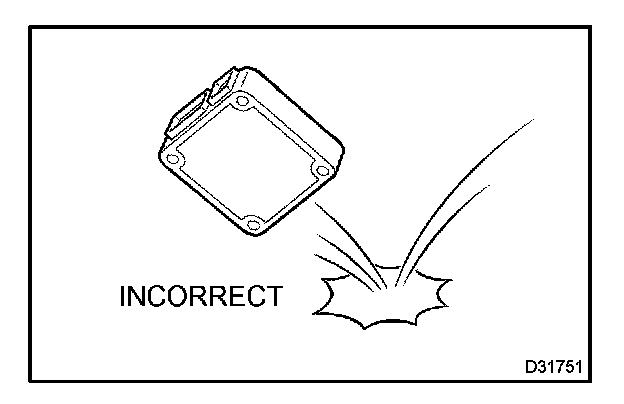
3. Be careful not to drop electronic components, such as sensors or relays. If they are dropped on a hard surface, they should be replaced.
4. When cleaning the engine with steam, protect the electronic components, air filter and emission-related components from water.
5. Never use an impact wrench to remove or install temperature switches or temperature sensors.
6. When checking the resistance of a wire connector, insert the tester probe carefully to prevent terminals from bending.
a. REMOVAL AND INSTALLATION OF BATTERY TERMINAL
NOTE: After disconnecting the negative (-) terminal, it is necessary to perform the initialization of certain systems.
1. Before performing electronic work, disconnect the battery negative (-) terminal cable beforehand to prevent component and wire damage caused by accidental short circuits.
2. When disconnecting the terminal cable, turn the ignition switch and lighting switch OFF and loosen the terminal nut completely. Perform these operations without twisting or prying the terminal. Remove the battery cable from the battery post.
3. Clock settings, radio settings, DTCs and other data are erased when the battery cable is removed. Before removing the battery cable, record any necessary data.
b. HANDLING OF ELECTRONIC PARTS
1. Do not open the cover or case of the ECU unless absolutely necessary. If the IC terminals are touched, the IC may be rendered inoperative by static electricity.
2. To disconnect electronic connectors, pull the connector itself, not the wires.
3. Be careful not to drop electronic components, such as sensors or relays. If they are dropped on a hard surface, they should be replaced.
4. When cleaning the engine with steam, protect the electronic components, air filter and emission-related components from water.
5. Never use an impact wrench to remove or install temperature switches or temperature sensors.
6. When checking the resistance of a wire connector, insert the tester probe carefully to prevent terminals from bending.
Factory Service Tools
Use the Manual With the Right Hardware
Pair factory procedures with proven DIY tools so the instructions are easier to execute.
Disclosure: Verified tool recommendations may earn an affiliate commission at no cost to you.
When to See a Mechanic
Stop DIY work and contact a certified mechanic immediately if any of the following apply:
- • You smell fuel, burning insulation, or see smoke.
- • Brakes feel soft, pull hard to one side, or make grinding noises.
- • The engine overheats, stalls repeatedly, or misfires under load.
- • You are missing required tools, torque specs, or safe lifting equipment.
- • You are not confident in the next step or safety outcome.