
Safety Warning
DIY auto repair can cause serious injury, fire, or vehicle damage. These guides are for informational purposes only. Always follow OEM torque specs, wear PPE, and consult a certified mechanic if you are unsure. You are solely responsible for your safety.
2004 Lexus ES 330 V6-3.3L (3MZ-FE)FACTORY OEM SERVICE PROCEDURE
Programming and Relearning
PRECAUTION
1. HANDLING PRECAUTIONS ON STEERING SYSTEM
a. Care must be taken when replacing parts. Incorrect replacement could affect the performance of the steering system and result in a driving hazard.
2. HANDLING PRECAUTIONS ON SRS AIRBAG SYSTEM
a. The ES330 is equipped with a SRS (Supplemental Restraint System), such as the driver airbag and front passenger airbag. Failure to carry out service operation in the correct sequence could cause the SRS to unexpectedly deploy during servicing, possibly leading to a serious accident. Before servicing (including removal or installation of parts, inspection or replacement), be sure to read the precautionary notice for the Supplemental Restraint System.
3. WIRE HARNESS REPAIR
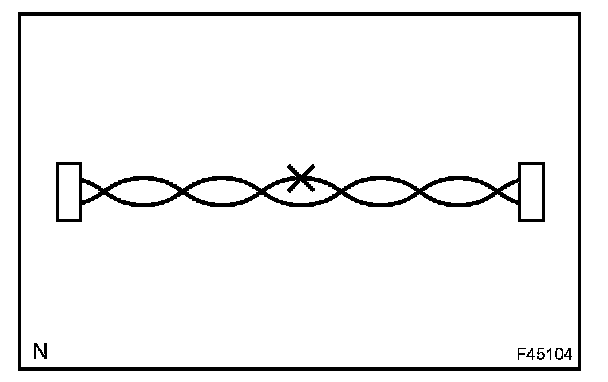
a. After repairing the wire bus line with solder, wrap the repaired part with vinyl tape.
NOTE:
- The CANL bus line and CANH bus line must be installed together all the time.
When installing, make sure to twist them.
CAN bus lines are likely to be influenced by noise if the bus lines are not twisted.
- The difference in length of the CANL bus line and CANH bus line should be within 100 mm (3.937 in.).
- Untwisted parts around the connectors should be within 80 mm (3.150 in.).
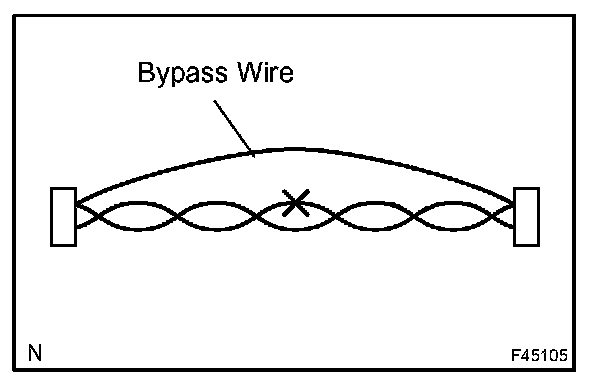
b. Do not perform bypass wiring between the connectors.
NOTE: If you perform bypass wiring, the characteristic of the twisted wire harness will be lost.
4. CONNECTOR HANDLING
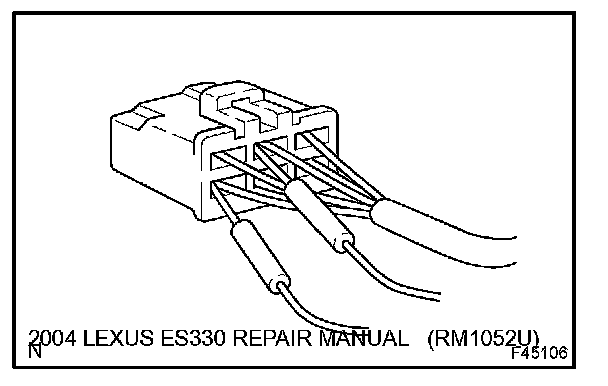
a. When inserting tester probes into a connector, insert them from the back of the connector.
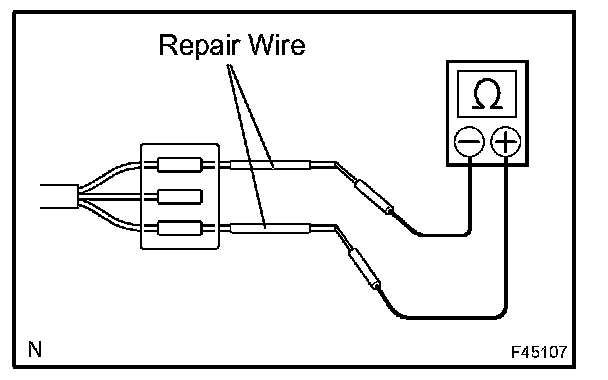
b. If it is impossible to check resistance from the back of the connector, use a repair wire to check it.
1. HANDLING PRECAUTIONS ON STEERING SYSTEM
a. Care must be taken when replacing parts. Incorrect replacement could affect the performance of the steering system and result in a driving hazard.
2. HANDLING PRECAUTIONS ON SRS AIRBAG SYSTEM
a. The ES330 is equipped with a SRS (Supplemental Restraint System), such as the driver airbag and front passenger airbag. Failure to carry out service operation in the correct sequence could cause the SRS to unexpectedly deploy during servicing, possibly leading to a serious accident. Before servicing (including removal or installation of parts, inspection or replacement), be sure to read the precautionary notice for the Supplemental Restraint System.
3. WIRE HARNESS REPAIR
a. After repairing the wire bus line with solder, wrap the repaired part with vinyl tape.
NOTE:
- The CANL bus line and CANH bus line must be installed together all the time.
When installing, make sure to twist them.
CAN bus lines are likely to be influenced by noise if the bus lines are not twisted.
- The difference in length of the CANL bus line and CANH bus line should be within 100 mm (3.937 in.).
- Untwisted parts around the connectors should be within 80 mm (3.150 in.).
b. Do not perform bypass wiring between the connectors.
NOTE: If you perform bypass wiring, the characteristic of the twisted wire harness will be lost.
4. CONNECTOR HANDLING
a. When inserting tester probes into a connector, insert them from the back of the connector.
b. If it is impossible to check resistance from the back of the connector, use a repair wire to check it.
Factory Service Tools
Use the Manual With the Right Hardware
Pair factory procedures with proven DIY tools so the instructions are easier to execute.
Disclosure: Verified tool recommendations may earn an affiliate commission at no cost to you.
When to See a Mechanic
Stop DIY work and contact a certified mechanic immediately if any of the following apply:
- • You smell fuel, burning insulation, or see smoke.
- • Brakes feel soft, pull hard to one side, or make grinding noises.
- • The engine overheats, stalls repeatedly, or misfires under load.
- • You are missing required tools, torque specs, or safe lifting equipment.
- • You are not confident in the next step or safety outcome.