
Safety Warning
DIY auto repair can cause serious injury, fire, or vehicle damage. These guides are for informational purposes only. Always follow OEM torque specs, wear PPE, and consult a certified mechanic if you are unsure. You are solely responsible for your safety.
2002 Lexus LS 430 V8-4.3L (3UZ-FE)FACTORY OEM SERVICE PROCEDURE
Connecting Rod Bearing
CONNECTING ROD BEARING OIL CLEARANCE
Standard: 0.021-0.047 mm (0.0008-0.0019 in)
Maximum: 0.065 mm (0.0026 in)
BEARING SELECTION
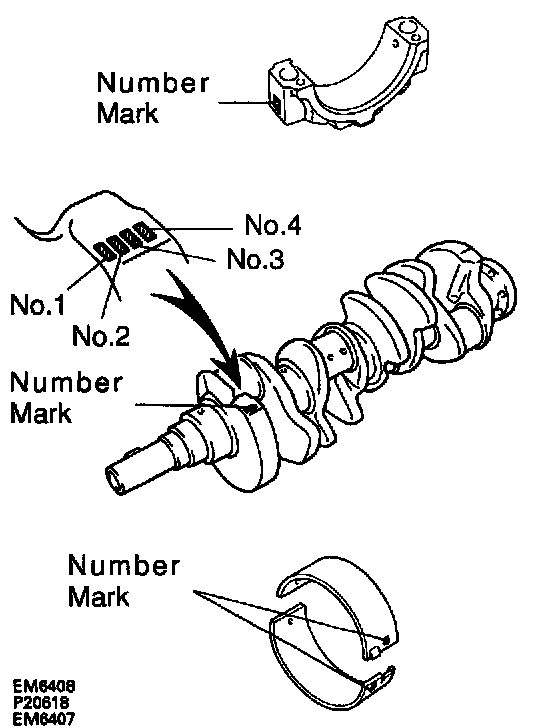
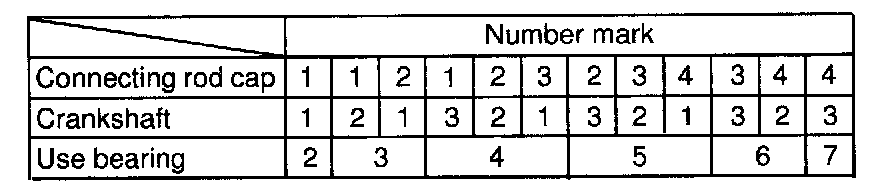
HINT: If using a standard bearing, replace it with one having the same number. If the number of the bearing cannot be determined, select the correct bearing by adding together the numbers imprinted on the connecting rod cap and crankshaft, then selecting the bearing with the same number as the total. There are 6 sizes of standard bearings, marked "2", "3", "4", "5", "6" and "7".
Reference
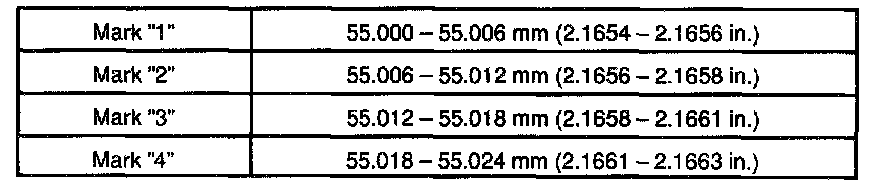
Connecting Rod Big End Inside Diameter

Crankshaft Crank Pin Diameter
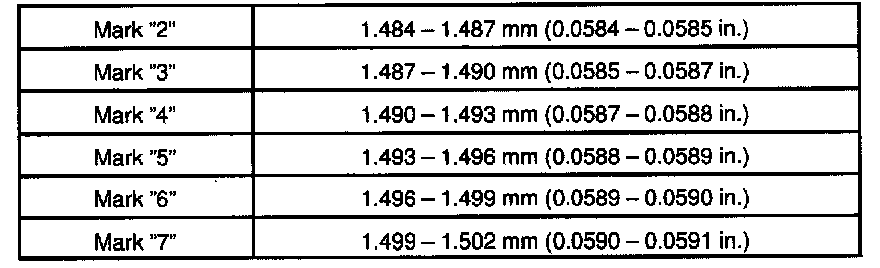
Standard Sized Bearing Center Wall Thickness
Standard: 0.021-0.047 mm (0.0008-0.0019 in)
Maximum: 0.065 mm (0.0026 in)
BEARING SELECTION
HINT: If using a standard bearing, replace it with one having the same number. If the number of the bearing cannot be determined, select the correct bearing by adding together the numbers imprinted on the connecting rod cap and crankshaft, then selecting the bearing with the same number as the total. There are 6 sizes of standard bearings, marked "2", "3", "4", "5", "6" and "7".
Reference
Connecting Rod Big End Inside Diameter
Crankshaft Crank Pin Diameter
Standard Sized Bearing Center Wall Thickness
Factory Service Tools
Use the Manual With the Right Hardware
Pair factory procedures with proven DIY tools so the instructions are easier to execute.
Disclosure: Verified tool recommendations may earn an affiliate commission at no cost to you.
When to See a Mechanic
Stop DIY work and contact a certified mechanic immediately if any of the following apply:
- • You smell fuel, burning insulation, or see smoke.
- • Brakes feel soft, pull hard to one side, or make grinding noises.
- • The engine overheats, stalls repeatedly, or misfires under load.
- • You are missing required tools, torque specs, or safe lifting equipment.
- • You are not confident in the next step or safety outcome.